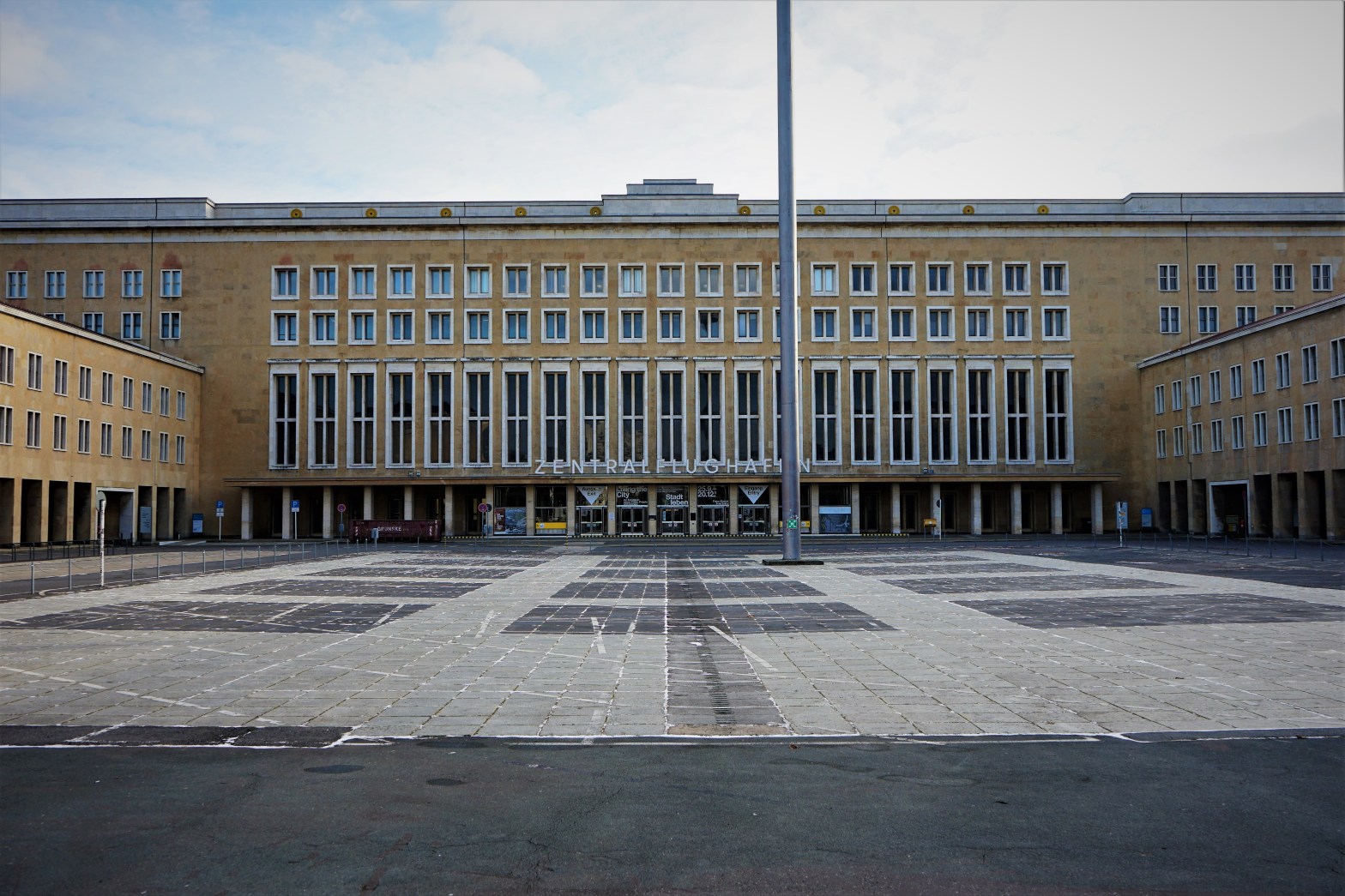
With lockdown in full force and the boys being old enough to be left at home for the afternoon, Dave and I took the opportunity to continue to explore Berlin.
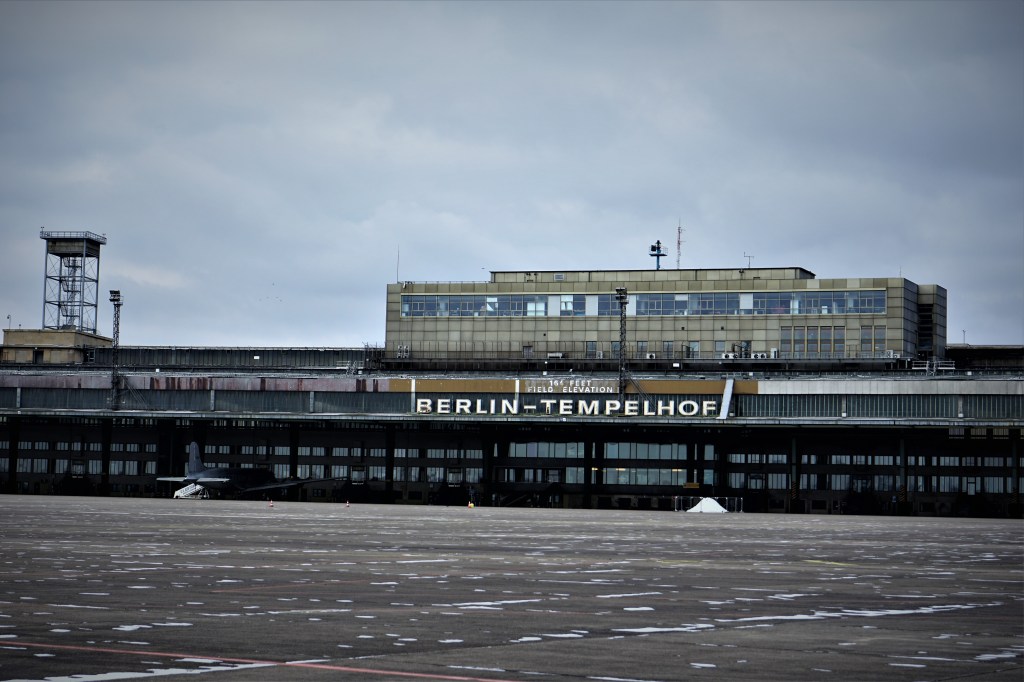
We decided to go to Templehofer Feld (Templehof Field – the old airport in the middle of the city which is rich in history) and look around.
Right after we moved to Berlin in the Summer of 2018, I briefly visited Templehof. https://atomic-temporary-144439175.wpcomstaging.com/2018/08/02/tempelhof-airport/
So I was eager to go back and see the actual tarmac that has been turned into a public park.

We walked to our neighborhood U8 stop and rode it to the Boddinstraße stop. There we were greeted by an eclectic Neukölln neighborhood. Confused about which bus stop to go to, we decided to simply walk to the former airport.

Along the way, we were treated to typical mix of Berlin architecture, a Berlin Airlift mural and a Turkish mosque.


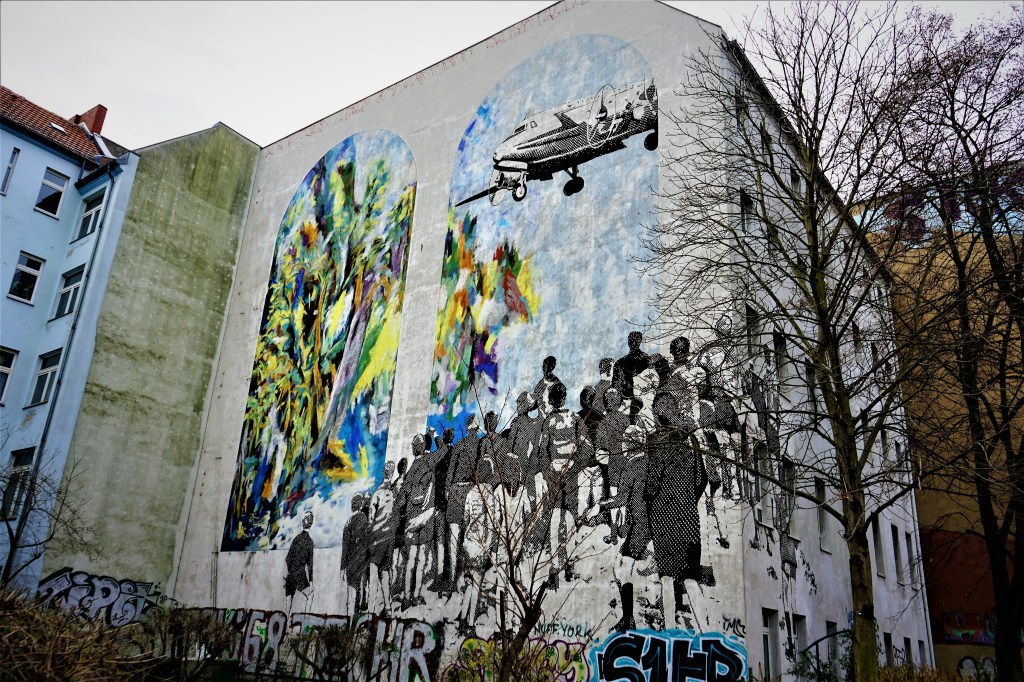
After about twenty minutes, with stops to take photos with my new camera, we arrived at the northeast entrance to the park.
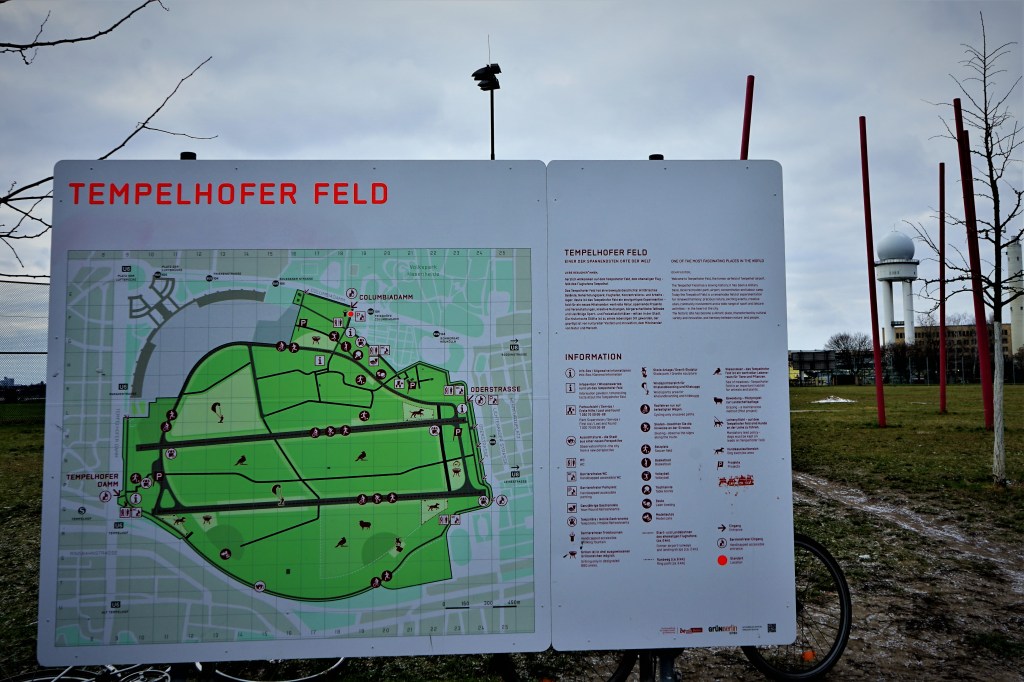
The field is a multi-sport heaven for those that use a ball, wheels or are air propelled. There is soccer, bocce, volleyball, basketball and table tennis. Not to mention a skate park, wind surfing, cycling, skating and an area for model cars.
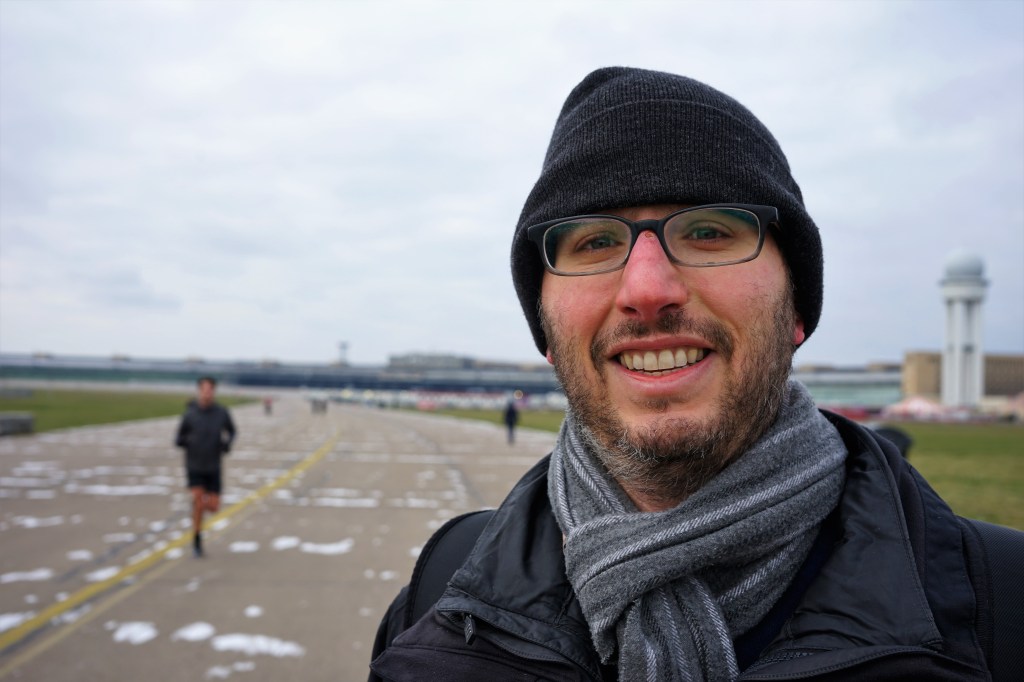
We were simply happy to walk along the former tarmac and read the information signs to learn of its history.
The site of the airport was originally Knights Templar land in medieval Berlin, and from this beginning came the name Tempelhof. Later, the site was used as a parade field by Prussian forces, and by unified German forces from 1720 to the start of World War I. In 1909, Frenchman Armand Zipfel made the first flight demonstration in Tempelhof, followed by Orville Wright later that same year. Tempelhof was first officially designated as an airport on 8 October 1923. Deutsche Luft Hansa (Lufthansa) was founded in Tempelhof on 6 January 1926.
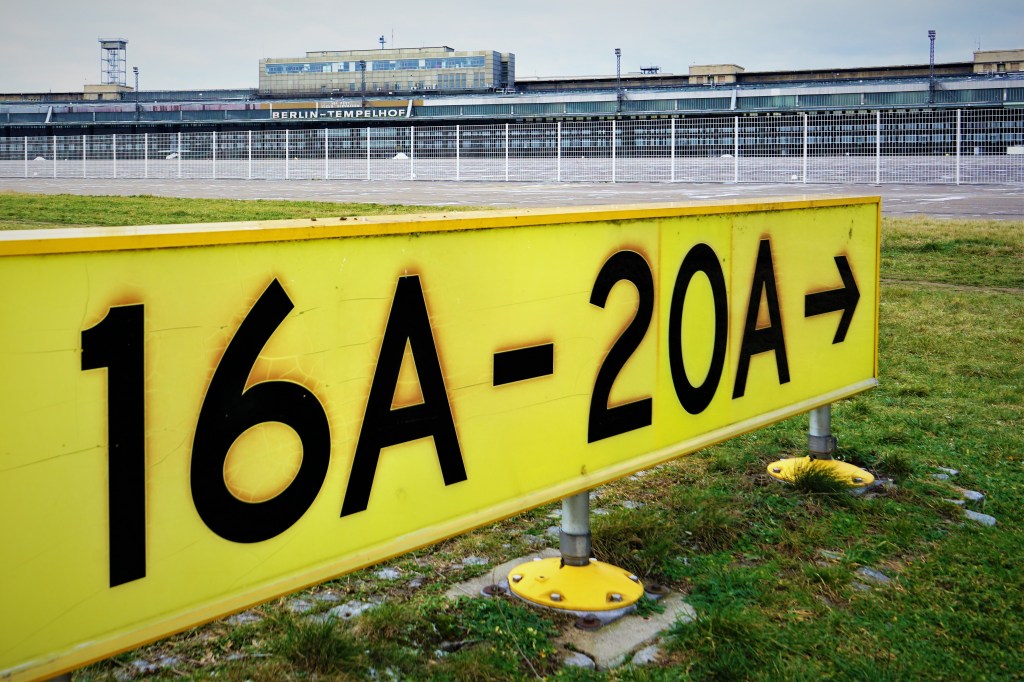
The old terminal, originally constructed in 1927, became the world’s first with an underground railway. The station has since been renamed Paradestraße, because the rebuilding of the airport in the 1930s required the airport access to be moved to a major intersection with a station now called Platz der Luftbrücke after the Berlin Airlift.
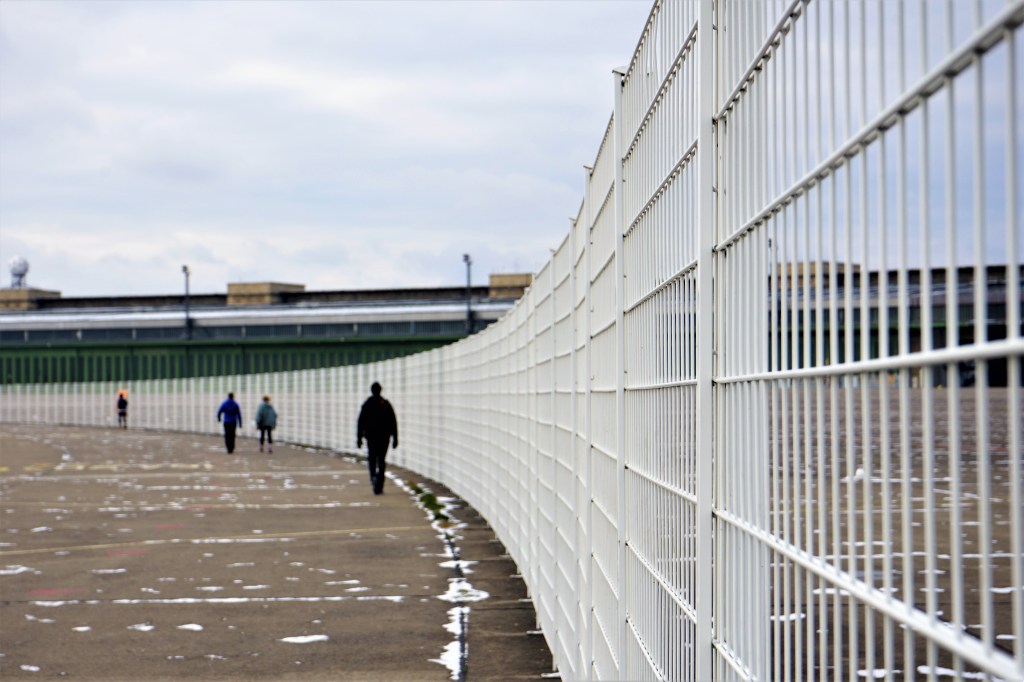
As part of Albert Speer’s plan for the reconstruction of Berlin during the Nazi era, Prof. Ernst Sagebiel was ordered to replace the old terminal with a new terminal building in 1934.
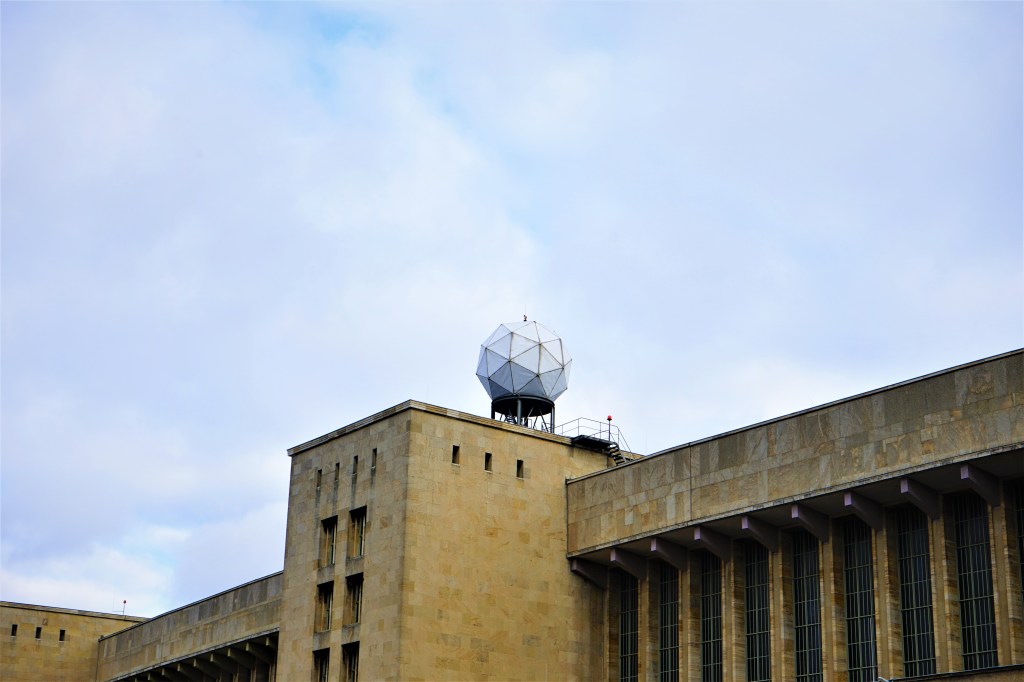
The airport halls and the adjoining buildings, intended to become the gateway to Europe and a symbol of Hitler’s “world capital” Germania, are still known as one of the largest built entities worldwide, and have been described by British architect Sir Norman Foster as “the mother of all airports”.
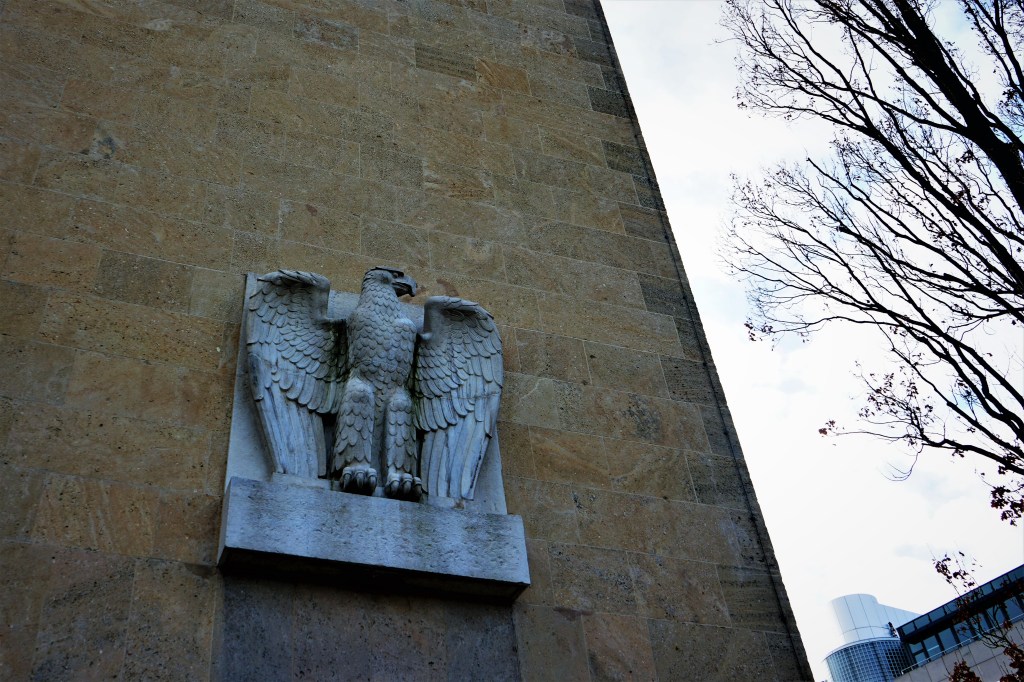
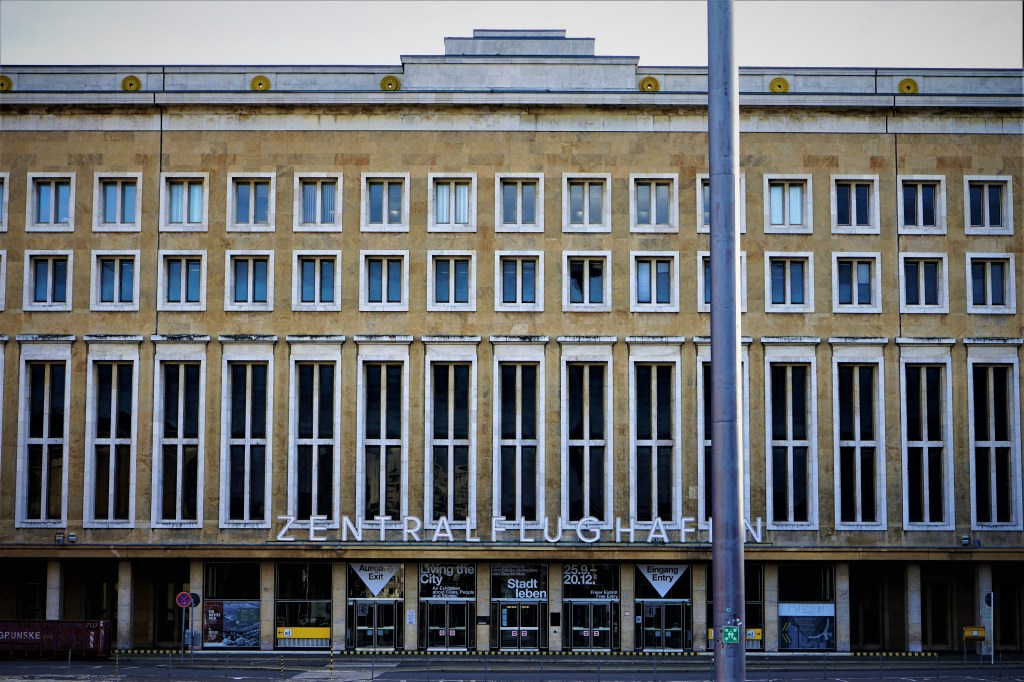
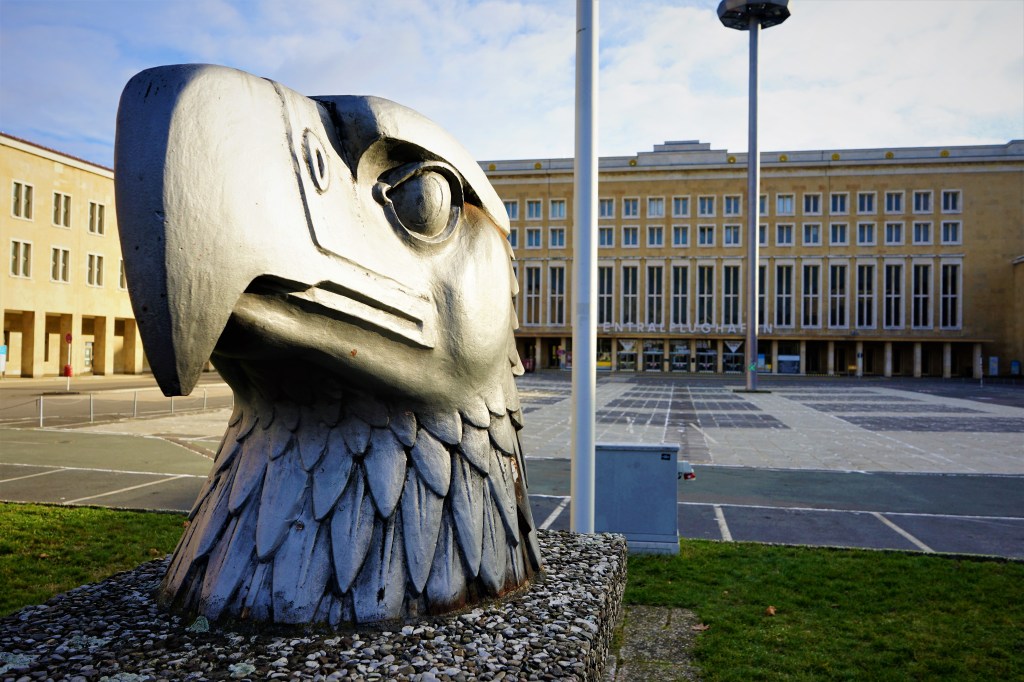
With its façades of shell limestone, the terminal building, built between 1936 and 1941, forms a 1.2-kilometre-long (0.75 mi) quadrant. The building complex was designed to resemble an eagle in flight with semicircular hangars forming the bird’s spread wings.
On 20 June 1948, Soviet authorities, claiming technical difficulties, halted all traffic by land and by water into or out of the western-controlled sectors of Berlin. The only remaining access routes into the city were three 20 mi (32 km)-wide air corridors across the Soviet Zone of Occupation. Faced with the choice of abandoning the city or attempting to supply its inhabitants with the necessities of life by air, the Western Powers chose the latter course.

Operation Vittles, as the airlift was unofficially named, began on 26 June when USAF Douglas C-47 Skytrains carried 80 tons of food into Tempelhof, far less than the estimated 4,500 tons of food, coal and other essential supplies needed daily to maintain a minimum level of existence. But this force was soon augmented by United States Navy and Royal Air Force cargo aircraft, as well as British European Airways and many of Britain’s fledgling wholly privately owned, independent airlines.
Tempelhof also became famous as the location of Operation Little Vittles: the dropping of candy to children living near the airport. The original Candy Bomber, Gail Halvorsen noticed children lingering near the fence line of the airport and wanted to share something with them. He eventually started dropping candy by parachute just before landing. His efforts were expanded by other pilots and eventually became a part of legend in the city of Berlin.
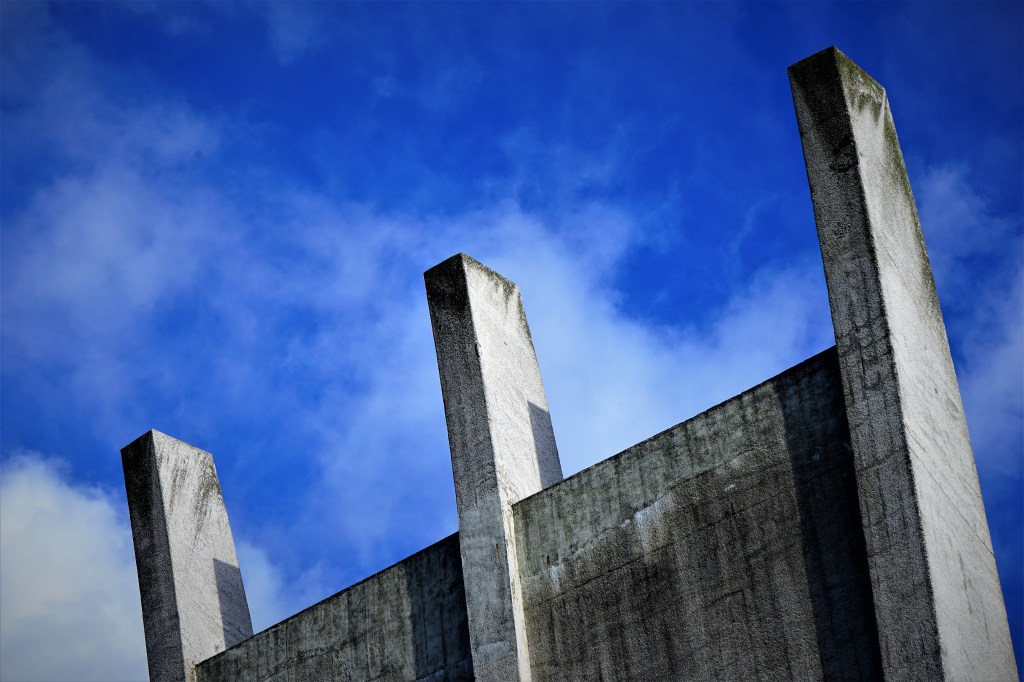
The Berlin Airlift Memorial on Platz der Luftbrücke, in front of the airport, displays the names of the 39 British and 31 American pilots who lost their lives during the operation, and symbolizing the three air corridors.


As the Cold War intensified in the late 1950s and 1960s, access problems to West Berlin, both by land and air, continued to cause tension. Throughout the Cold War years, Tempelhof was the main terminal for American military transport aircraft accessing West Berlin. In 1969 one of the pilots during the Berlin Airlift, and the original Candy Bomber, Gail Halvorsen, returned to Berlin as the commander of Tempelhof airbase.
With the fall of the Berlin Wall and the reunification of Germany, the presence of American forces in Berlin ended. The USAF 7350th Air Base Group at Tempelhof was inactivated in June 1993.

In July 1994, with President Clinton in attendance, the British, French, and American air and land forces in Berlin were deactivated in a ceremony on the Four Ring Parade field at McNair Barracks. The Western Allies returned a united city of Berlin to the unified German government. The U.S. Army closed its Berlin Army Aviation Detachment at TCA in August 1994, ending a 49-year American military presence in Berlin.
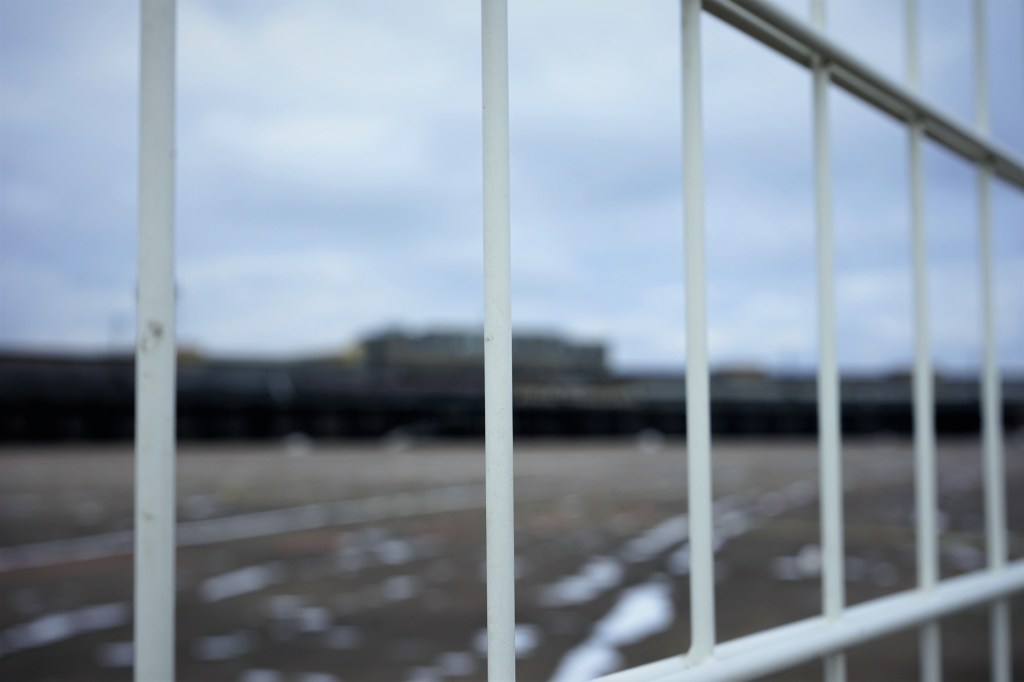
In 2017, Templehof was named the World’s Largest Refugee Shelter by the Independent after Merkel opened the German border to over 1.5 million Syrian refugees. During our tour today, Dave and I saw the remnants of that shelter, now behind a fence.
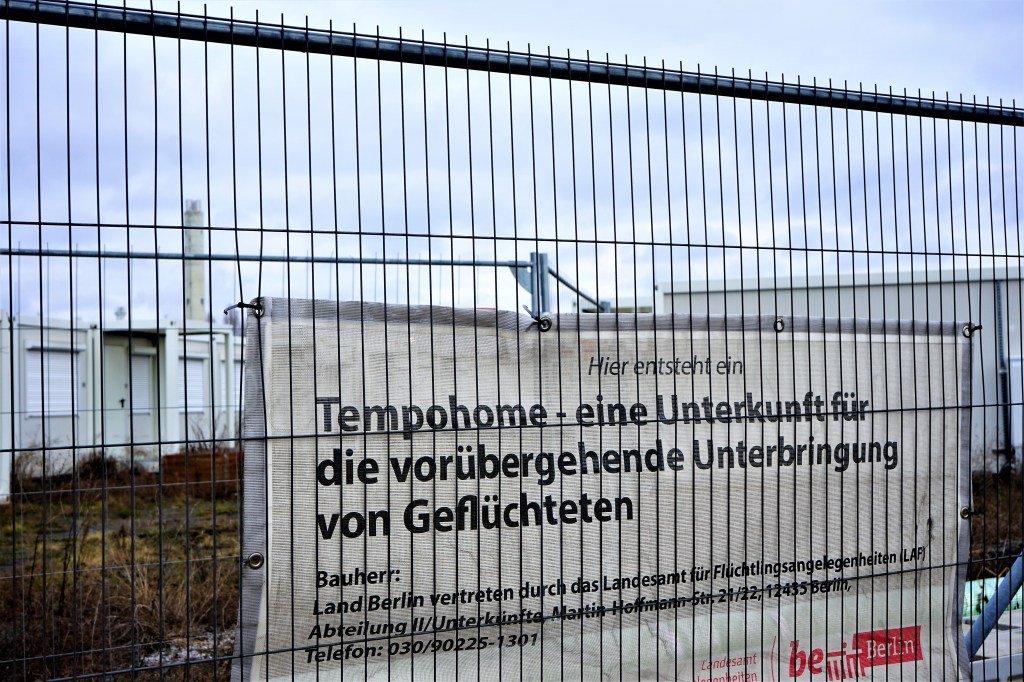
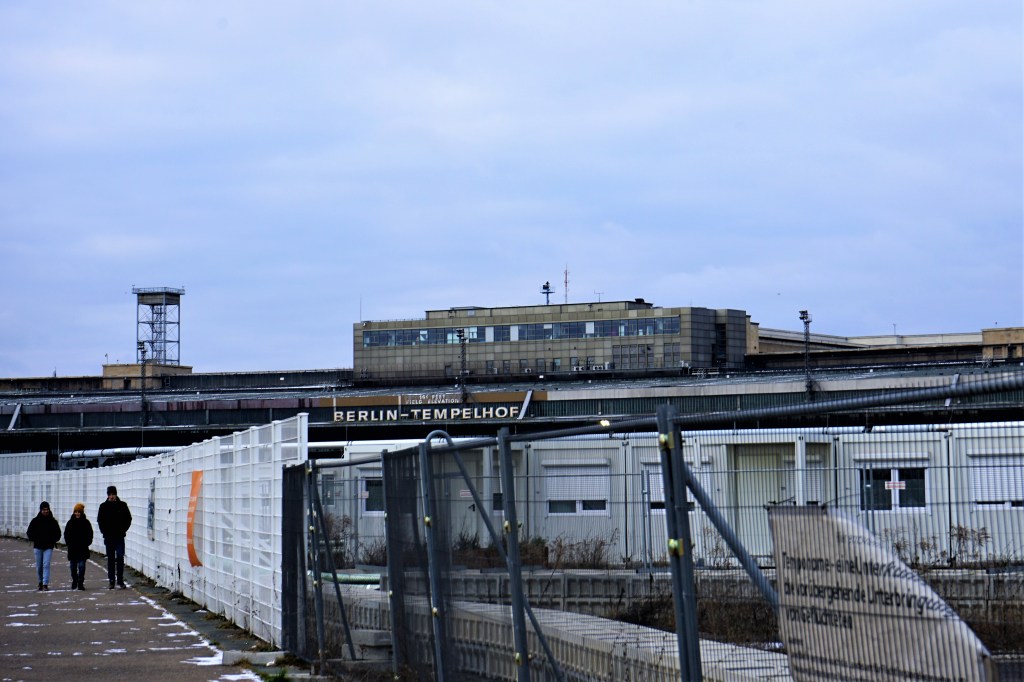
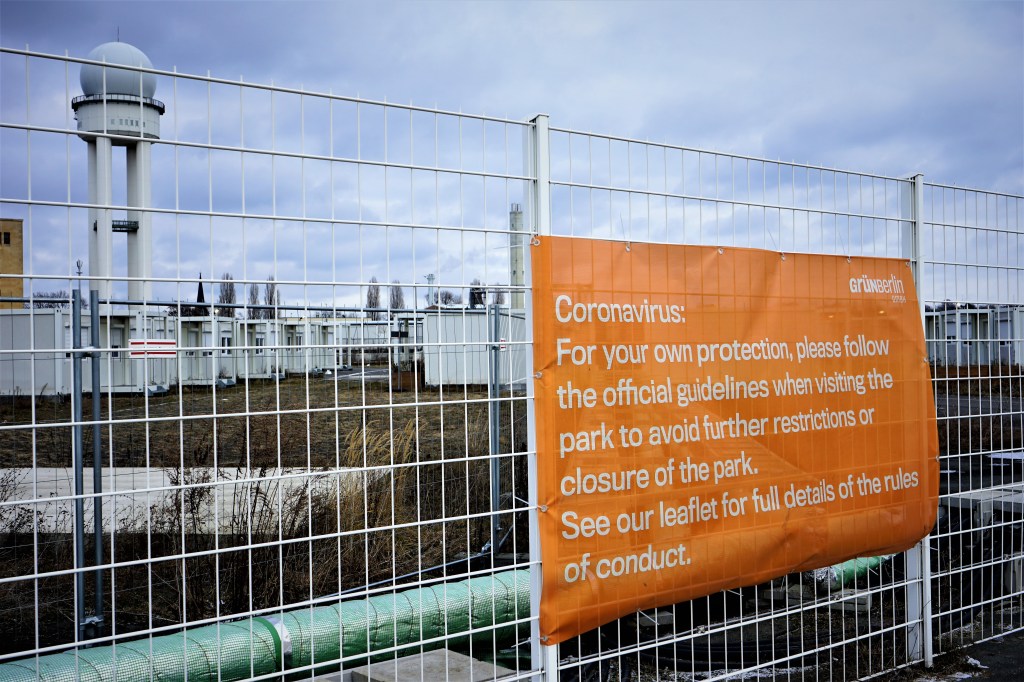
What was once the site of a concentration camp during World War II, has become a Coronavirus vaccination center for the City of Berlin as well as a site of movie production companies and the Berlin Police. I have no doubt that Templehofer Feld will continue to make it’s mark on history in times to come.
 Berlin Lubells: Stories of Life in Berlin from an American Expat Mom's First Experience Living Abroad