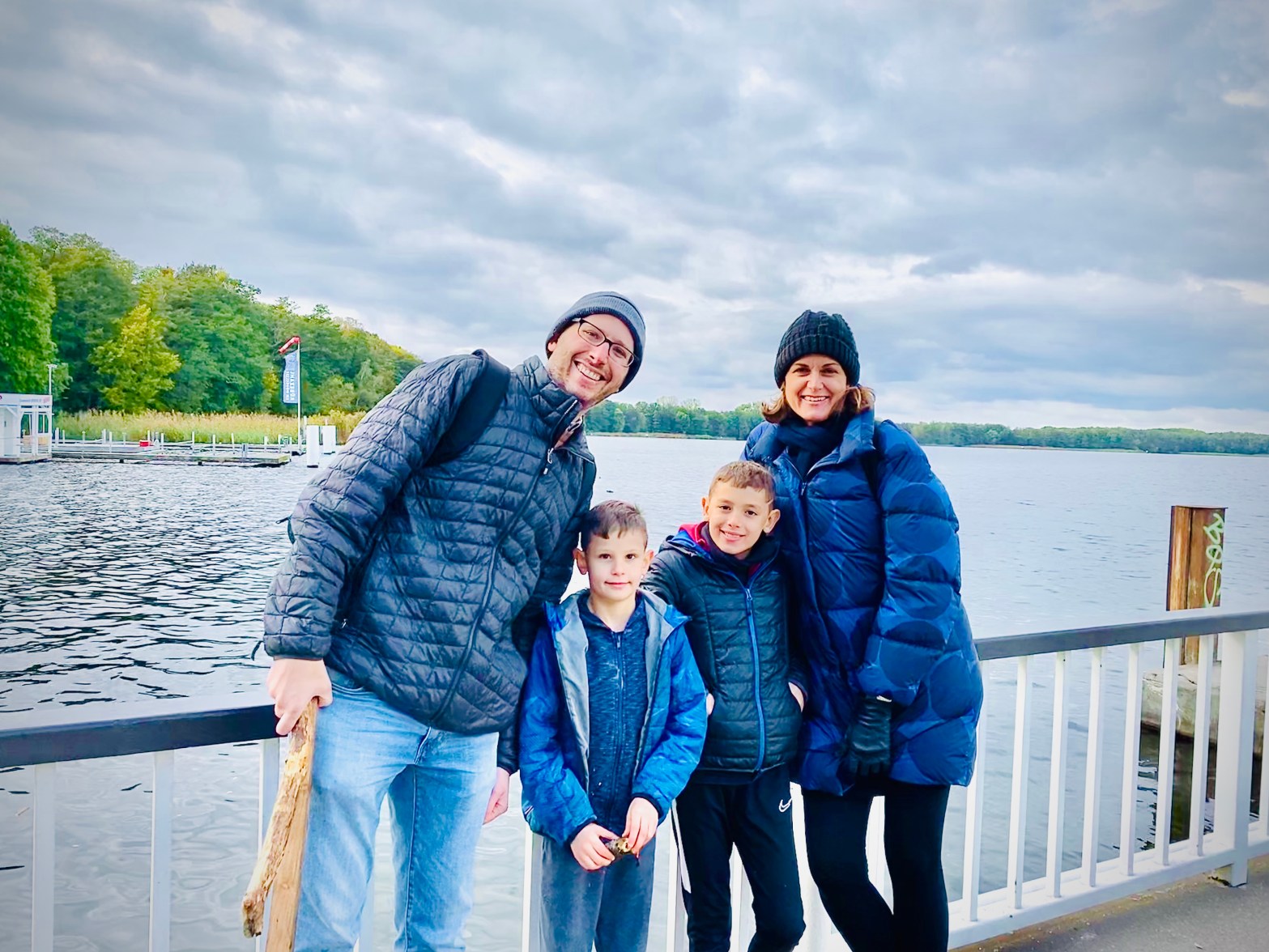
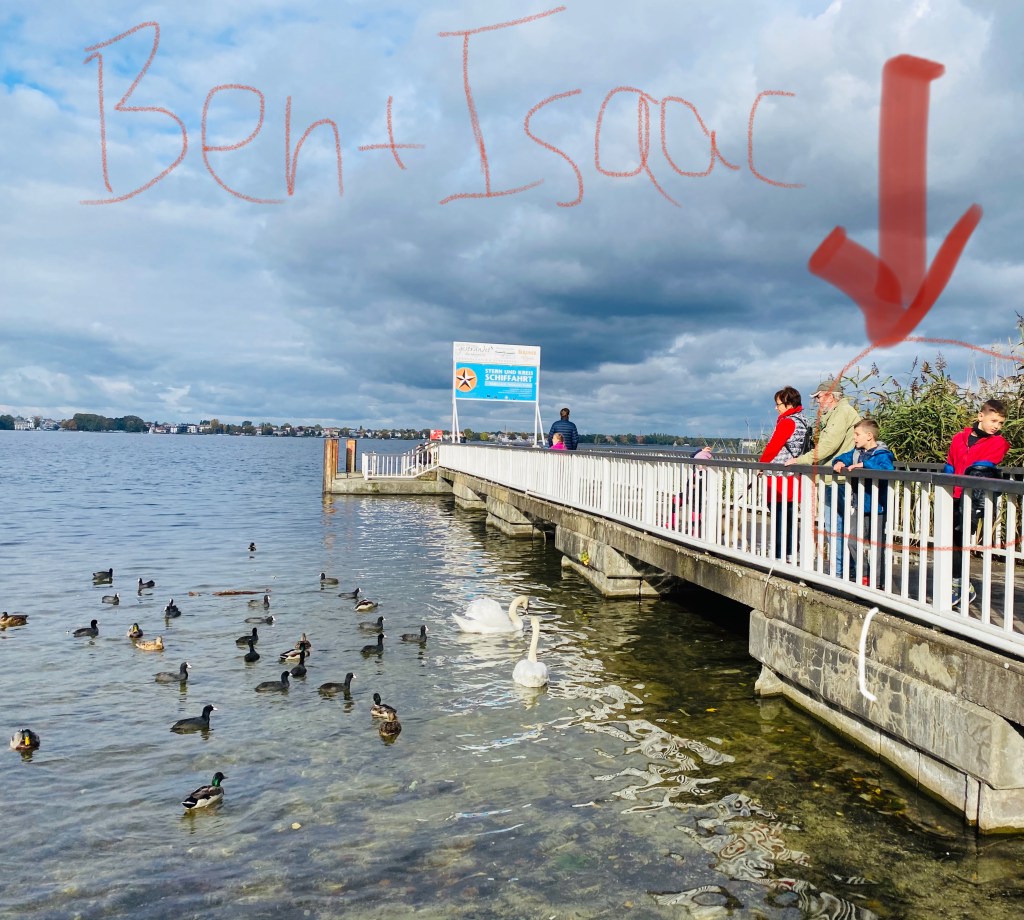
With Coronavirus on the rise, instead of our normal jaunt to warmer countries, we booked a week in the Harz Mountains, a three hour drive from Berlin.
After our summer of exploring the northern coast of Germany (https://atomic-temporary-144439175.wpcomstaging.com/2020/07/18/summer-2020/) we decided again not to risk infection by traveling abroad and to also see a new part of Germany.
However, with an increase in the number of cases in Germany, the state we were planning to visit started requiring a negative COVID test taken 48 hours or less before arrival for visitors coming from „hot spots“. And unfortunately, Berlin fell into that category
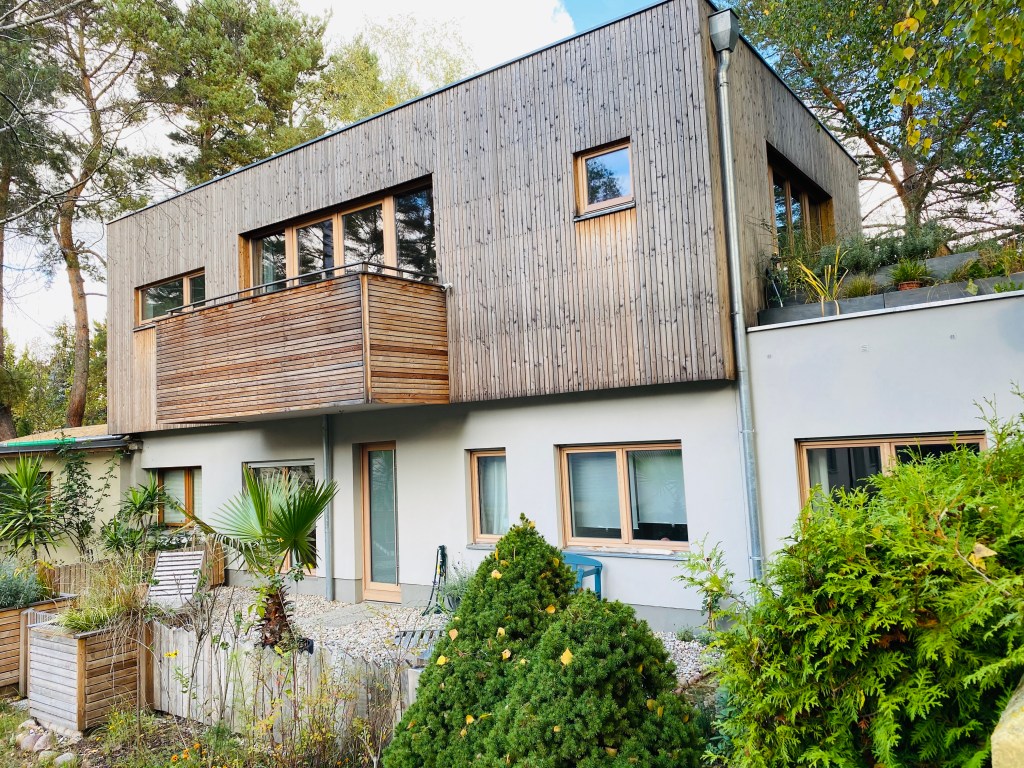
Not wanting to risk the timing of results in order to be able to travel, we cancelled our mountain trip and instead booked a beautiful home near a lake in the far eastern edge of Berlin.
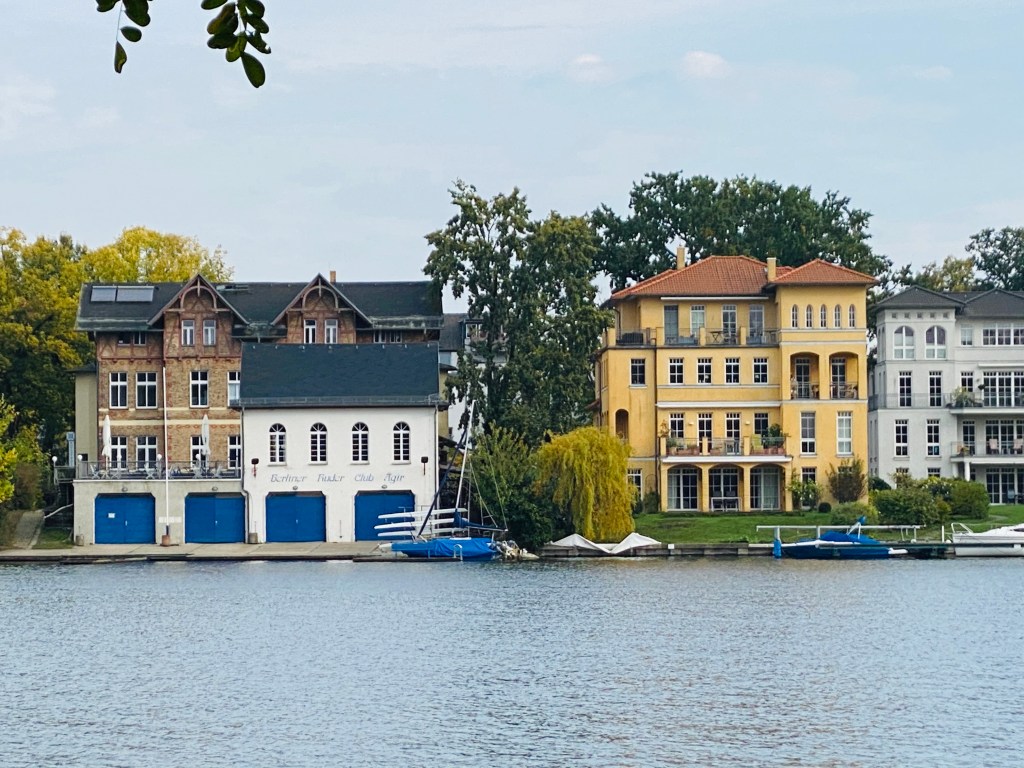
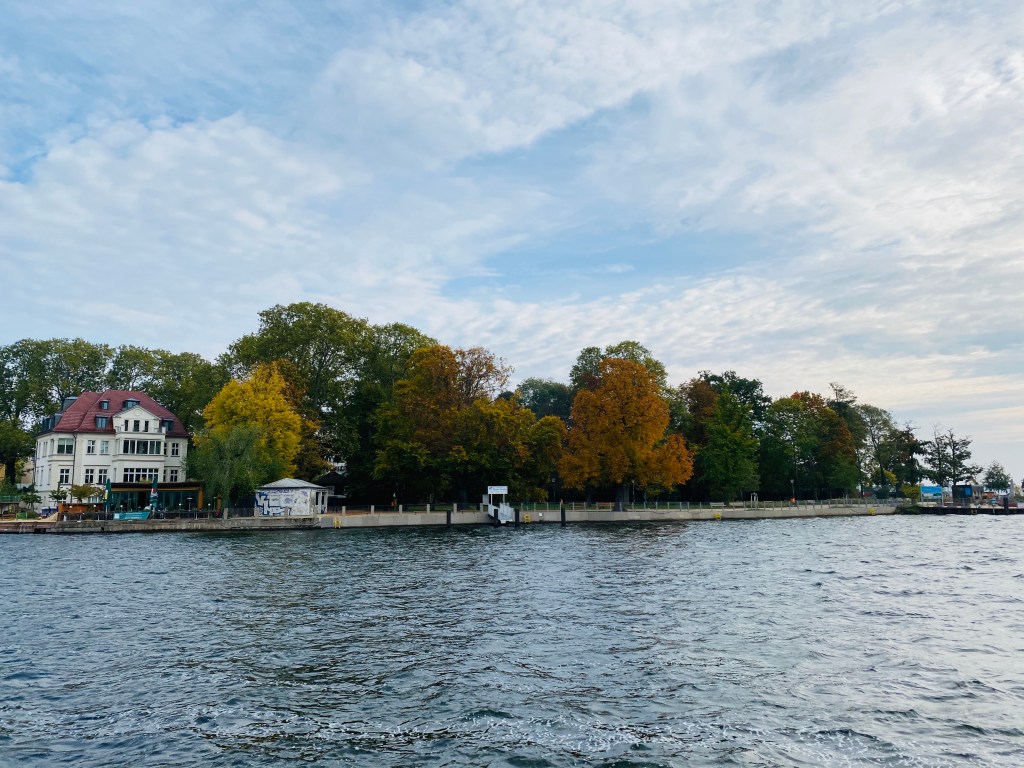
We stayed in Friedrichshagen on the north end of the Mügglesee (just east of Köpenick) a forty minute drive east of our Mitte apartment and only five minutes from the neighboring State of Brandenburg .

Friedrichshagen is a neighborhood within the Berlin borough of Treptow-Köpenick.
Until 2001 it was part of the former borough of Köpenick.

In the 19th century Friedrichshagen was a popular destination for excursions and gradually developed into a colony of villas.
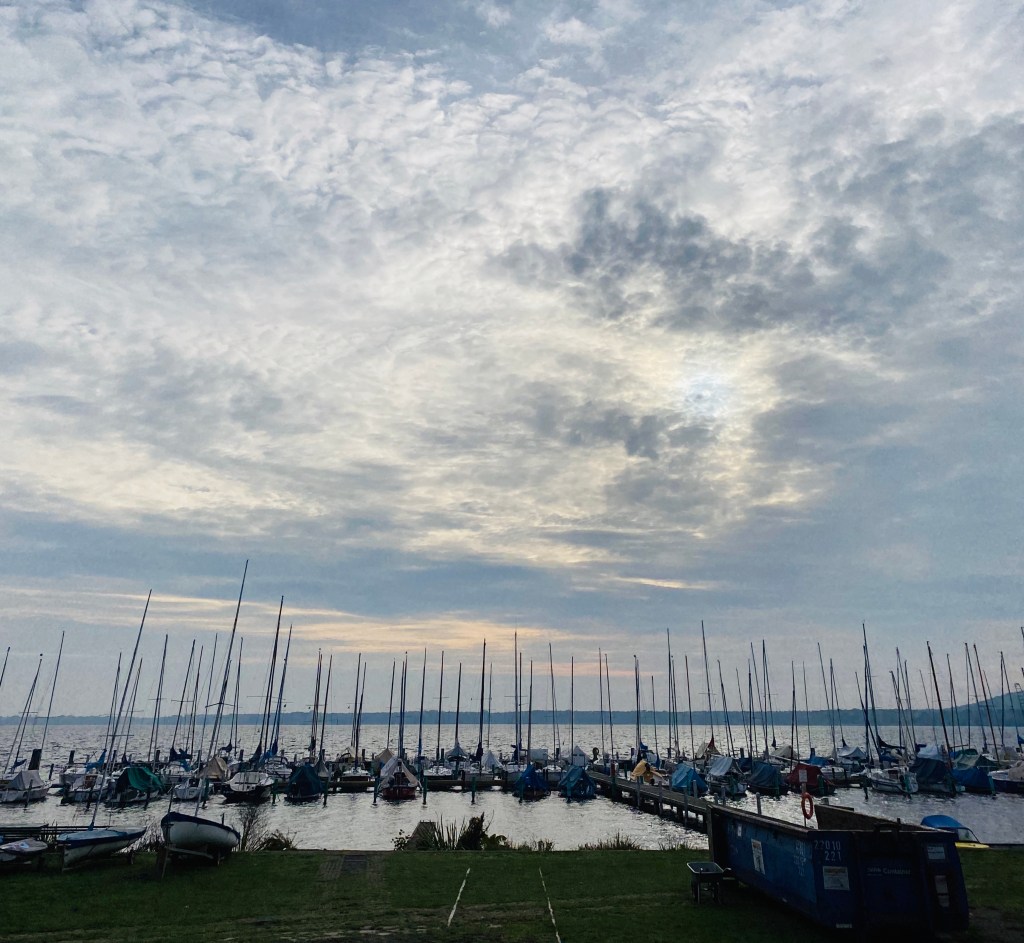
The Friedrichshagener Dichterkreis (Circle of Poets) was founded there because of its tranquility and closeness to nature.

Not only poets but also artists lived and still live there: every summer the studios are opened and there are also many galleries.
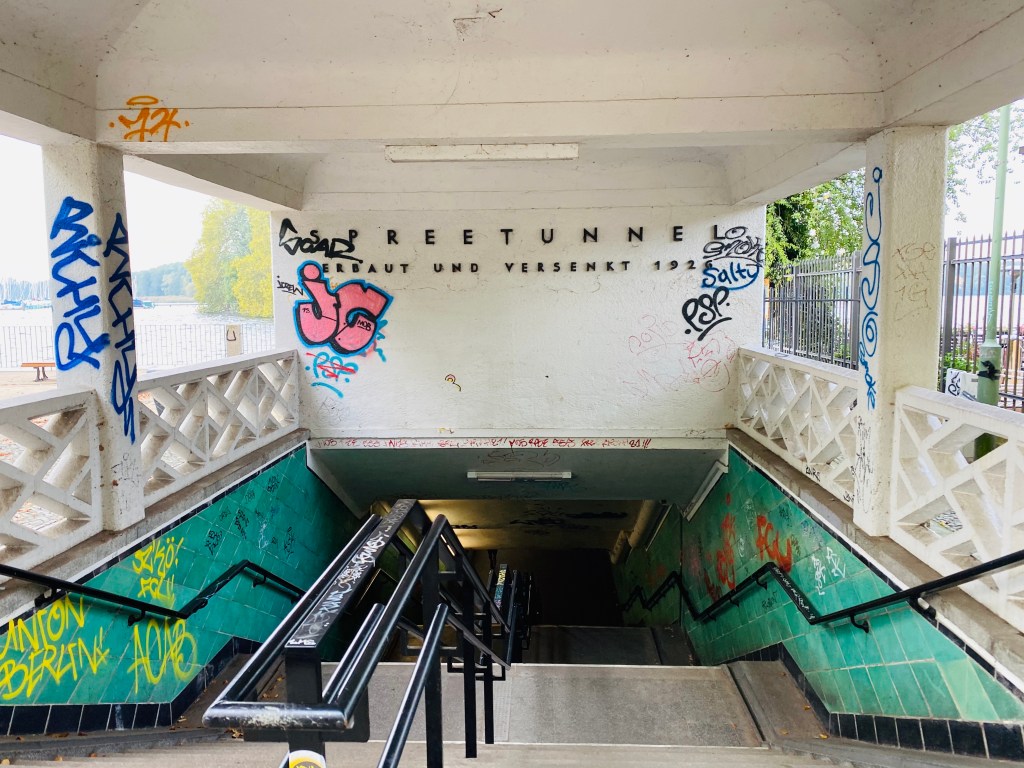
A special feature is the Spree tunnel from the 1920s, which makes it possible to cross under the Spree from Friedrichshagen to Köpenick.
The Bürgerbräu in Friedrichshagen was Berlin’s oldest brewery until it closed in 2010. Part of the brewery building has now been converted into a museum, which allows visitors to experience the historic beer production process.
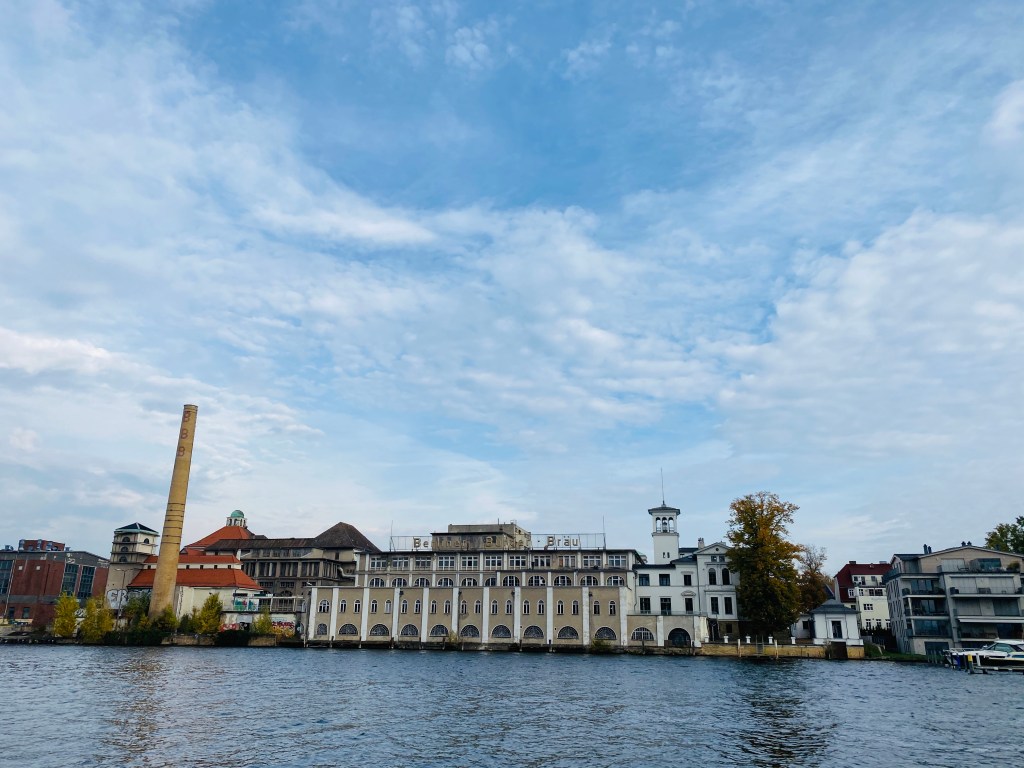
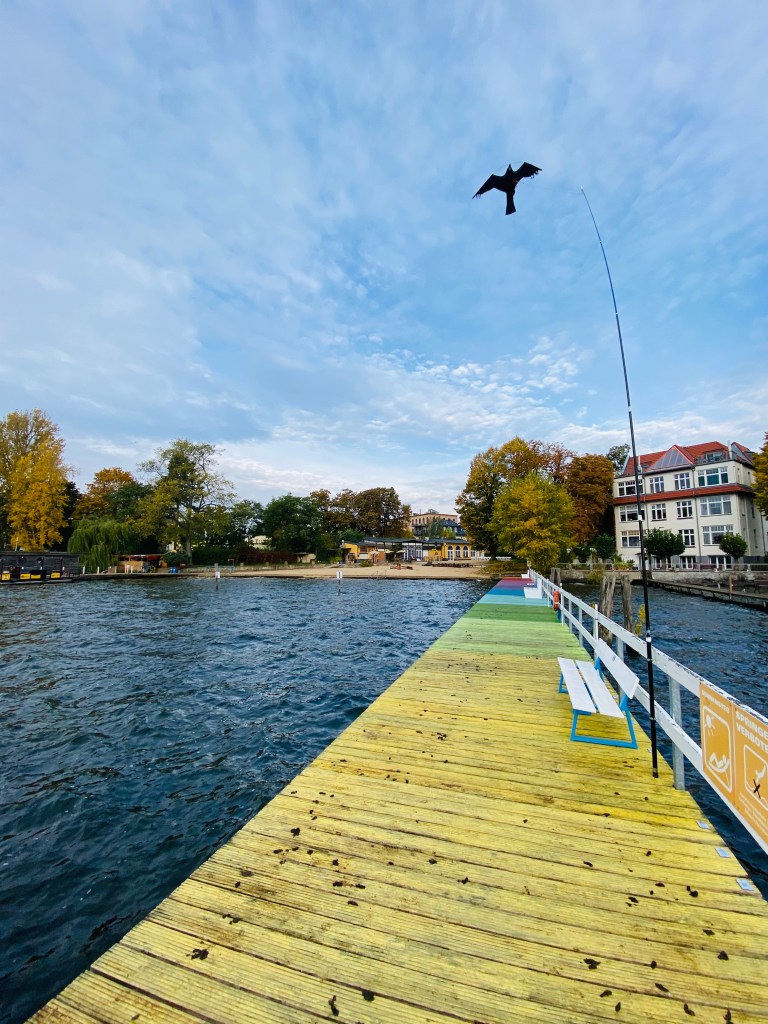
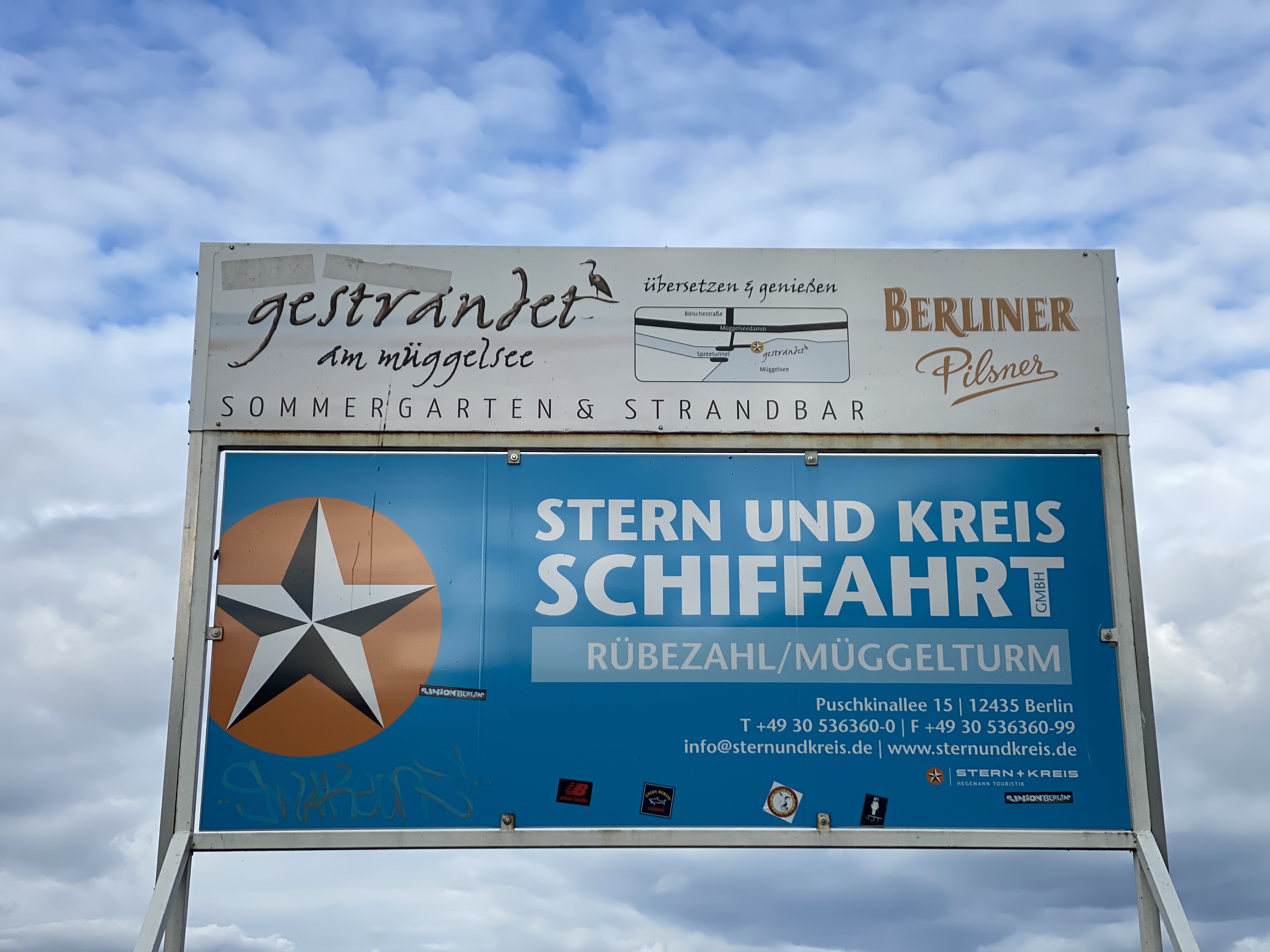
We arrived the second Saturday of our two week Herbstferien (fall break) and soon found ourselves driving fifteen minutes to the south end of the Mügglesee for lunch at the Rübezahl am Mügglesee.
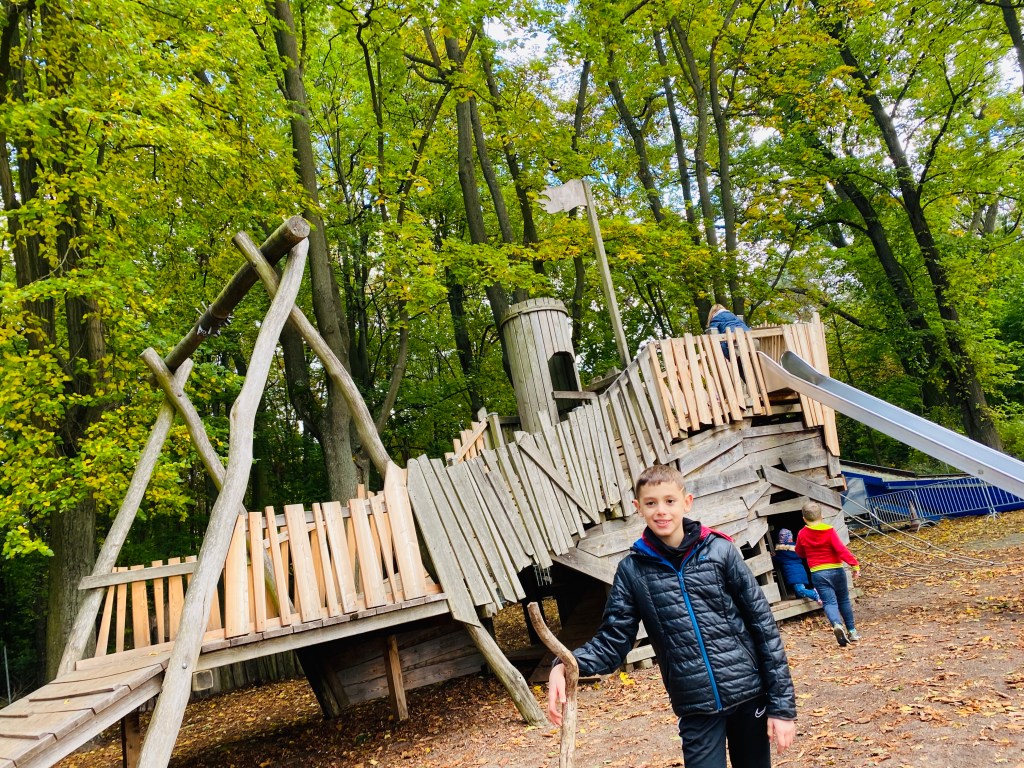
Here the boys played on the playground while we ordered lunch.
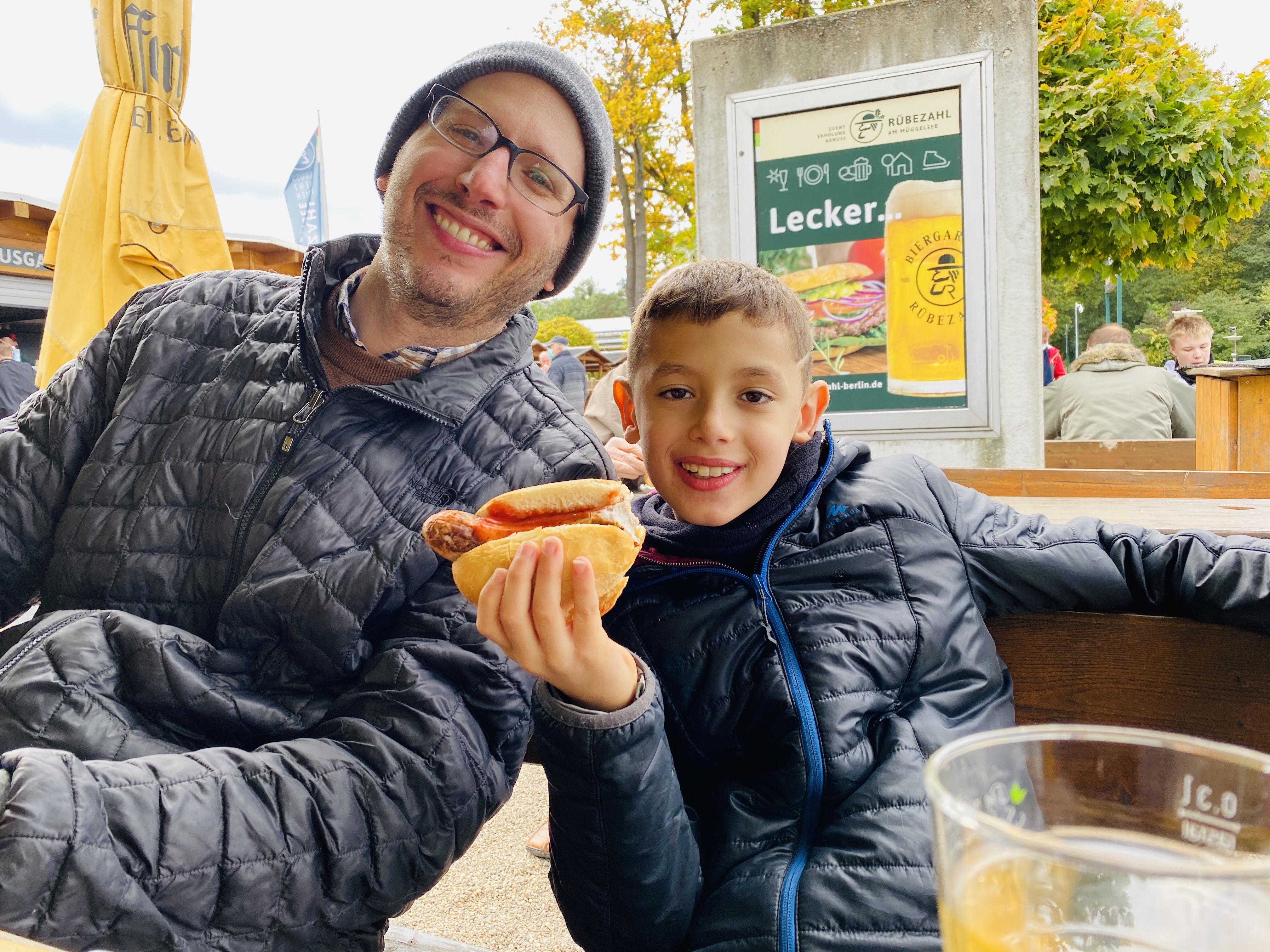
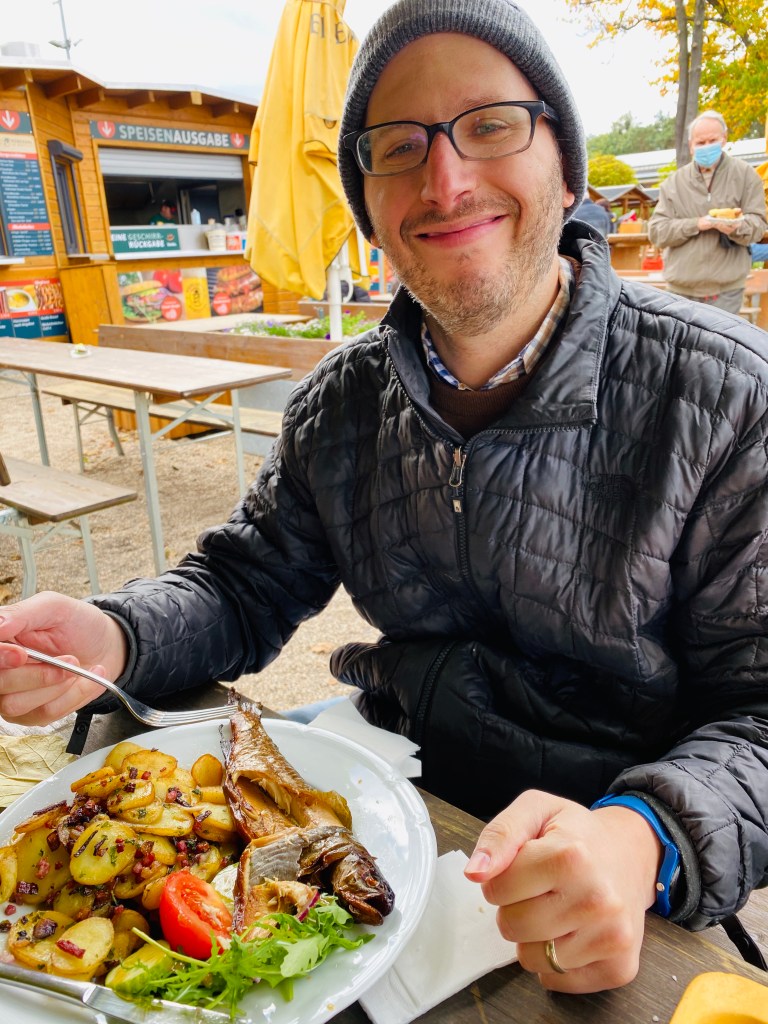
They happily played (with the normal amount of fighting, of course) both on the playground and on the pier while Dave and I enjoyed our fish and drinks.

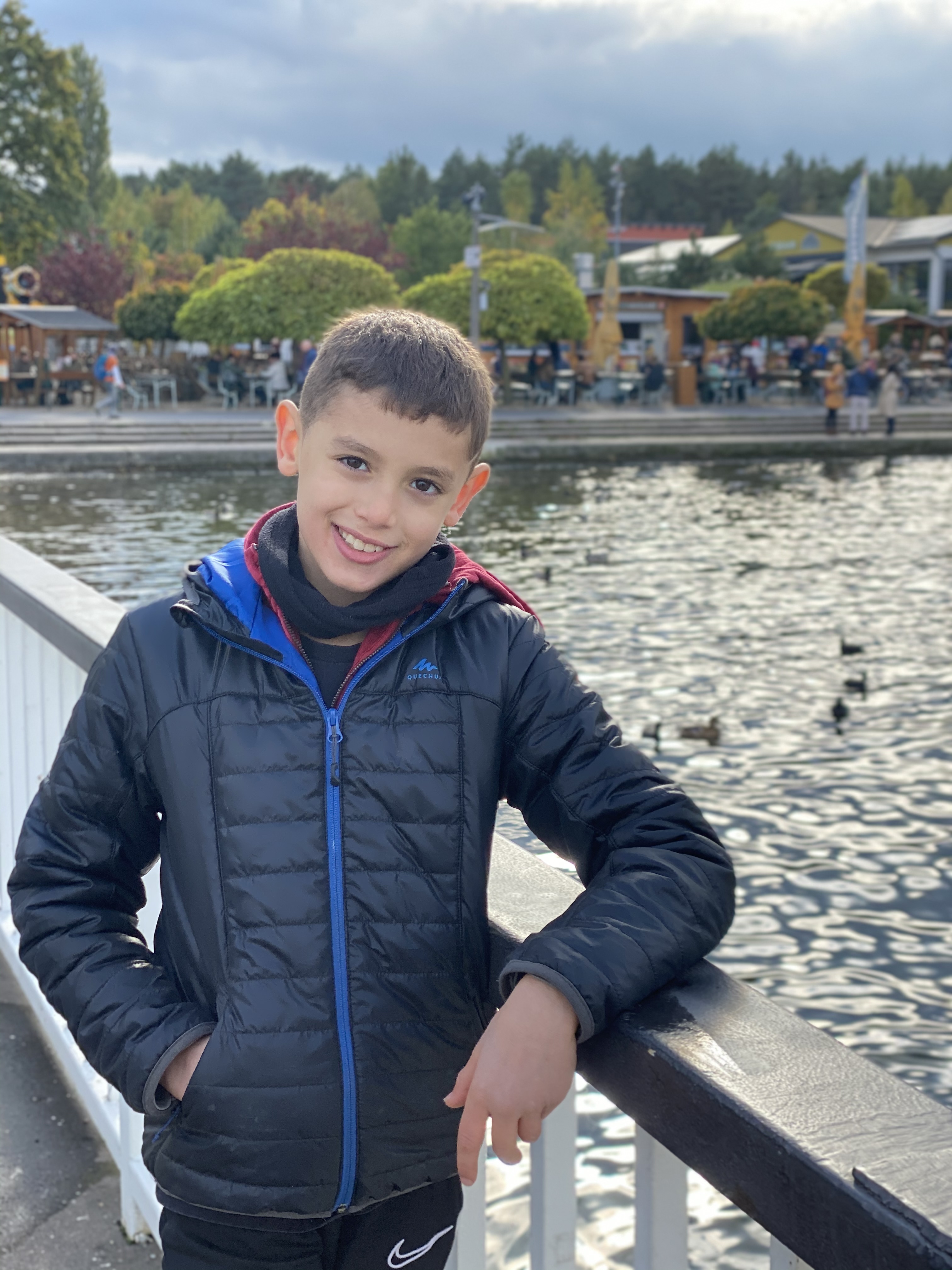

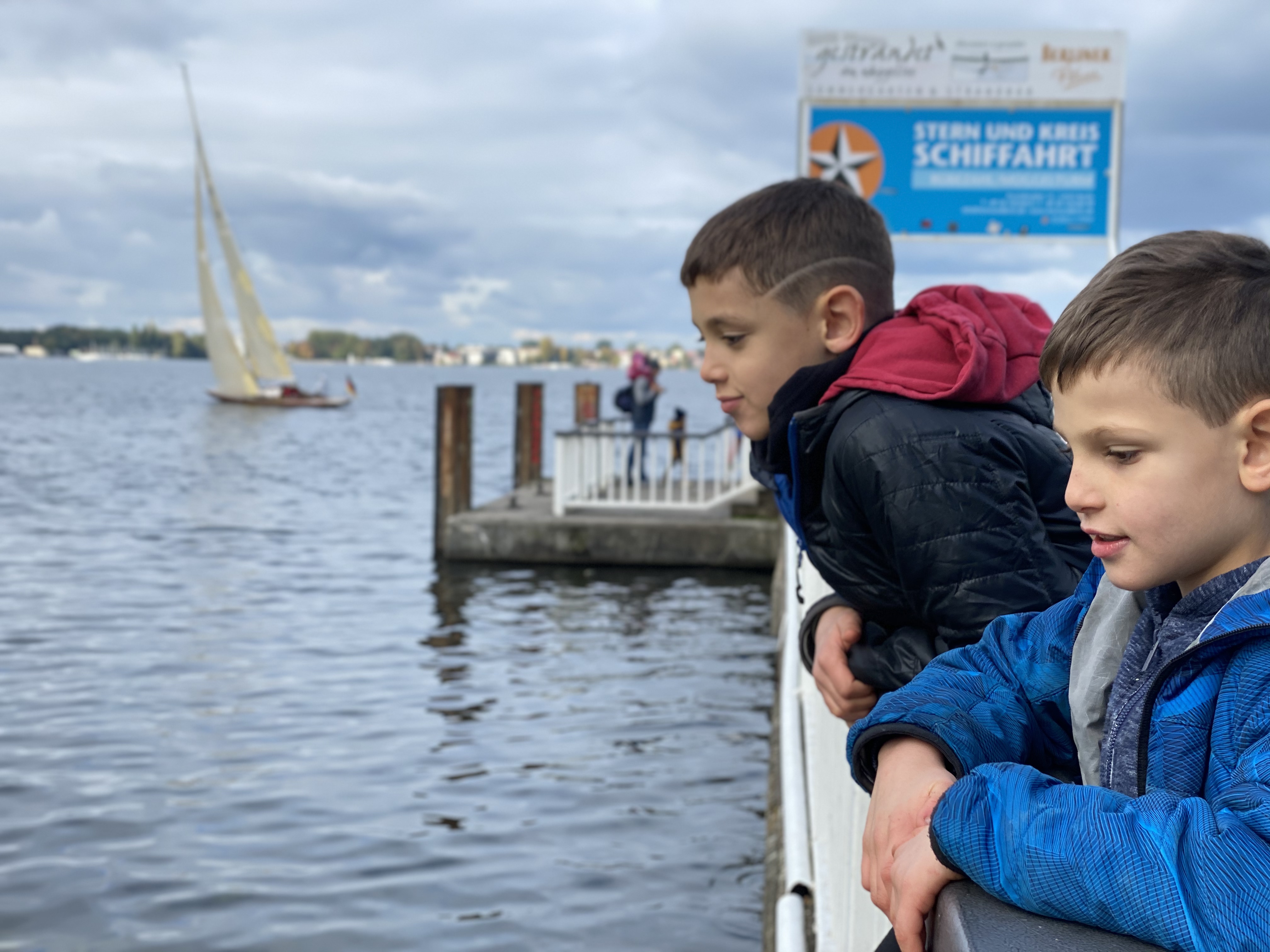
After exploring the south shore of the Mügglesee, we dropped the boys off at the rental house and drove into Brandenburg for groceries for the week. We took it easy that night eating diner at home and canceling our pre-booked restaurant reservation.
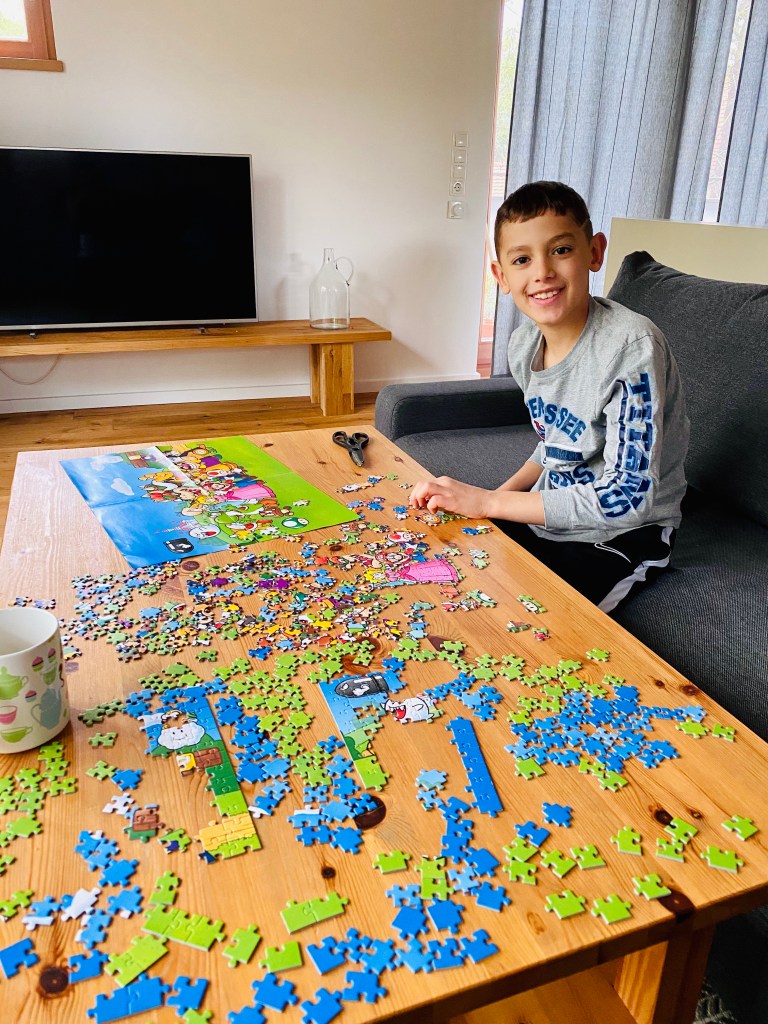
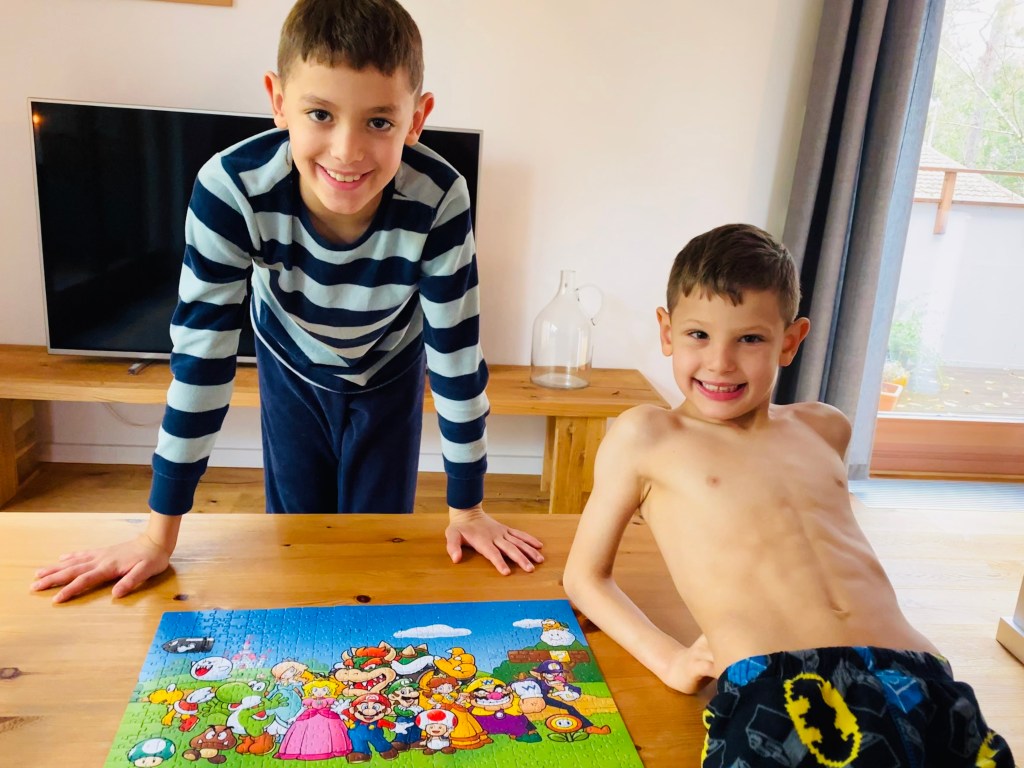
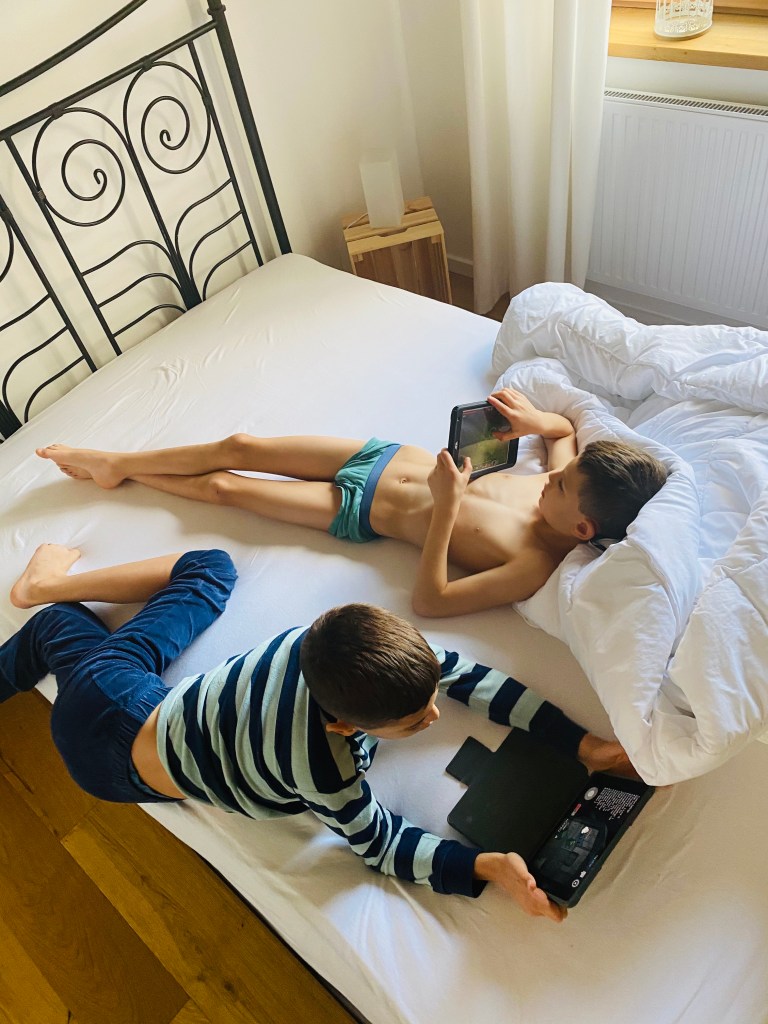
The next day we all stayed in our PJs and watched movies, worked on a puzzle and played games. It was the perfect break from the normal hustle and bustle.
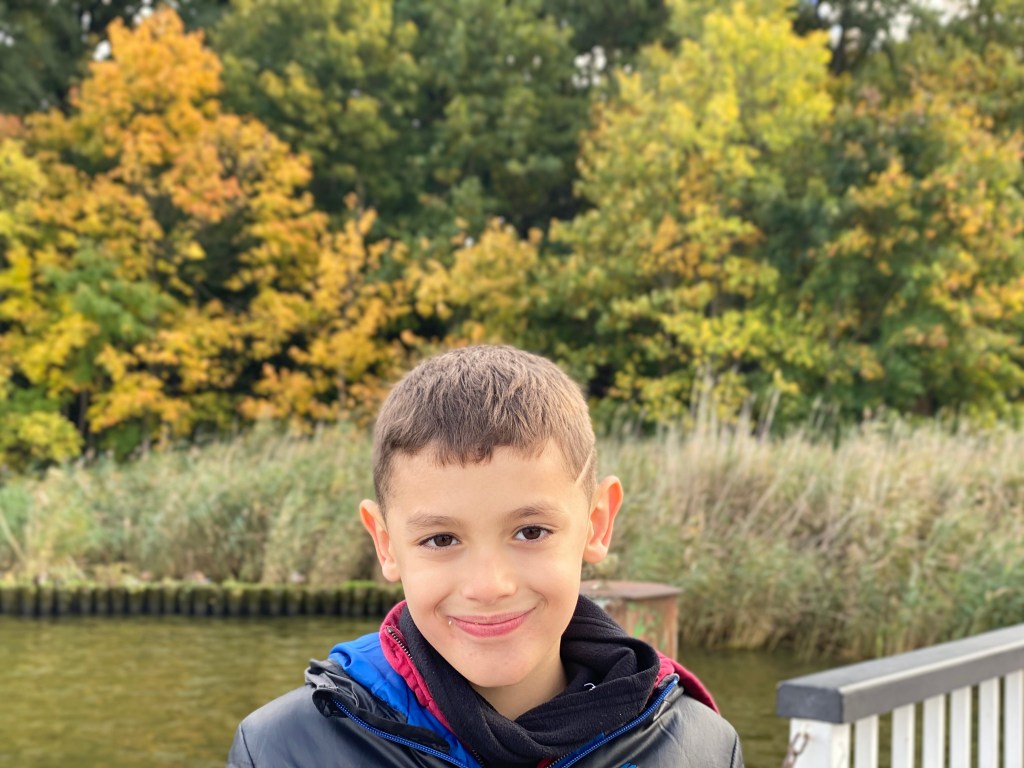
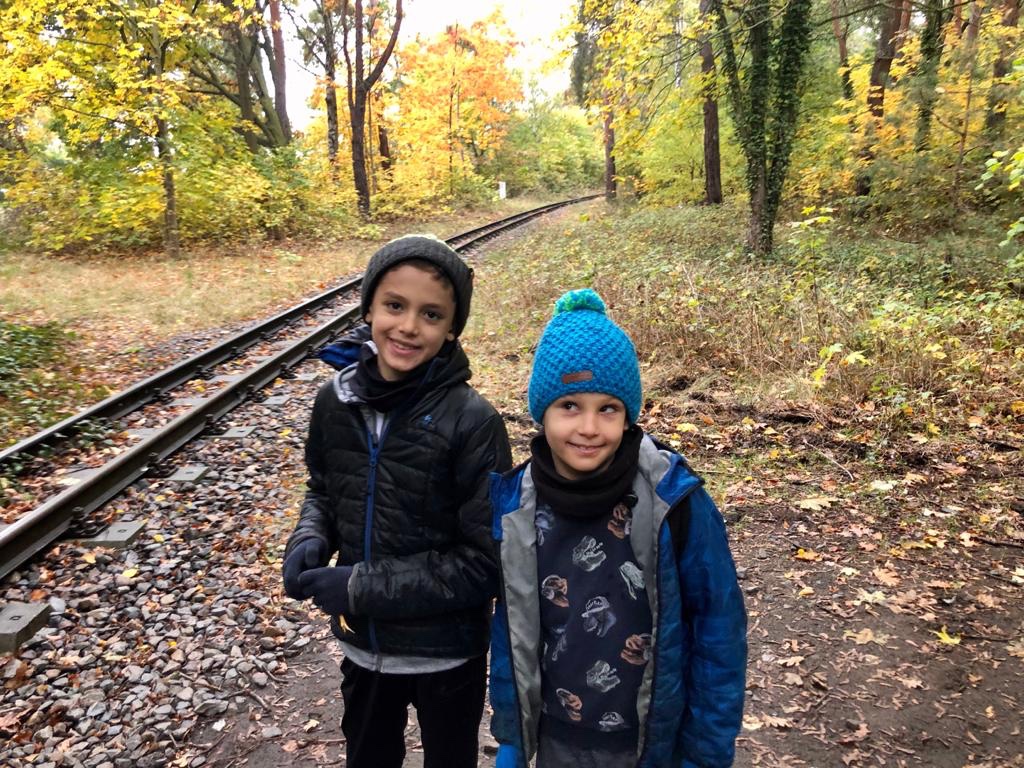
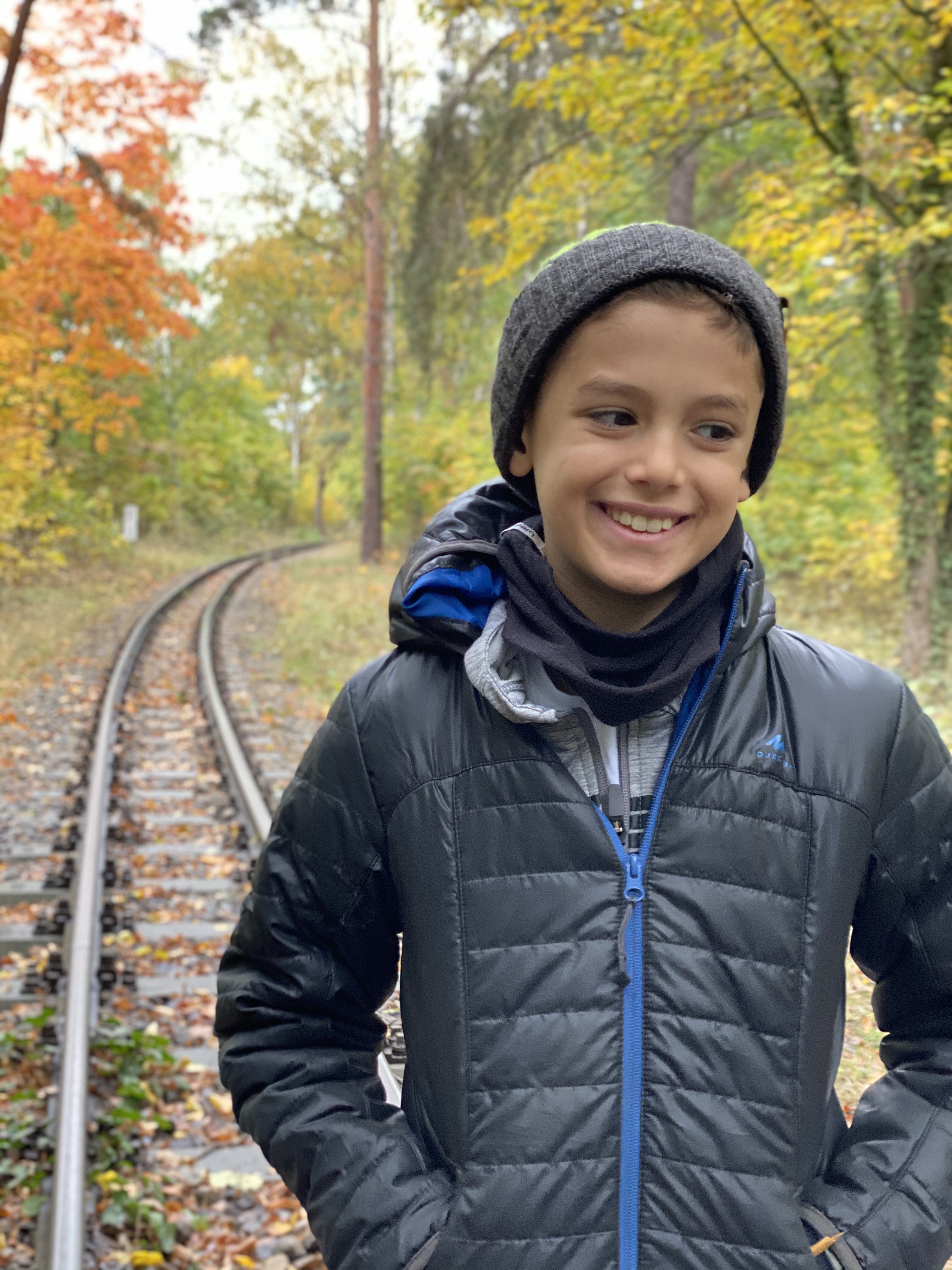
While in the area, I longed to do some hiking, especially with the fall colors as magnificent as they were.
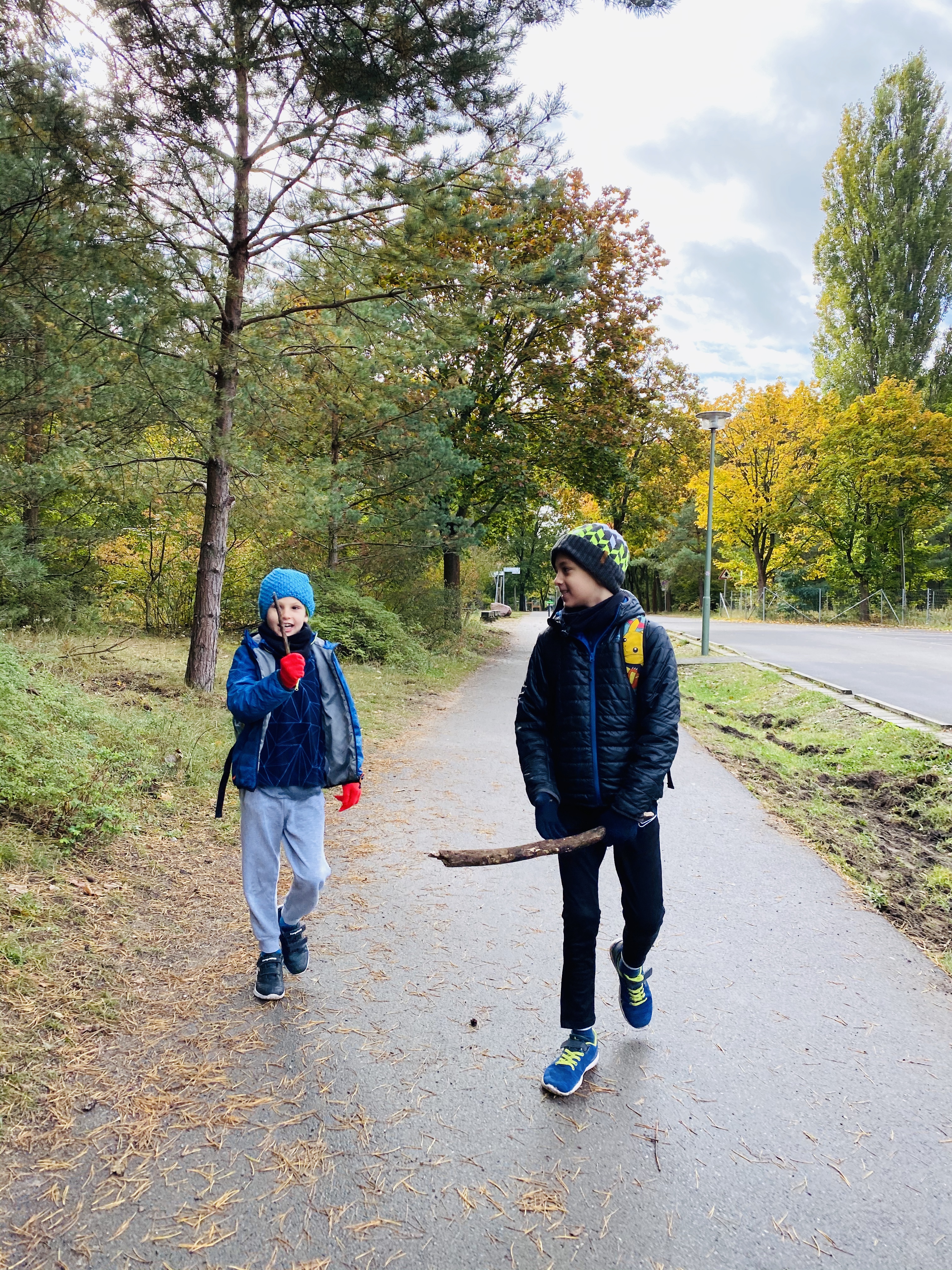
One of Isaac‘s classmates, Oliver, along with his mom and sister, met us to hike on the south end of the Mügglesee.
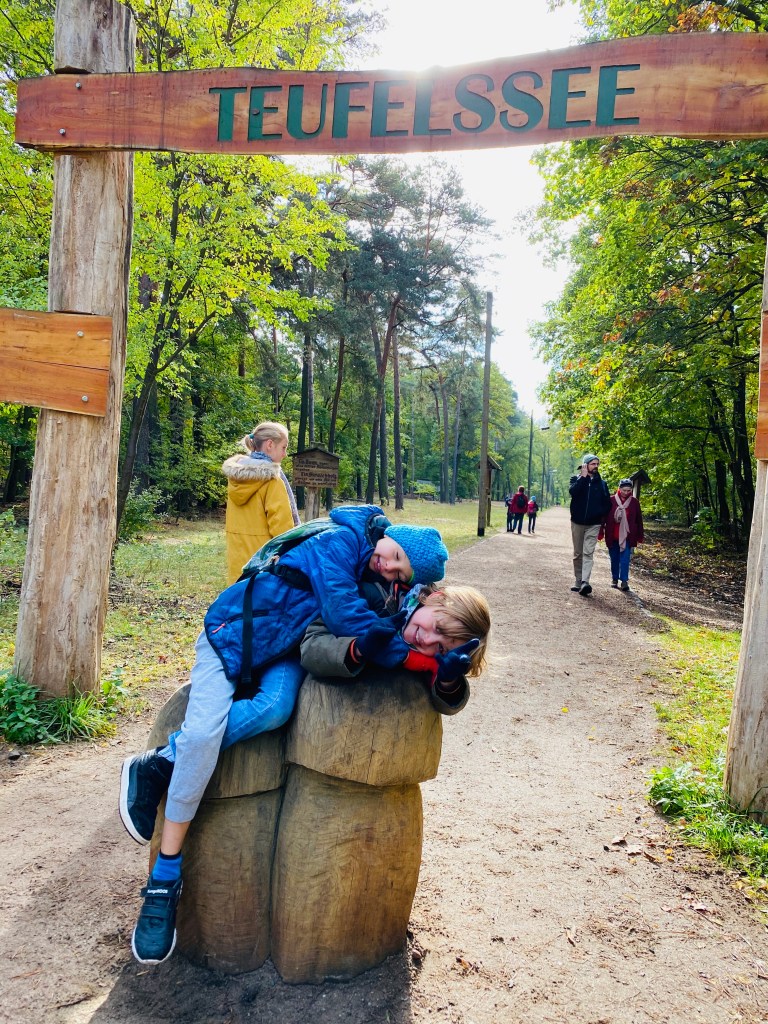
Together Uta, Oliver‘s mom, and I planned a picturesque route to the Müggleseeturm (Tower), Teufelsee (Devil‘s Lake) and Müggleberge, a mountain formed during the ice age which is the highest natural point in Berlin.

The first tower on this spot was built in 1880, but was unpopular because it was too short to afford a good view.
Ten years later, a restaurant was added and the tower was expanded to 27m high and attracted 52,000 visitors that year alone.
Fast forward to 1945, as the Soviet army approached Berlin the tower was declared a military object and used as a radio transmission tower as well as an observation post for artillery units.
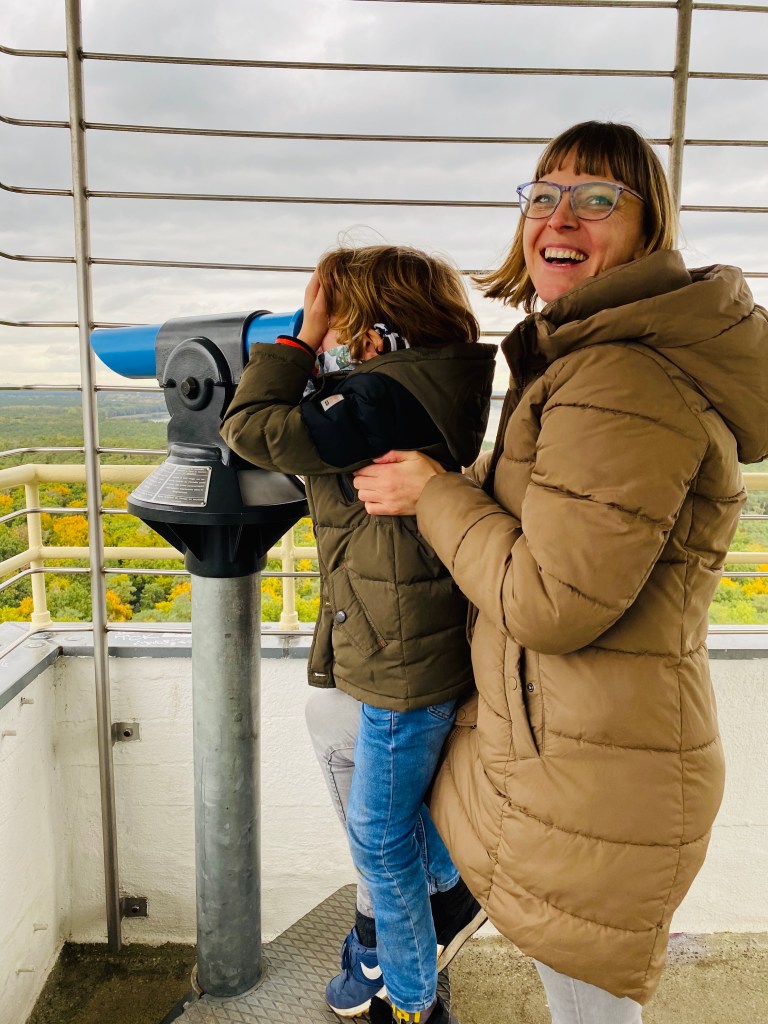
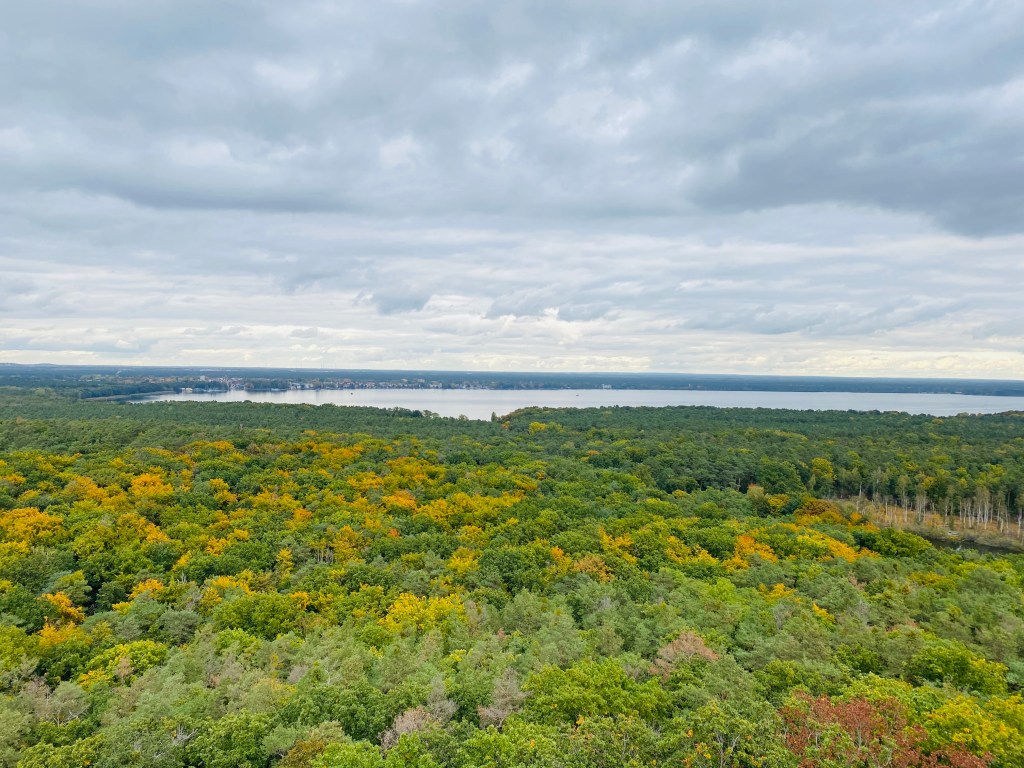
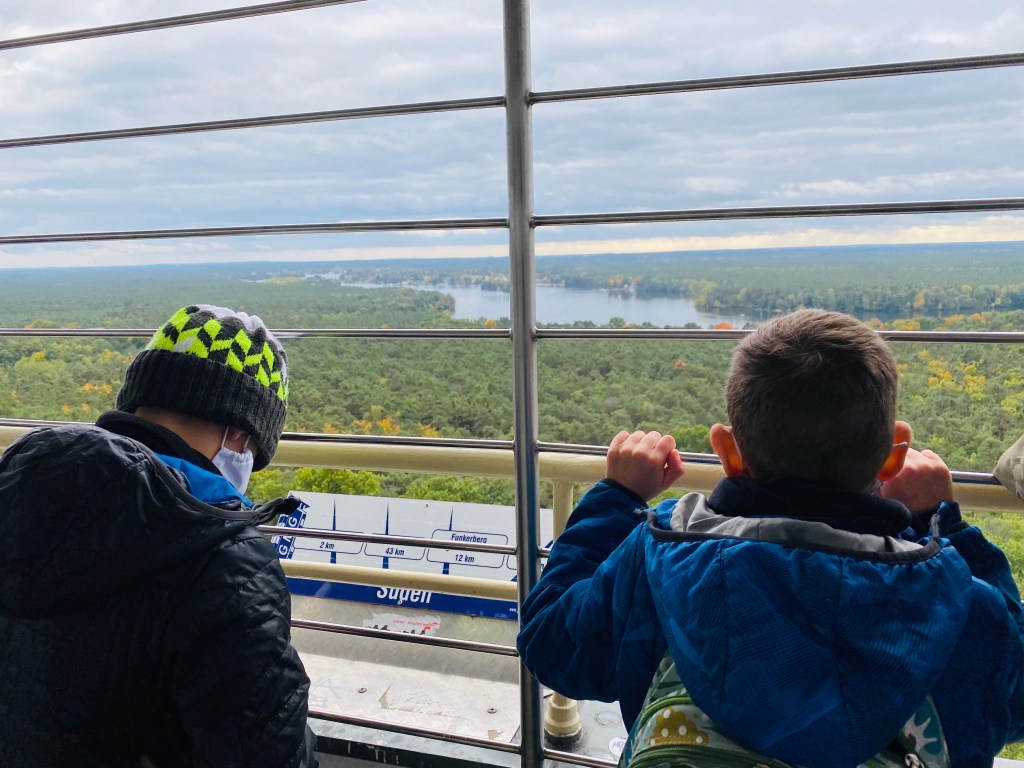
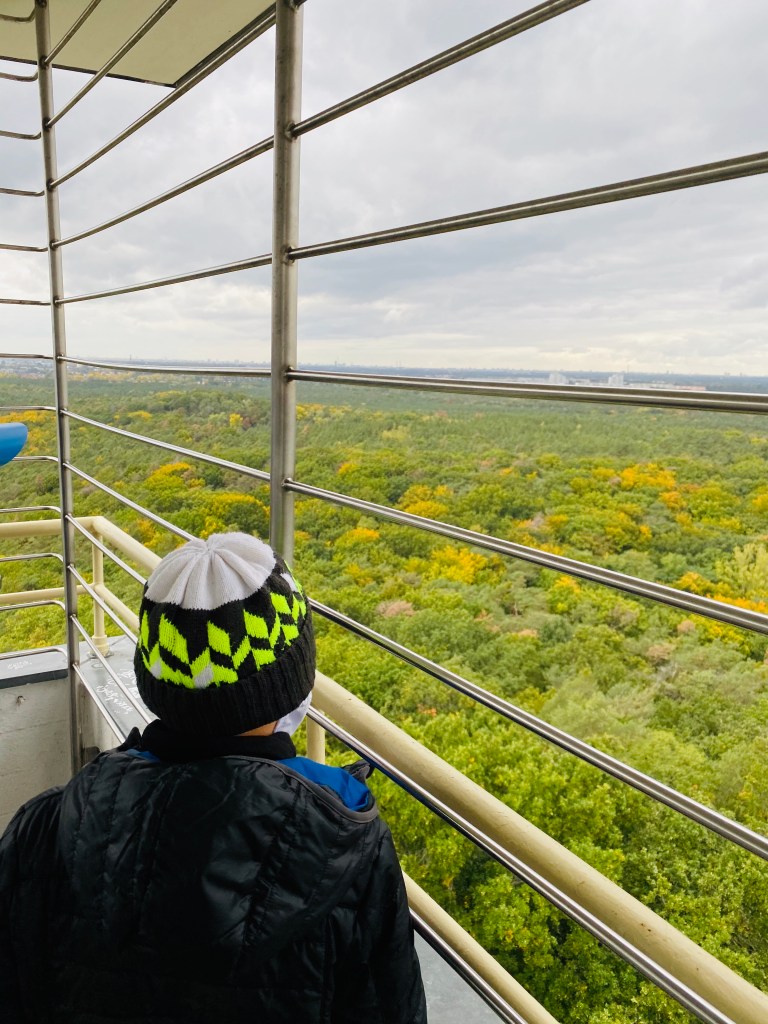
While it survived the DDR, today’s updated tower is 29.61 m high, has 126 steps and attracts a quarter of a million visitors annual.
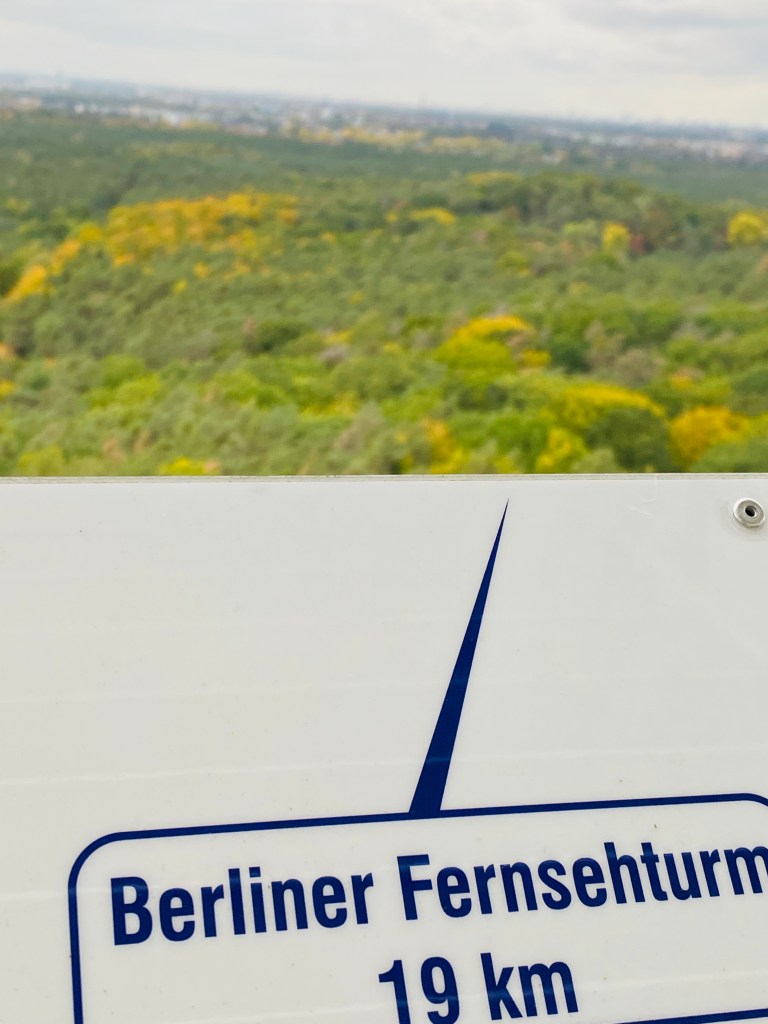
On clear days, one can see downtown Berlin, Schönefeld Airport, Teufelsee (Devil’s Lake) and the Mügglesee.
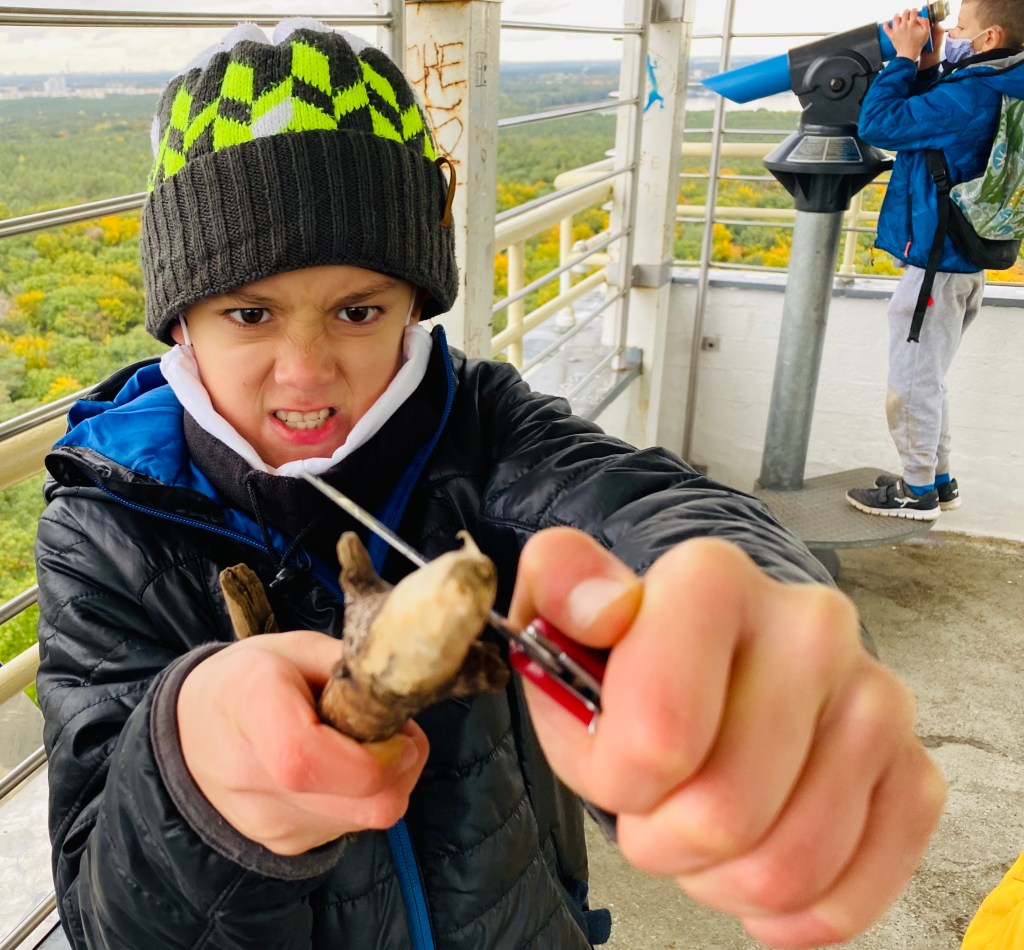
Afterwards, we headed to the Müggleberge, a short, scenic walk from the tower. Müggleberge is the tallest naturally occurring point in Berlin – there are higher in Berlin, which were made using building rubble after WWII.
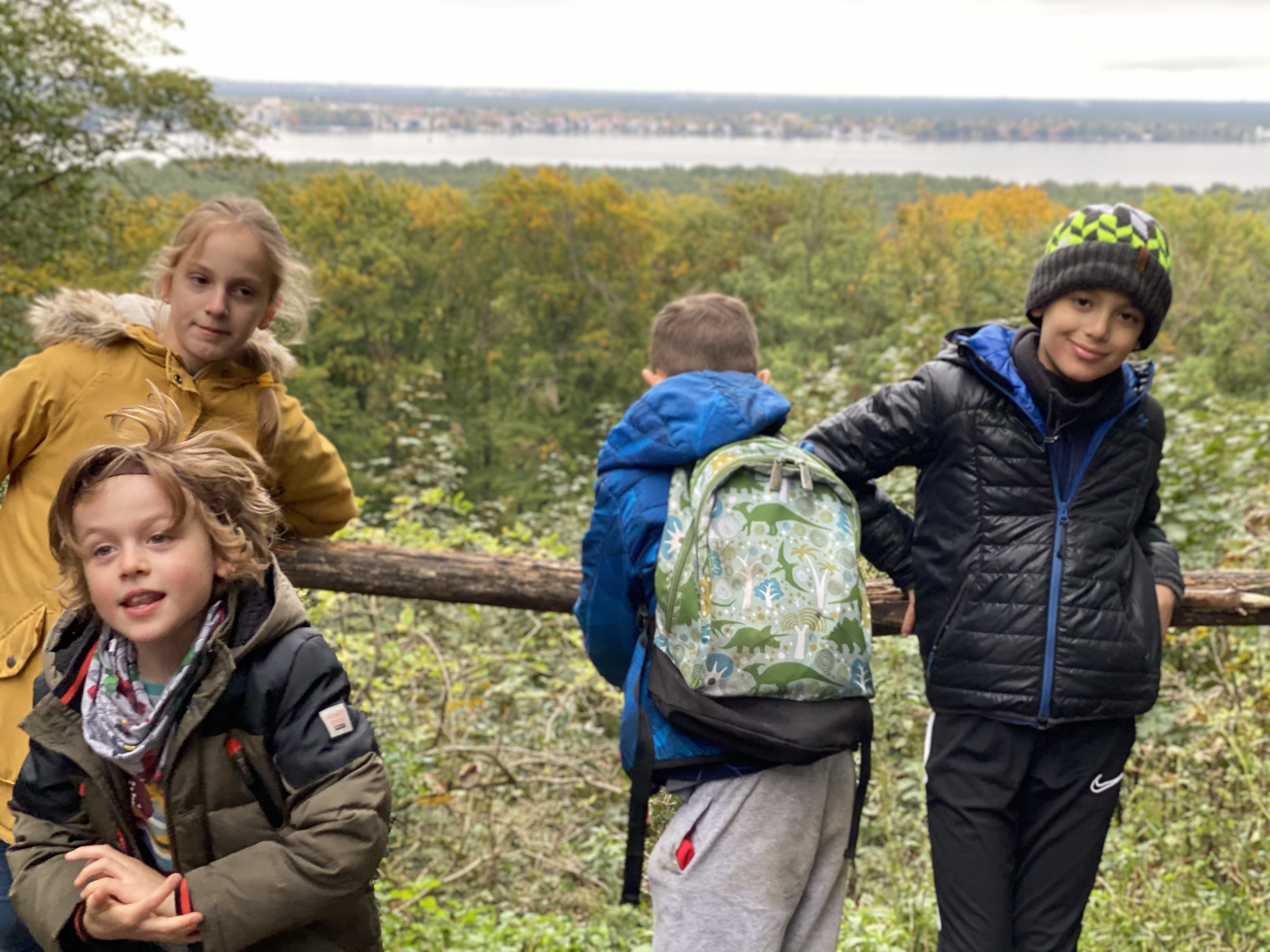
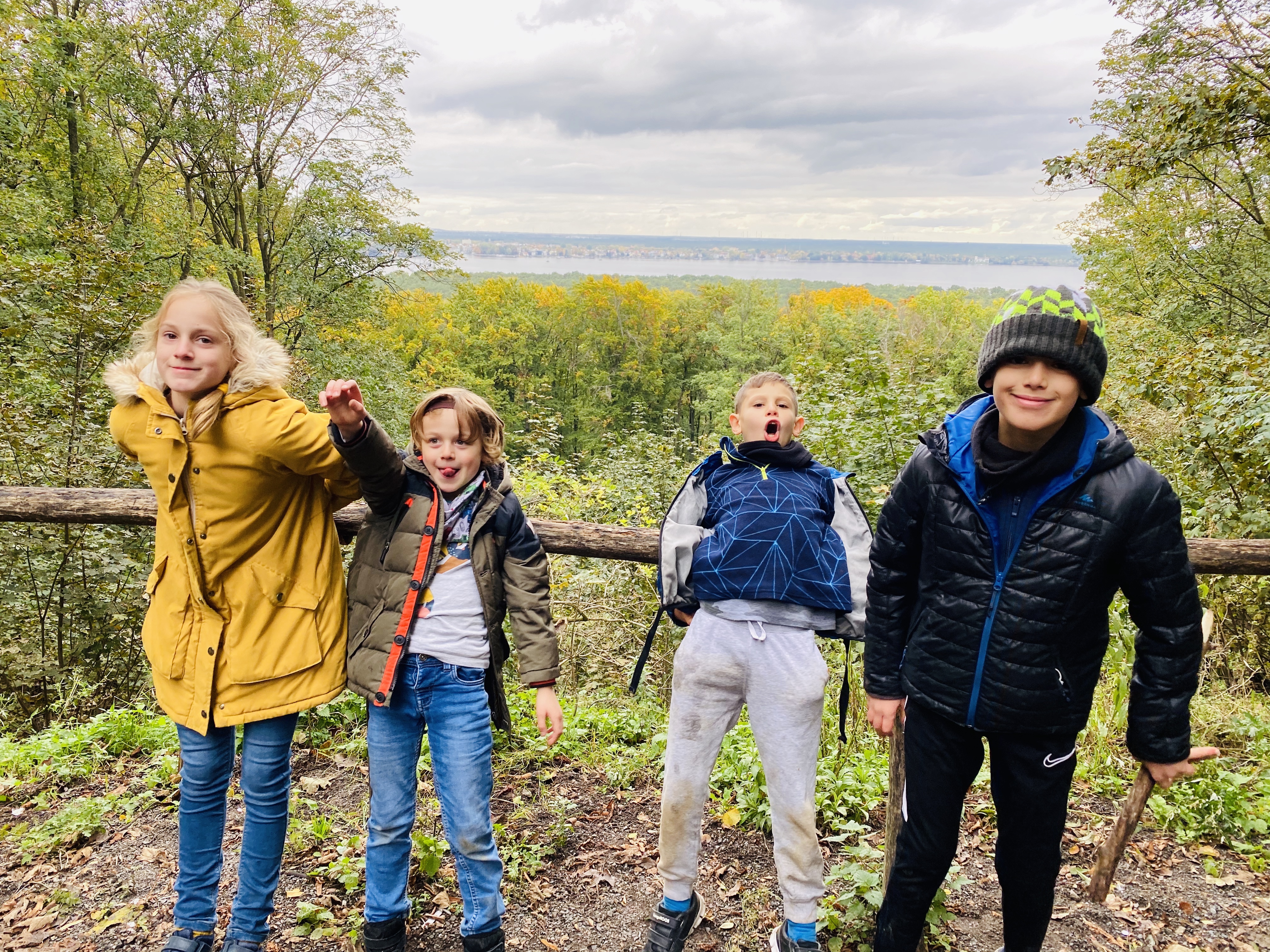
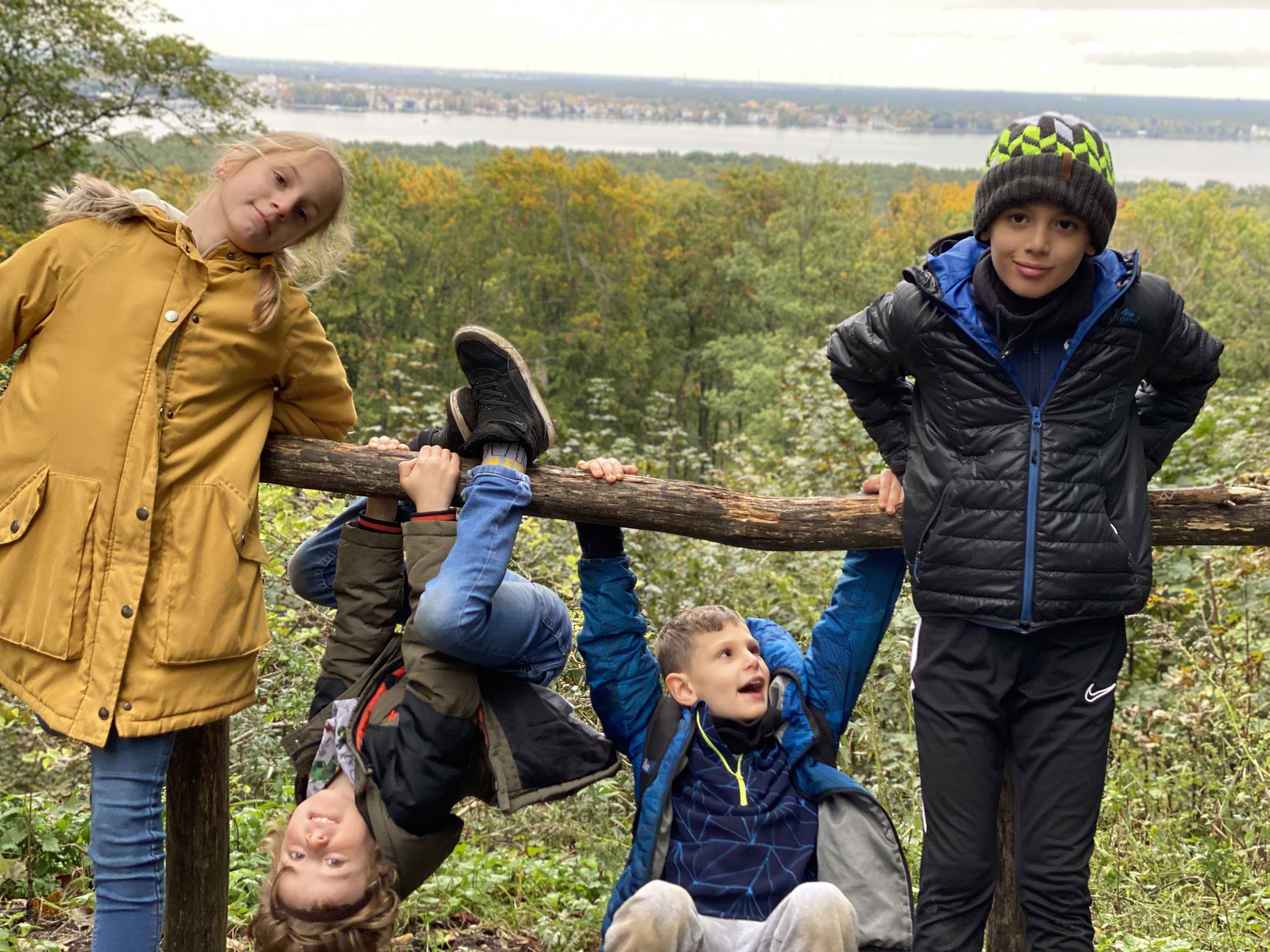
After a brisk, off-path downhill hike, we met up with the path again to hike directly to the Teufelsee (Devil‘s Lake).
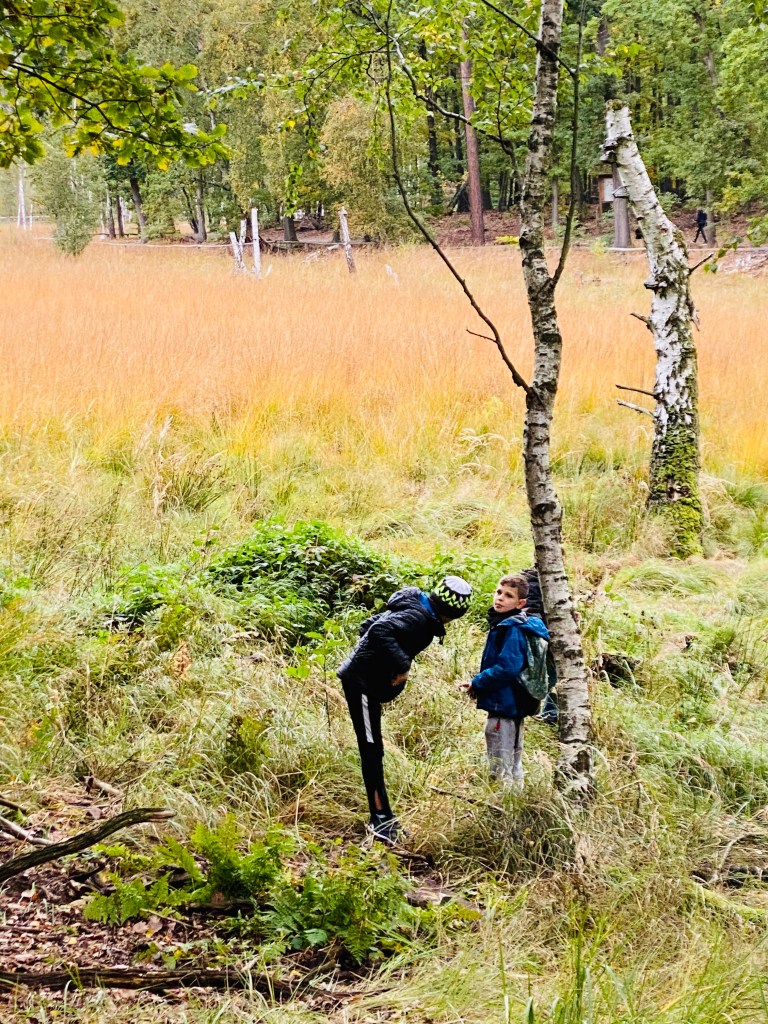
The shallow and nutrient-rich lake is a raised bog that was formed during the Ice Age and was created as a sink by the meltwater from the ice.
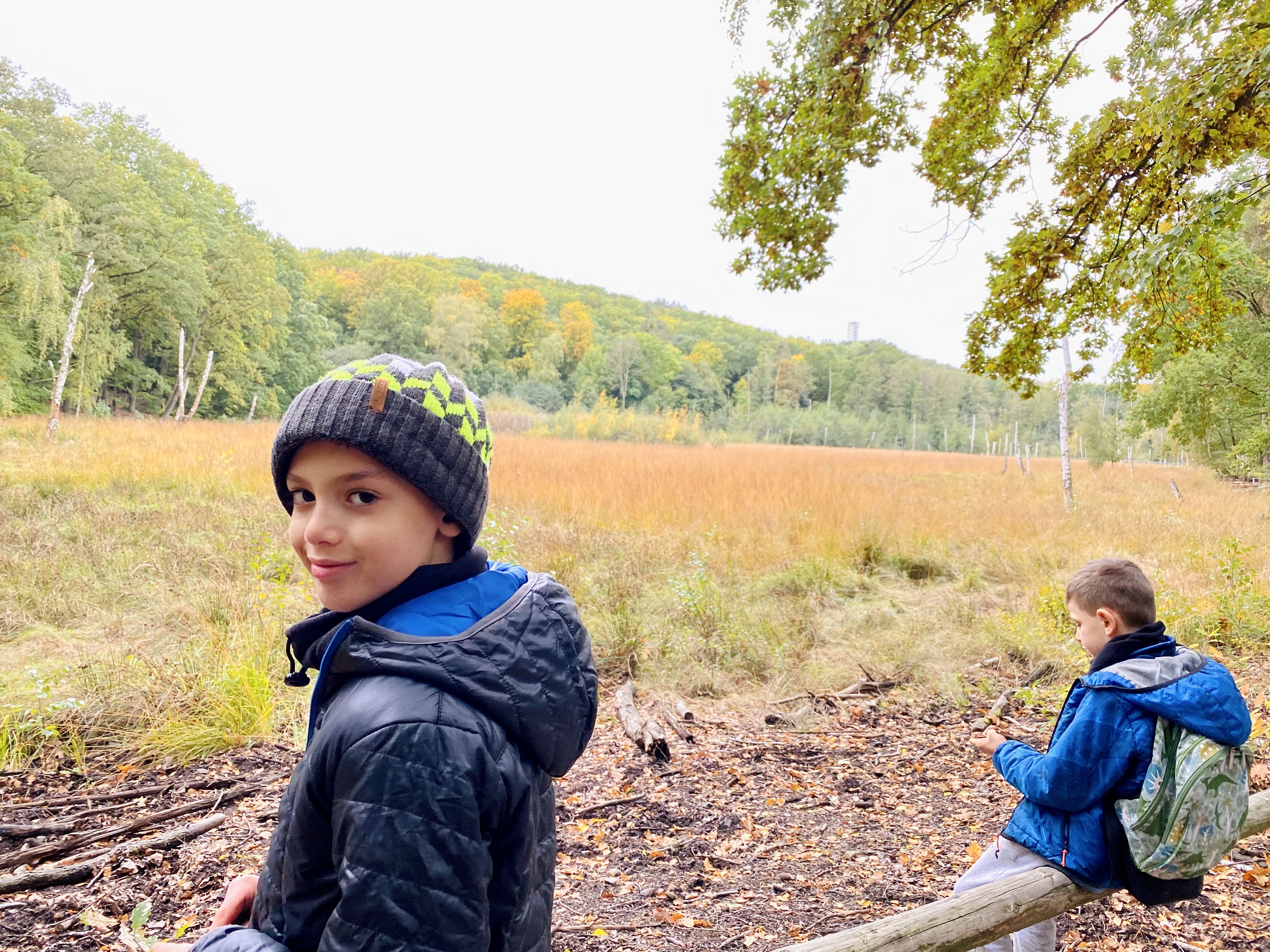
It allegedly owes its name to someone who claimed to have seen an altar of the devil here in the distant past, though there are other explanations for the name.
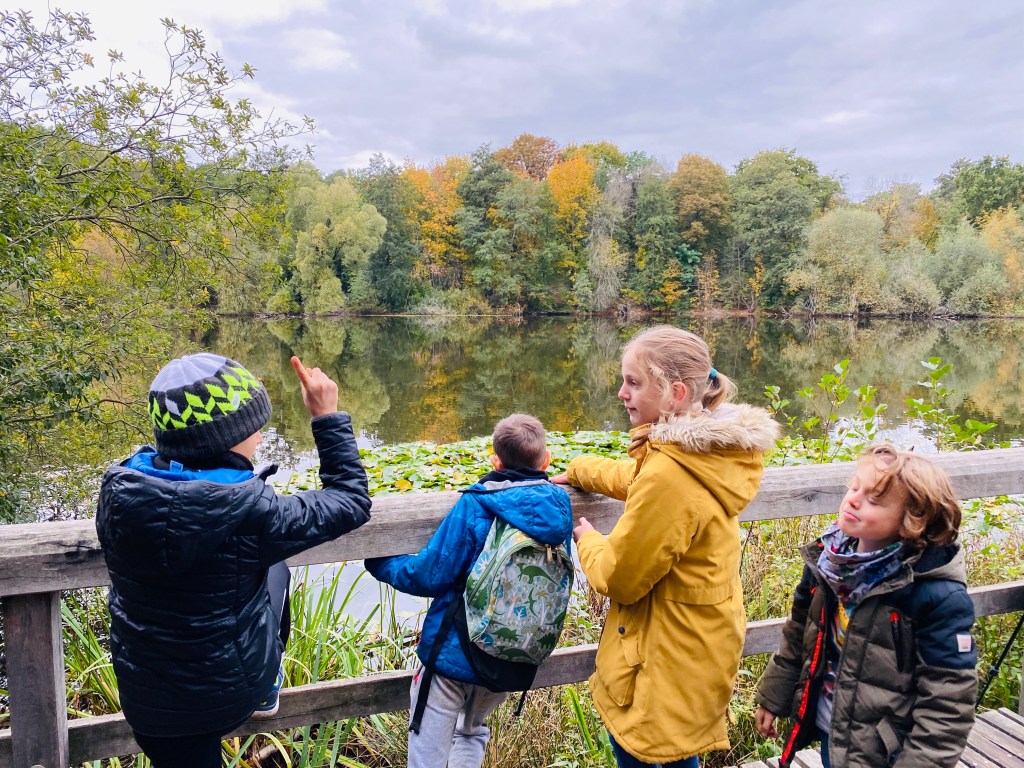
A nature trail leads three kilometers around the lake over boggy ground with informative plaques about the unique flora and fauna.
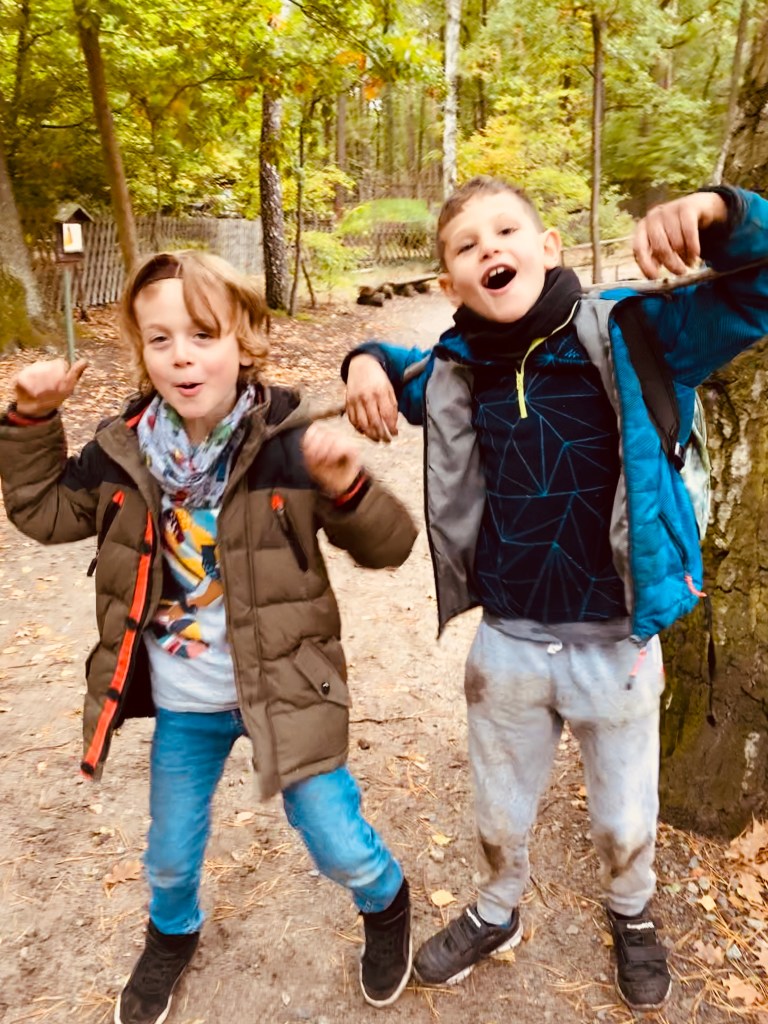
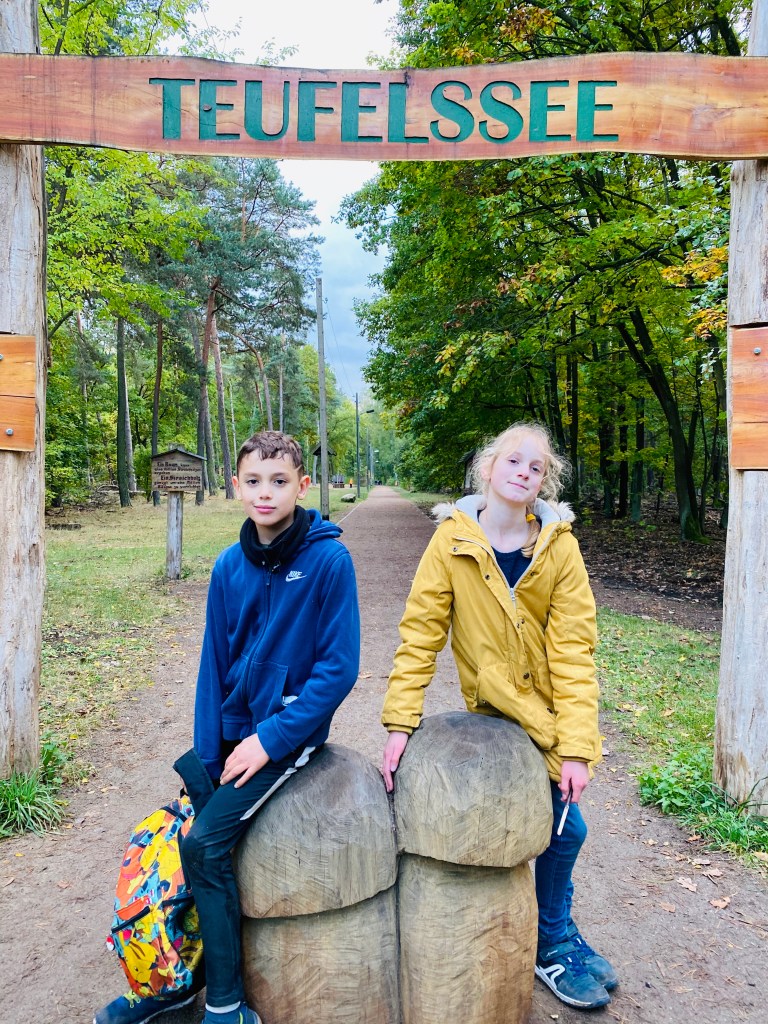
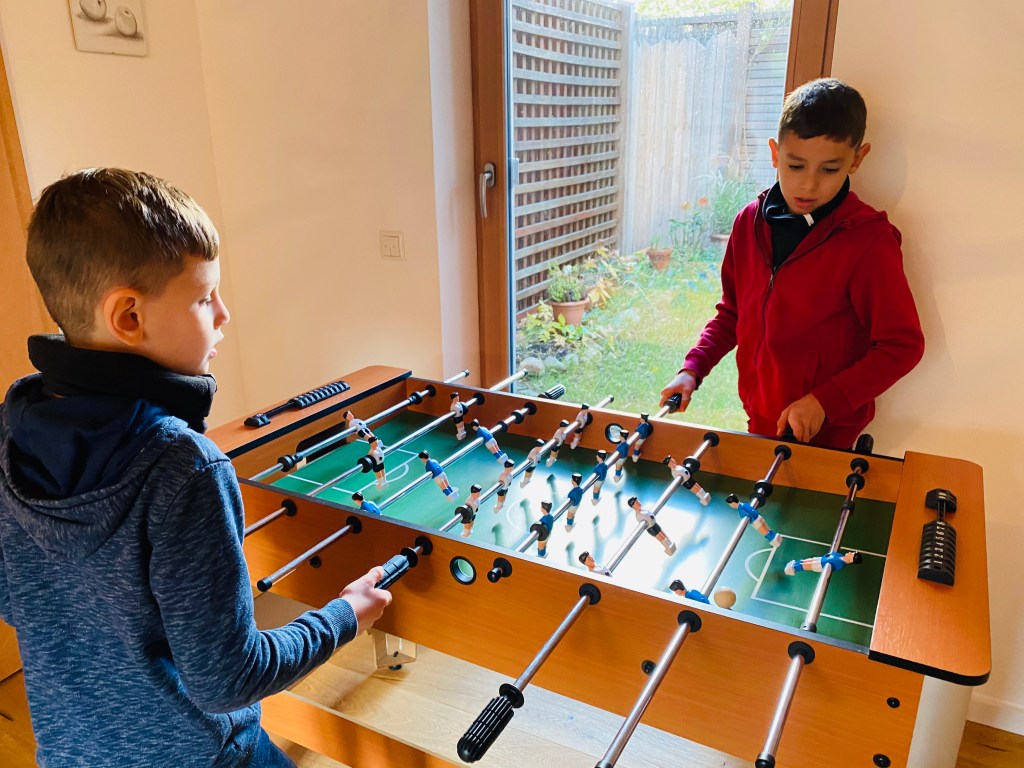
After our hike and some time on a playground in the middle of the forrest, we all headed back to our rental home for some hot tea and Fußball before heading into Köpenick for dinner at the Ratskeller.
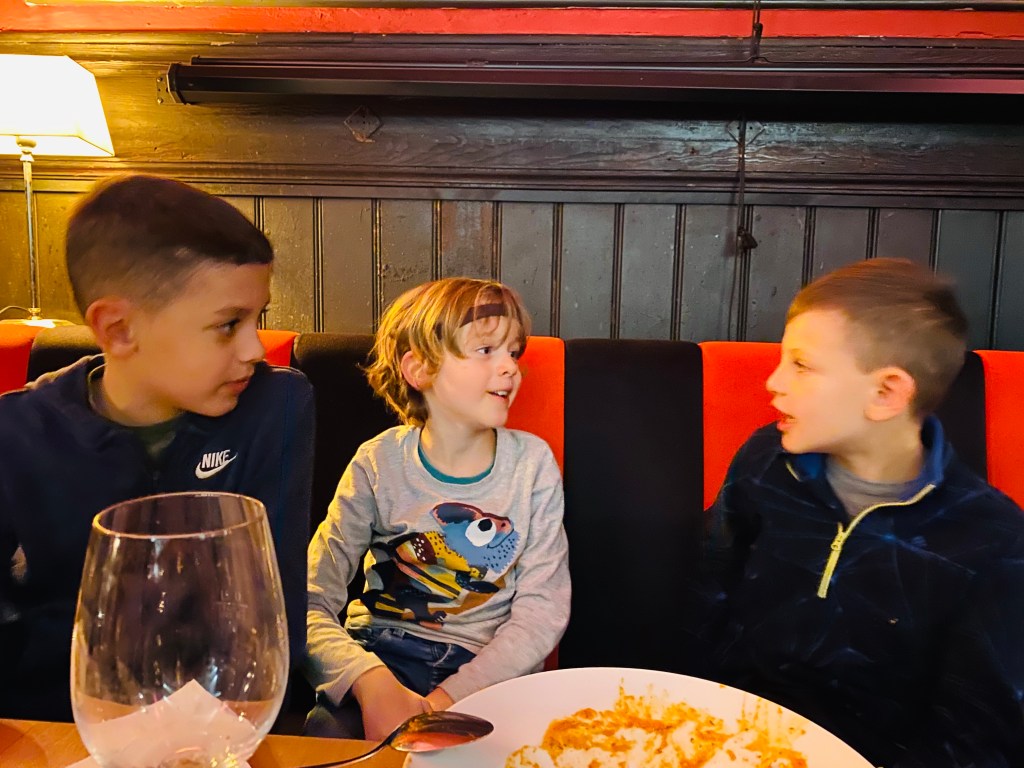
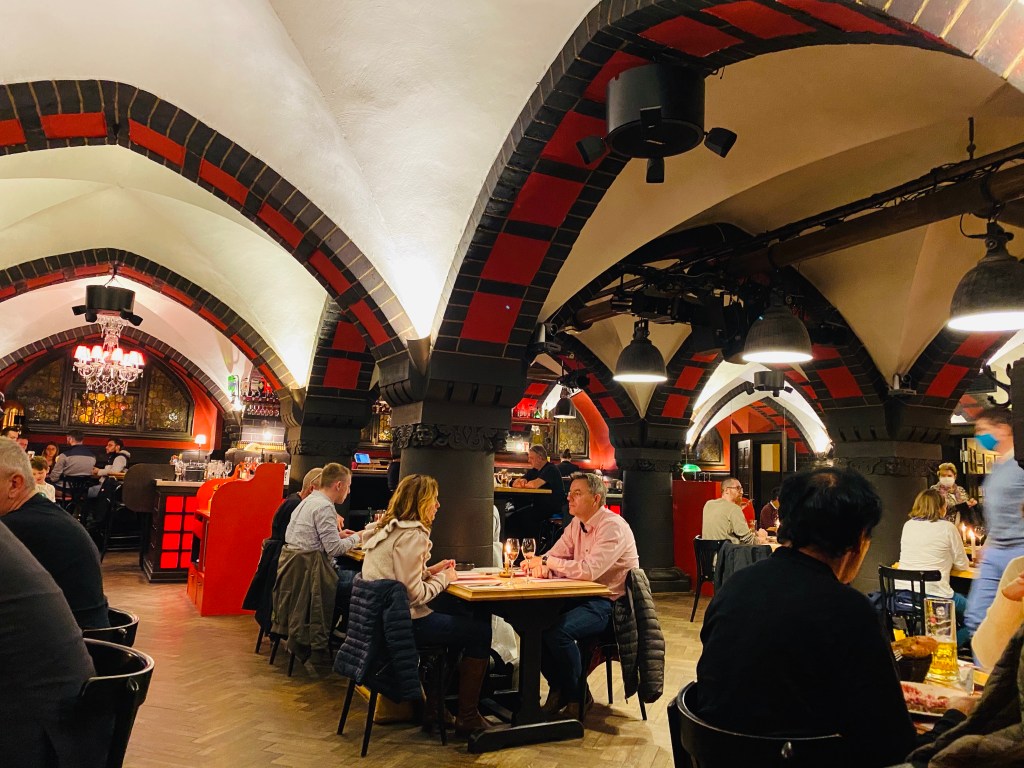
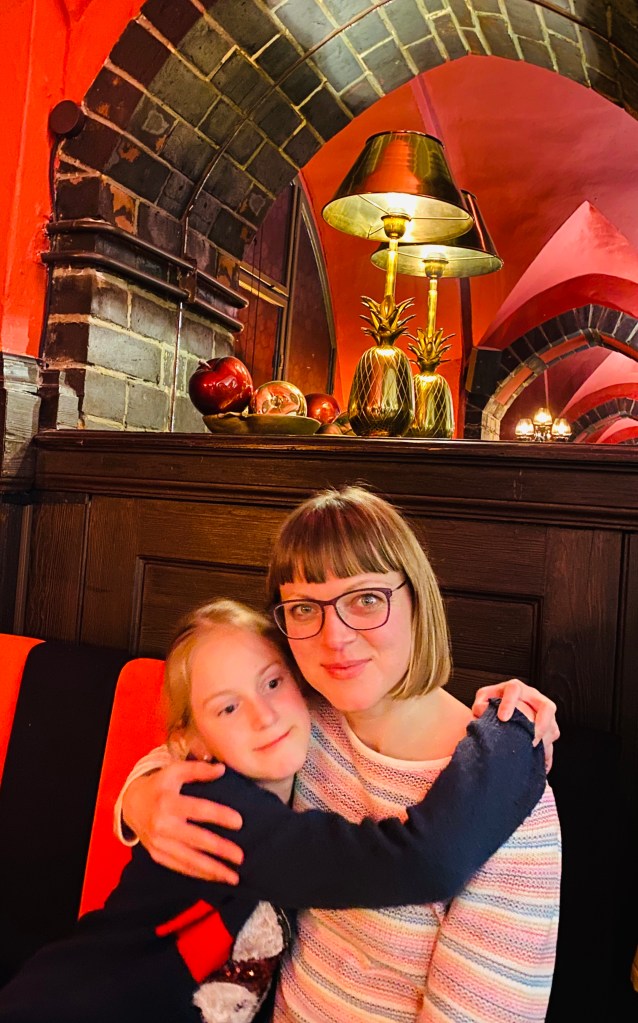
The next morning, I went on a relaxing, meandering walk through Friedrichshagen to Köpenick.
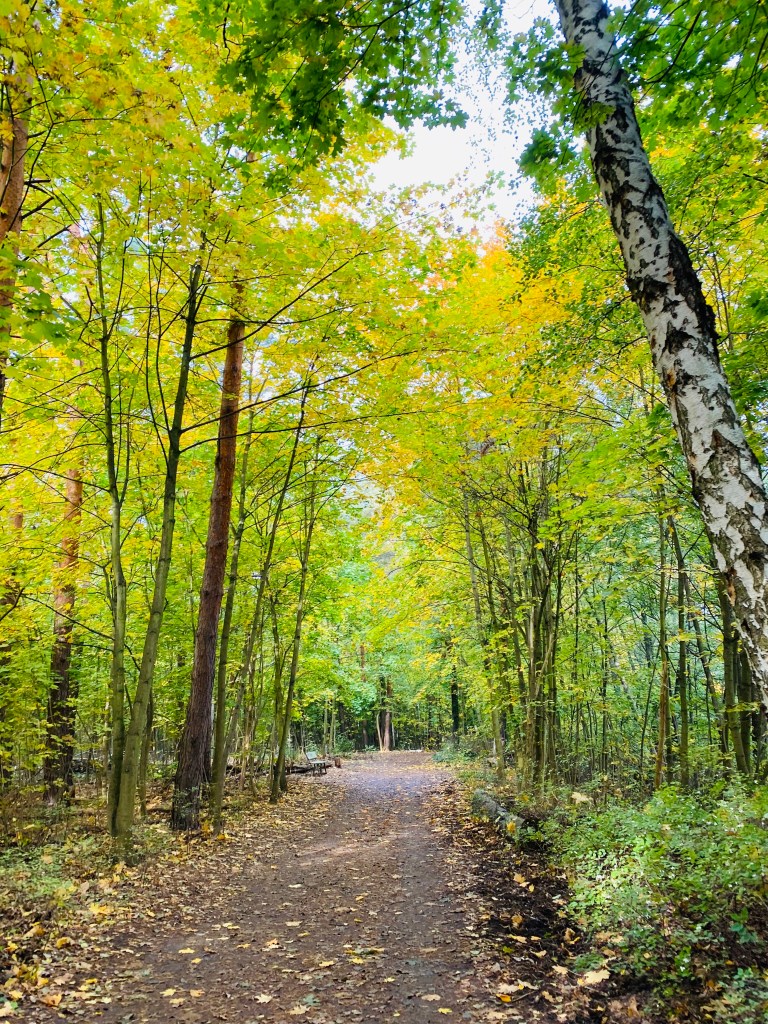
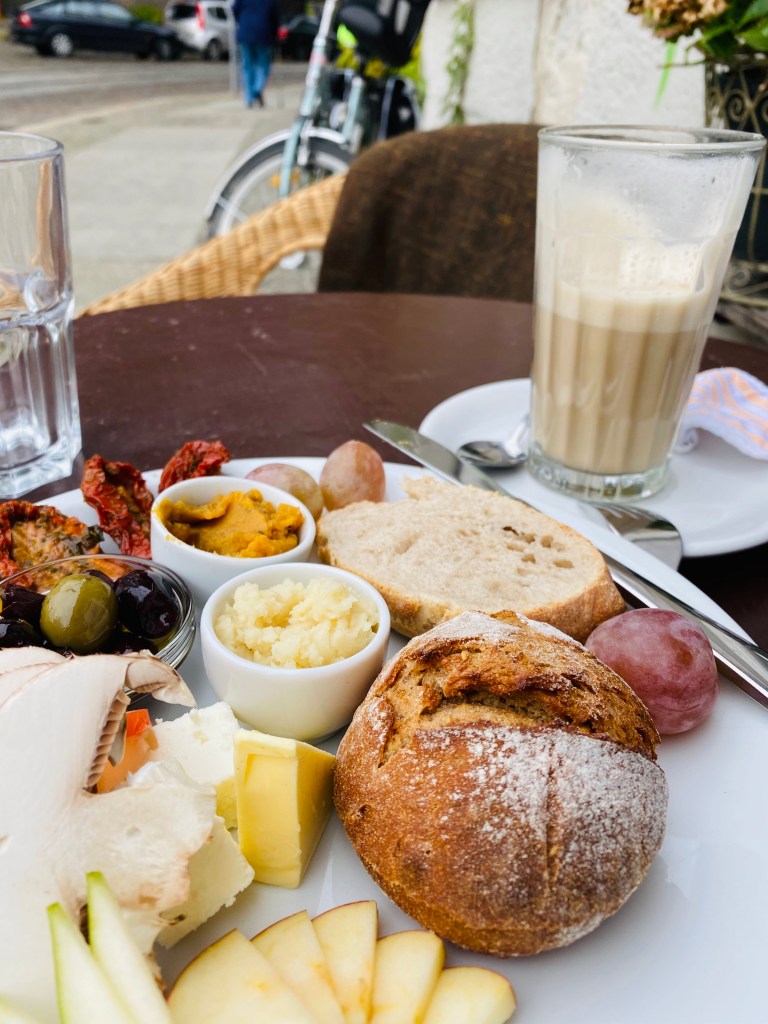
Not intentionally, but as I continued to walk, I simply didn’t want to stop. It was a glorious morning. And after four miles of wandering, I settled into a breakfast at the restaurant Milchkaffee, or milk coffee.
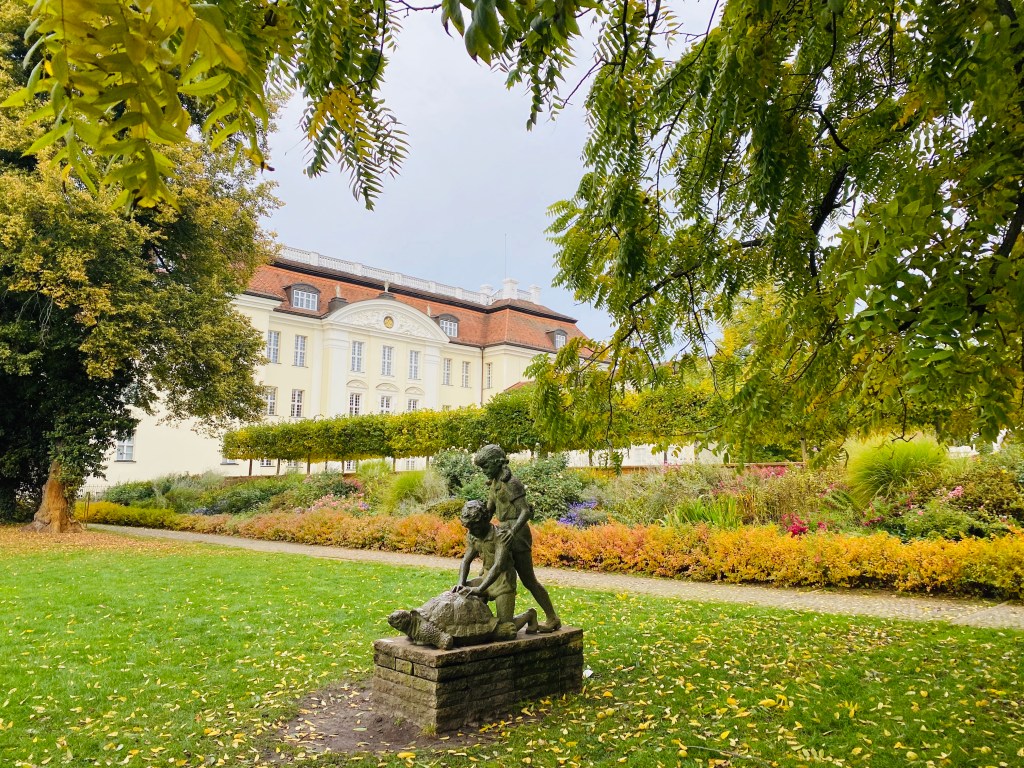
My walk included a stroll through the Schloßpark, which is where we spent time last Mother’s Day. (https://atomic-temporary-144439175.wpcomstaging.com/2020/05/16/mothers-day-2020/)
I took a 20 minute tram ride back to our rental house. It’s so lovely to be in Berlin near public transport even when you don’t plan on needing it.
That afternoon’s adventure led us to a large open air industrial museum called Museumspark Rüdersdorf.

It documents the extraction and processing of limestone from the Rüdersdorfer Kalkberg, or limestone mountain.
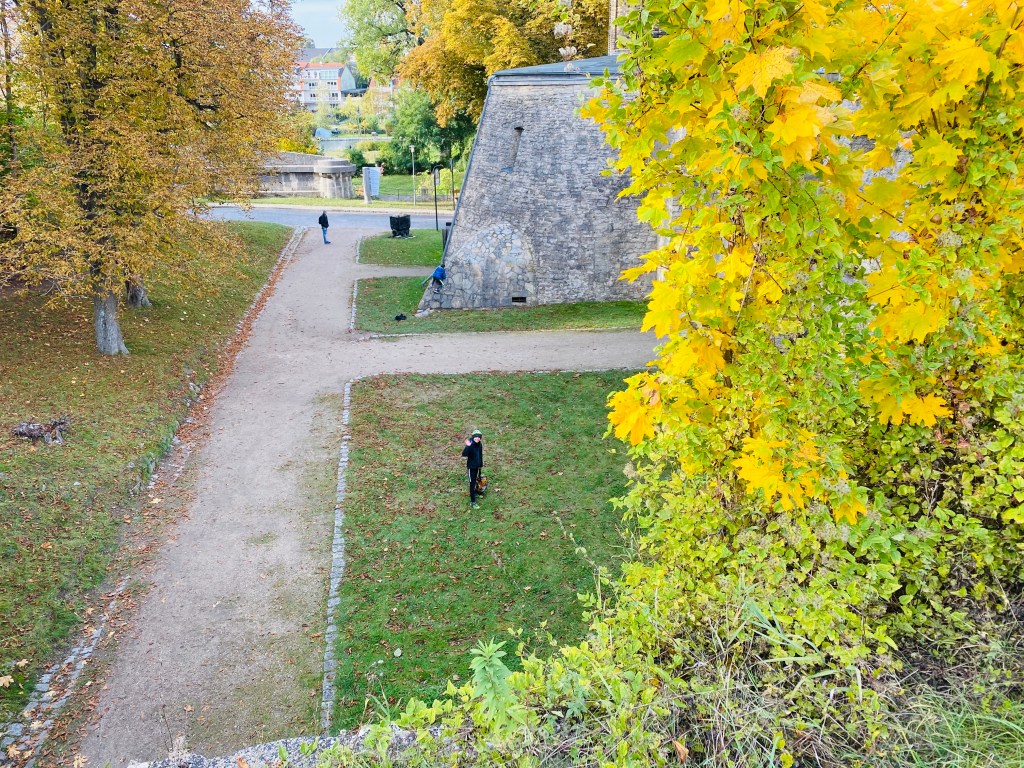
In the middle of the sand-spoiled Berlin area around 800 years ago, a gentle limestone hill protruded from the otherwise flat landscape.
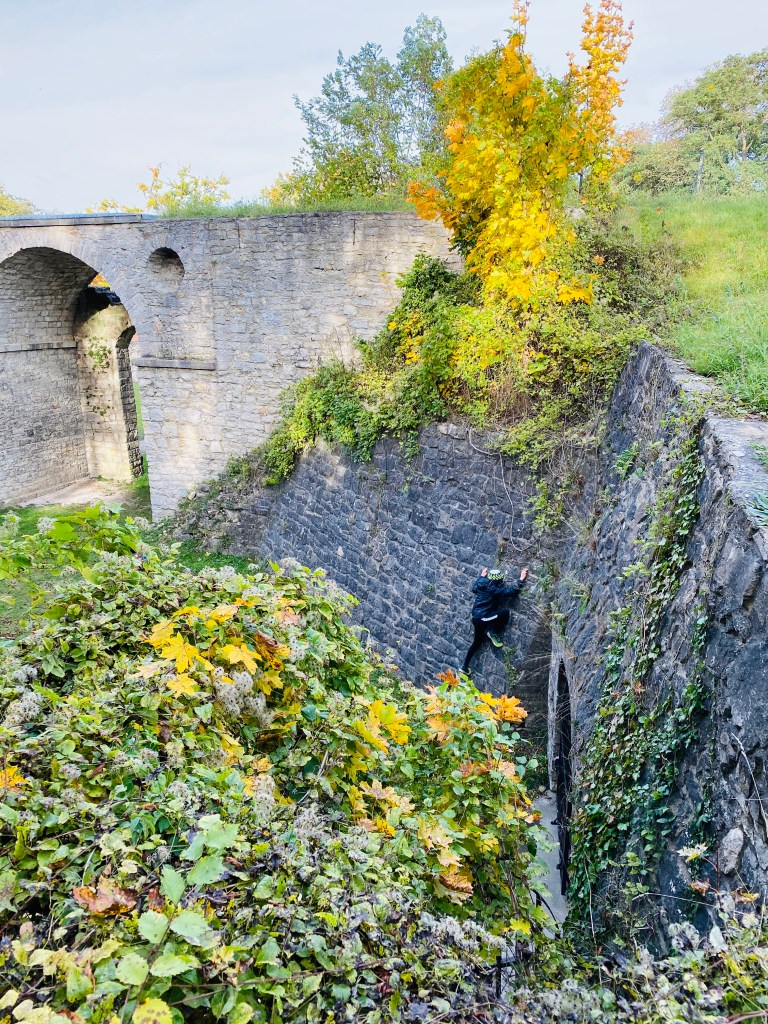
The limestone was broken and used as stone for many famous buildings in Berlin such as the Brandenburg Gate and the Olympic Stadium as well as Sanssouci Palace in Potsdam.


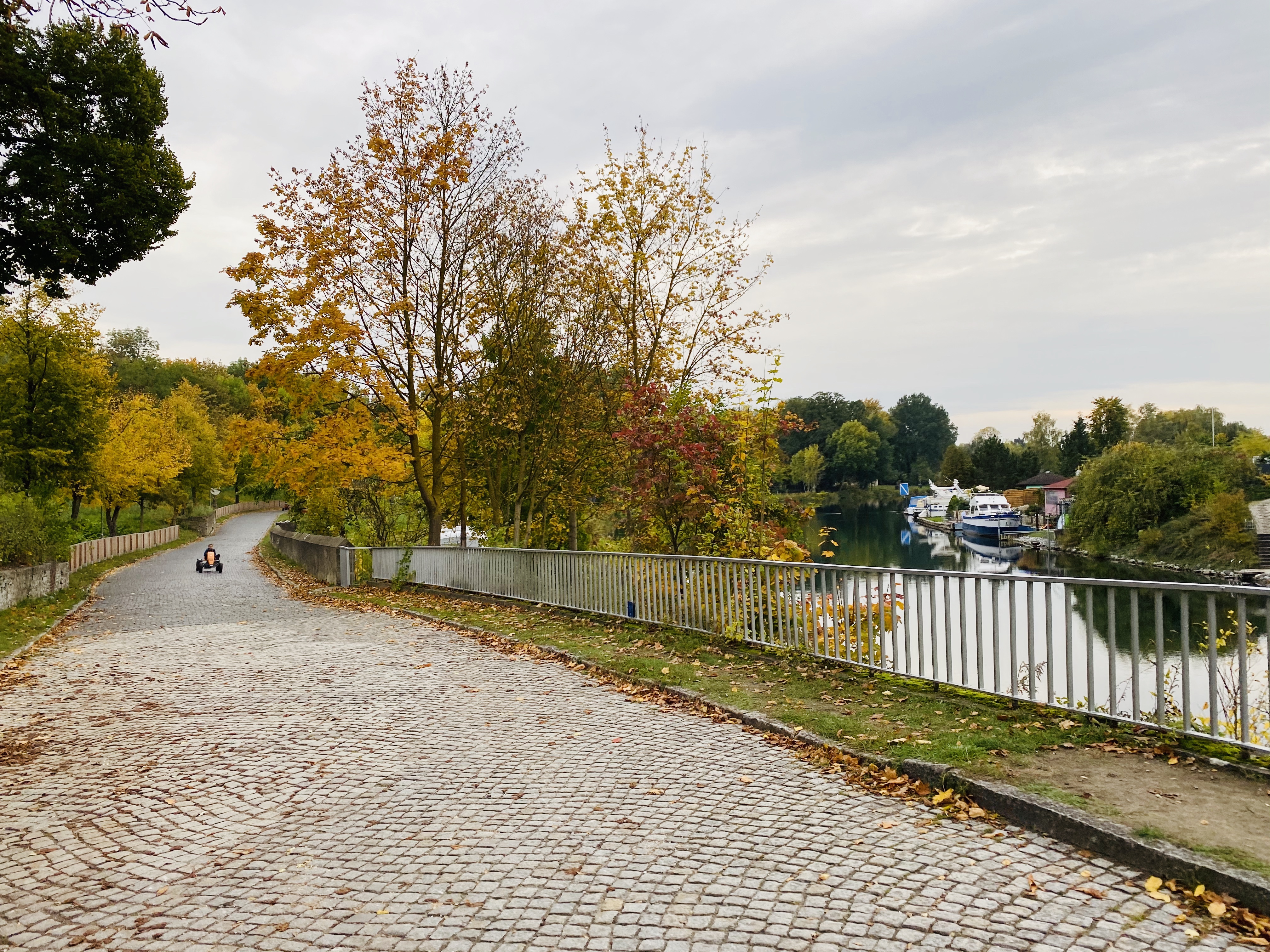
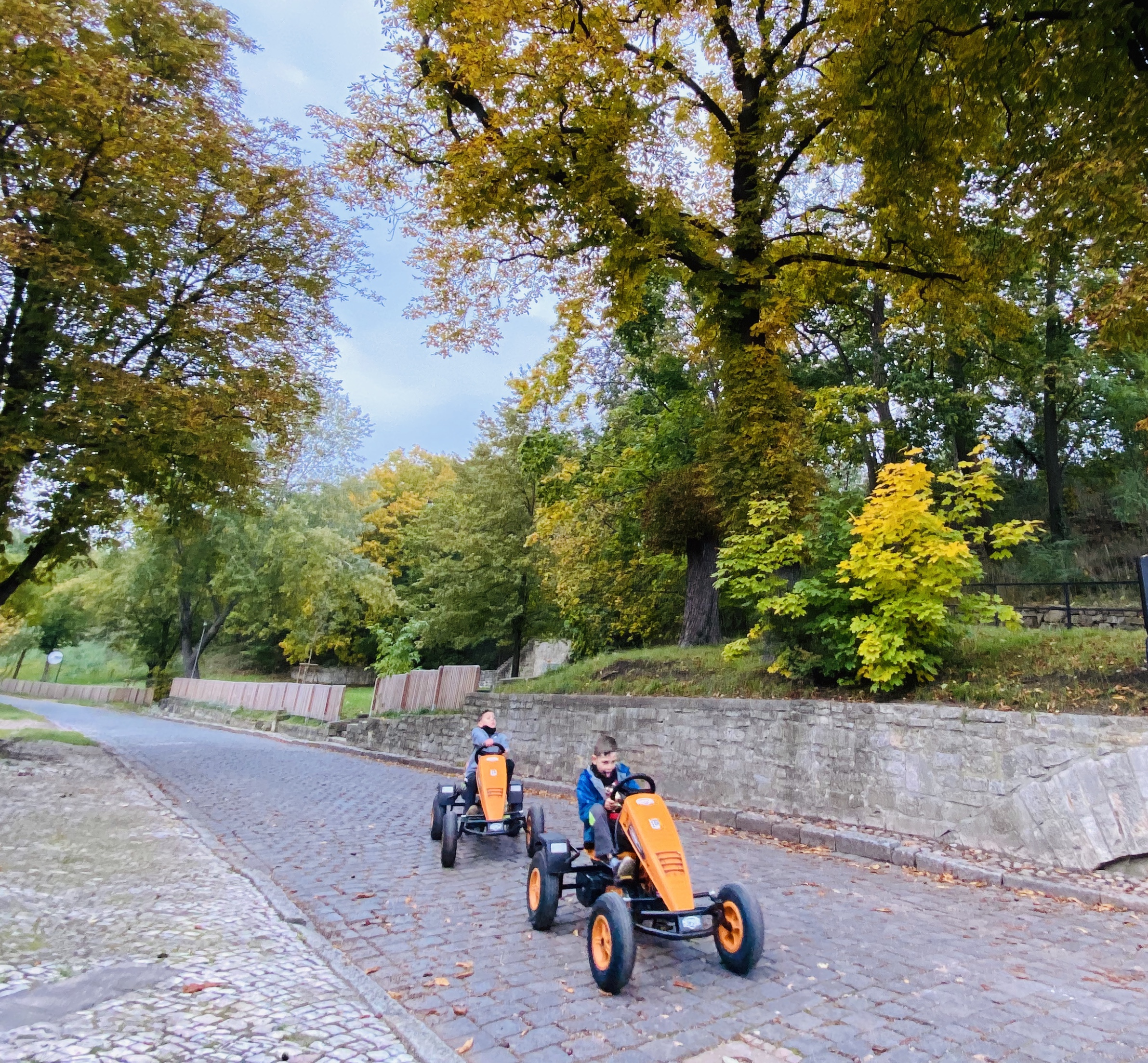
We rental pedal go-karts for the boys, which gave Dave and I more time to explore the historic grounds.
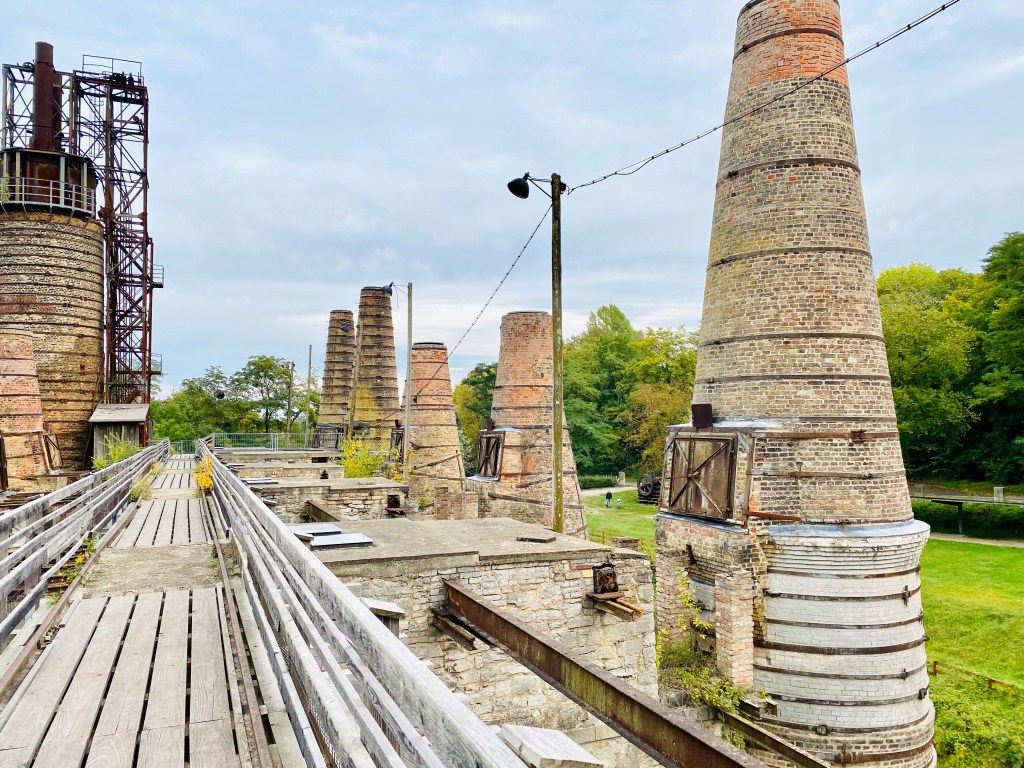
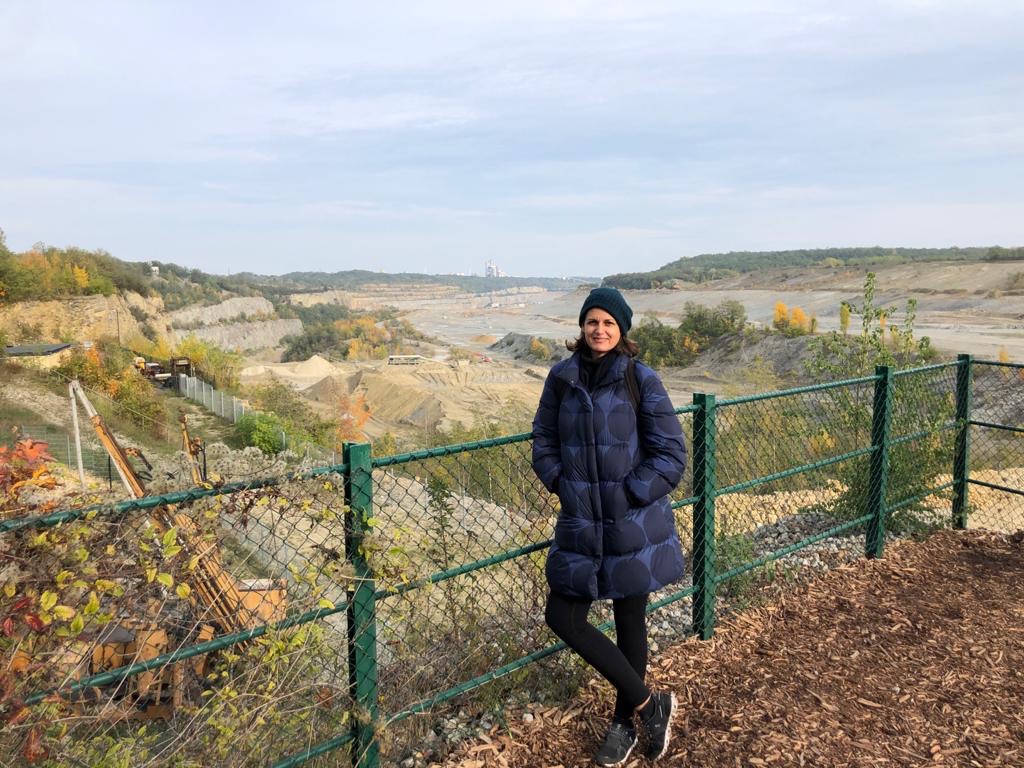
Another interesting fact is that in additional to countless number of fossils found in the limestone, the Nothosaurus dinosaur was also discovered there. Or rather, his skeleton. It is an otter-sized marine dinosaur that can be seen in the Berlin Natural History Museum.

We decided to head out for dinner on the historic street of Bölschestraße in Friedrichshagen. We drove straight there and were fortunate to find a table at a cozy Italian restaurant.

The boys had been playing „Jinx“ all day and somehow they were both jinxed by the time we got to dinner. We enjoyed a quiet meal involving charades, writing and drawing as opposed to the normal loud disruptions. We almost felt as though we were on a date without them at times!
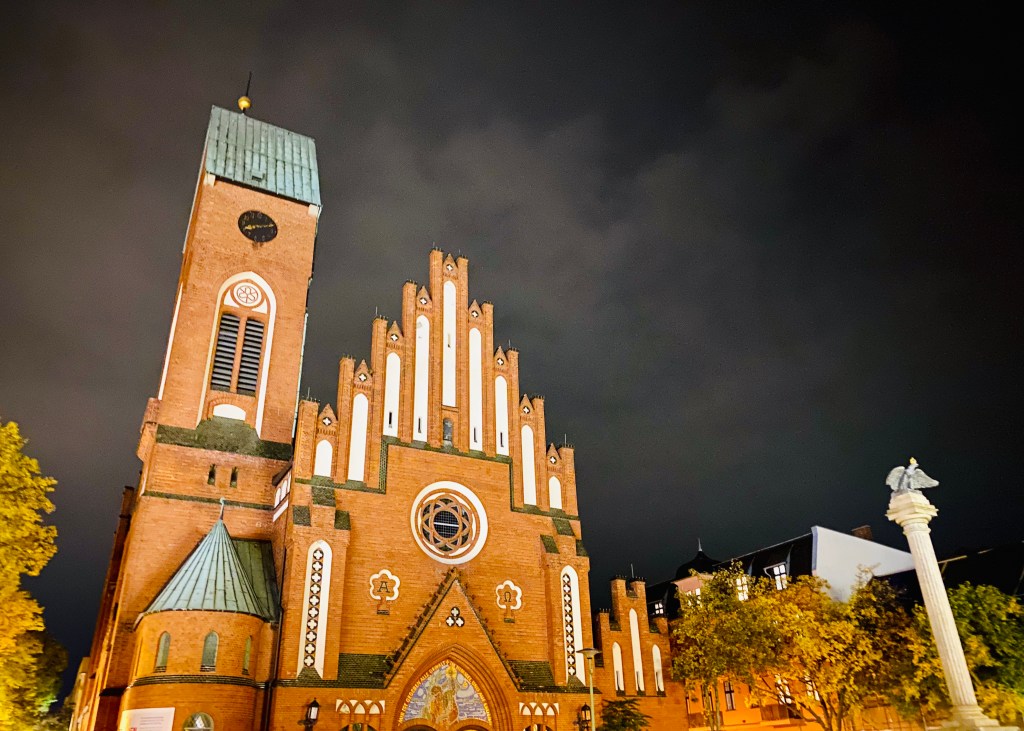
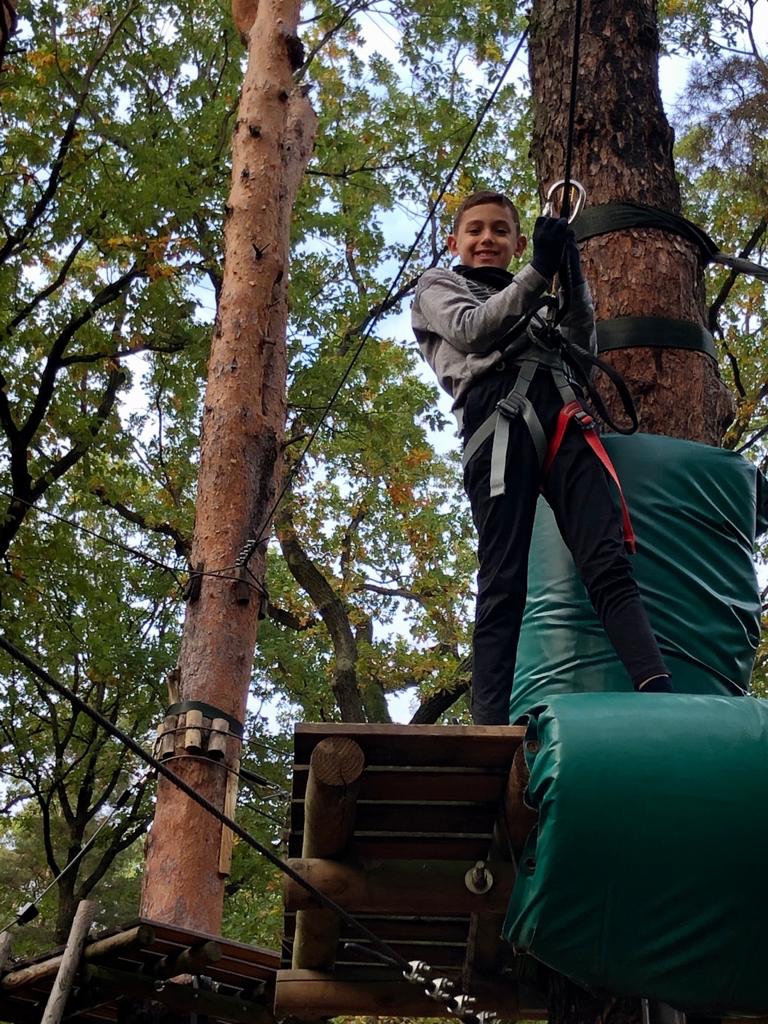
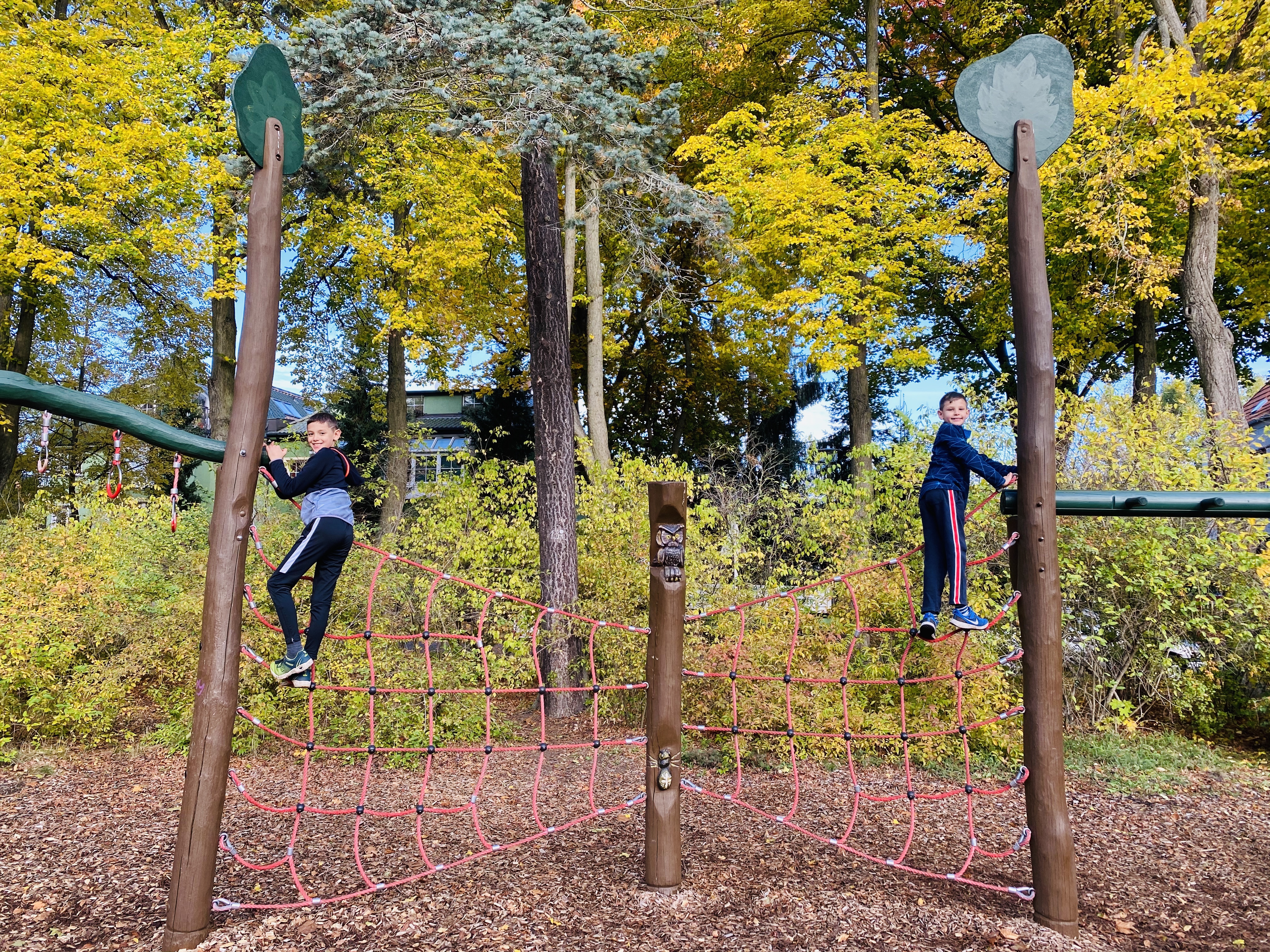
The next day, we went to a Kletterpark ropes course nearby, which was truly spectacular in the autum trees.

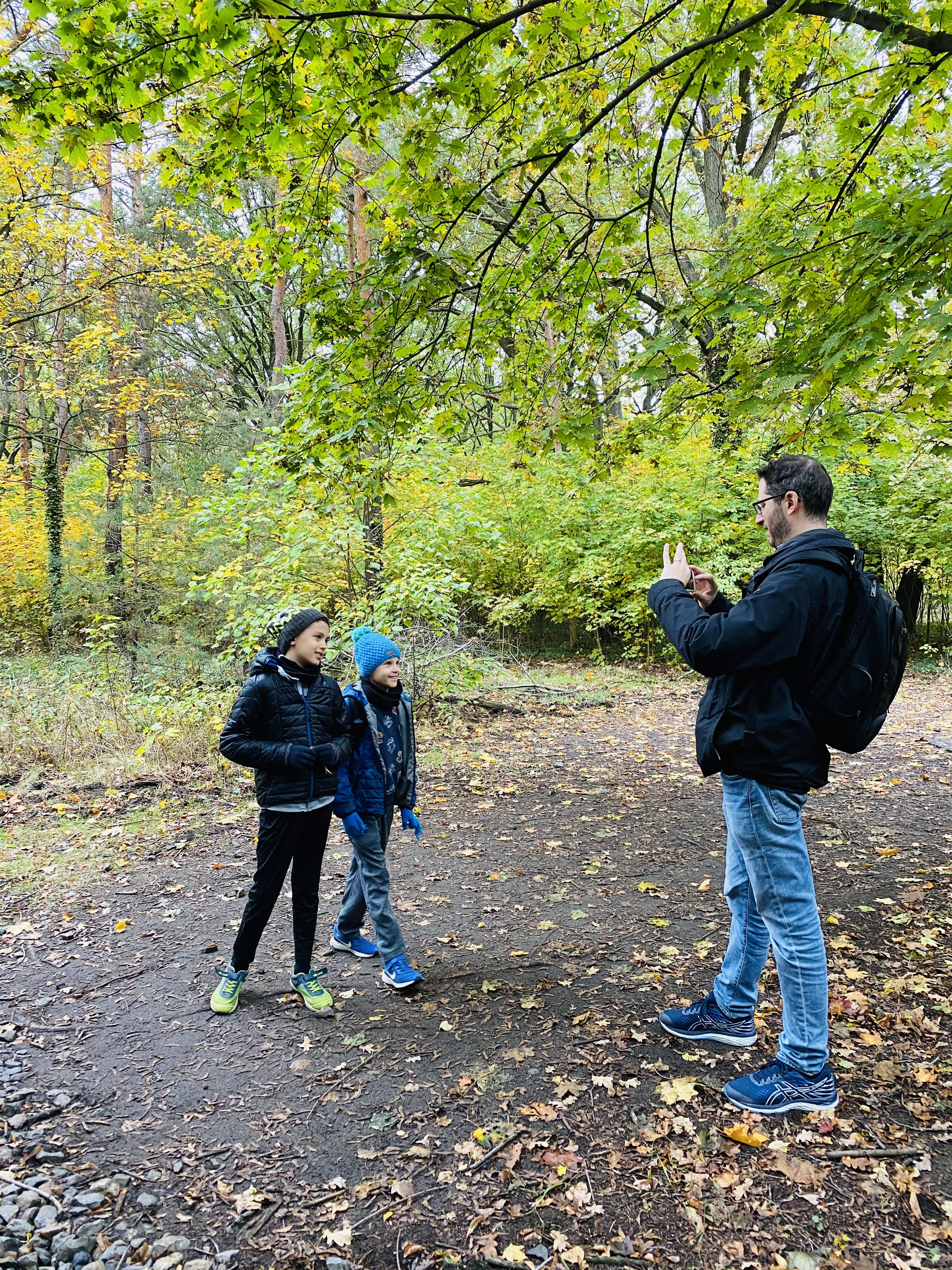
Ben took off through the trees by himself as I climbed with Issac and helped him navigate the karabiner through the turnbuckles.
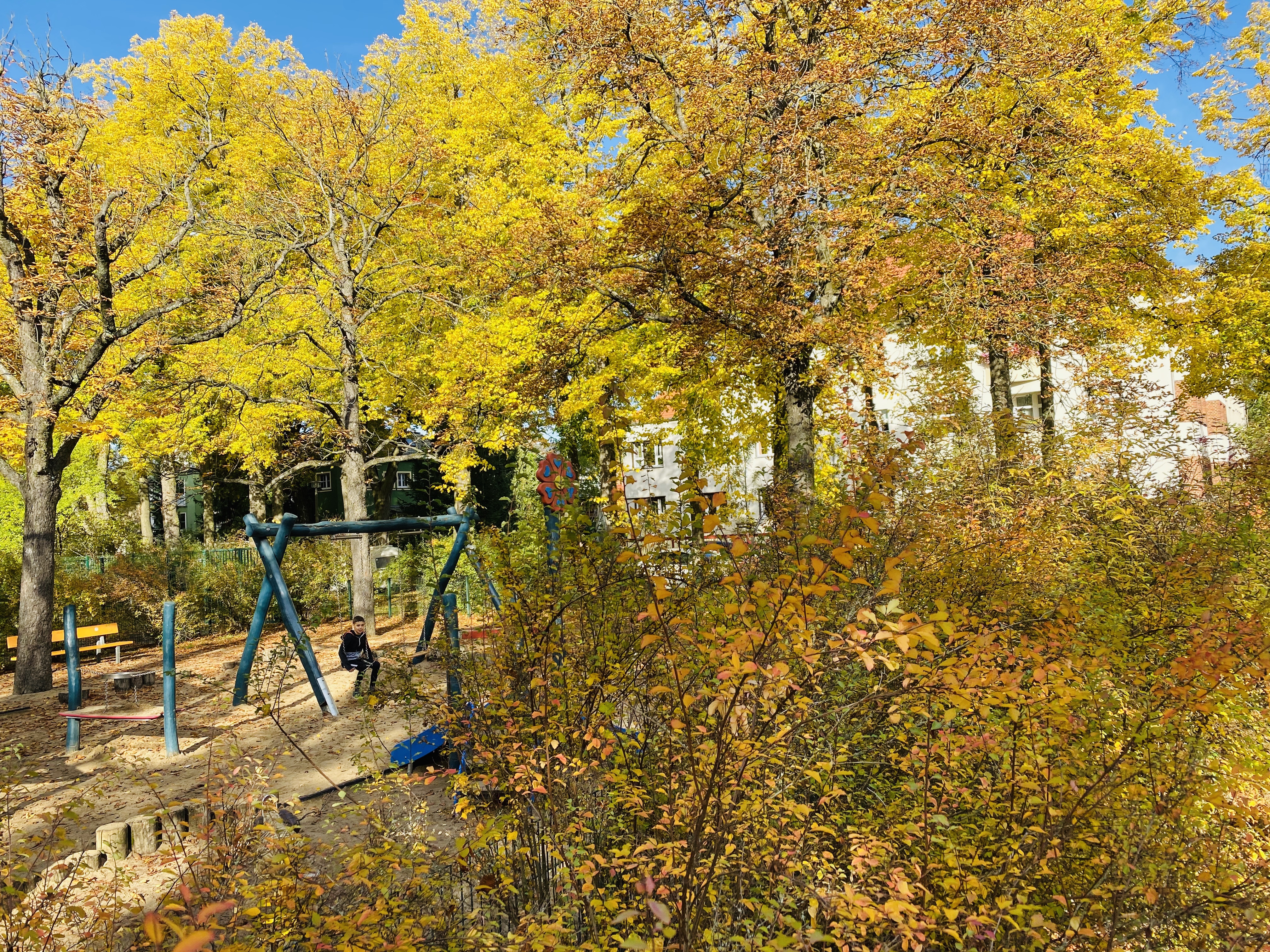
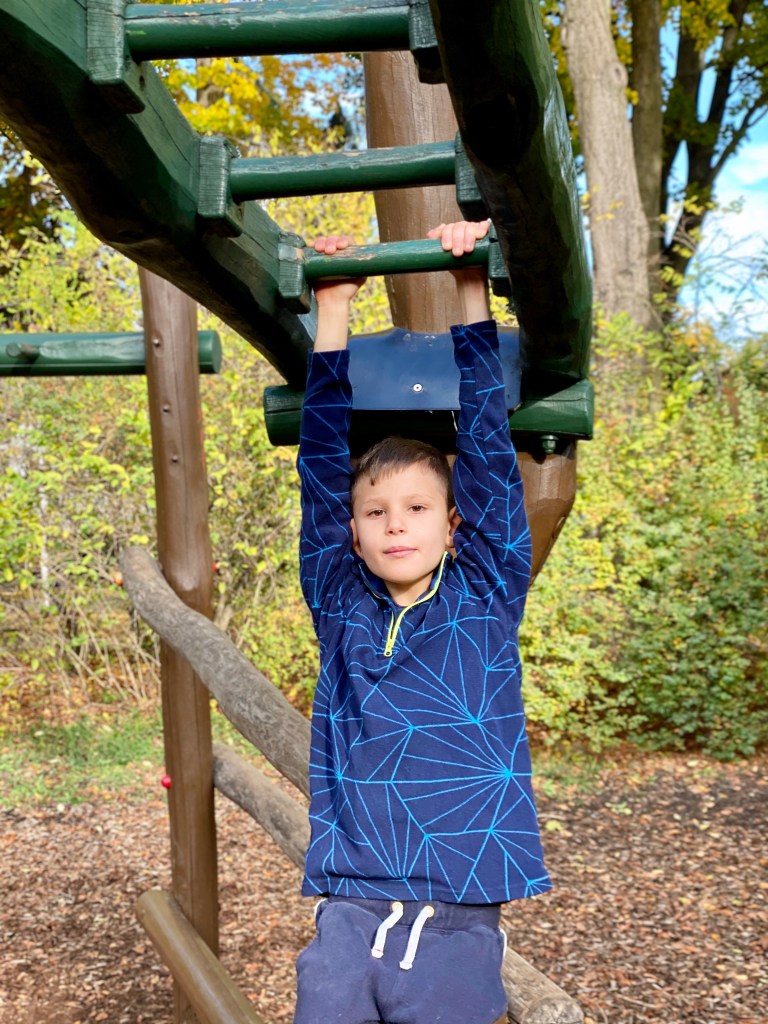
Our last day had arrived, so as Dave finished packing the car, I took the boys to a playground down the street.
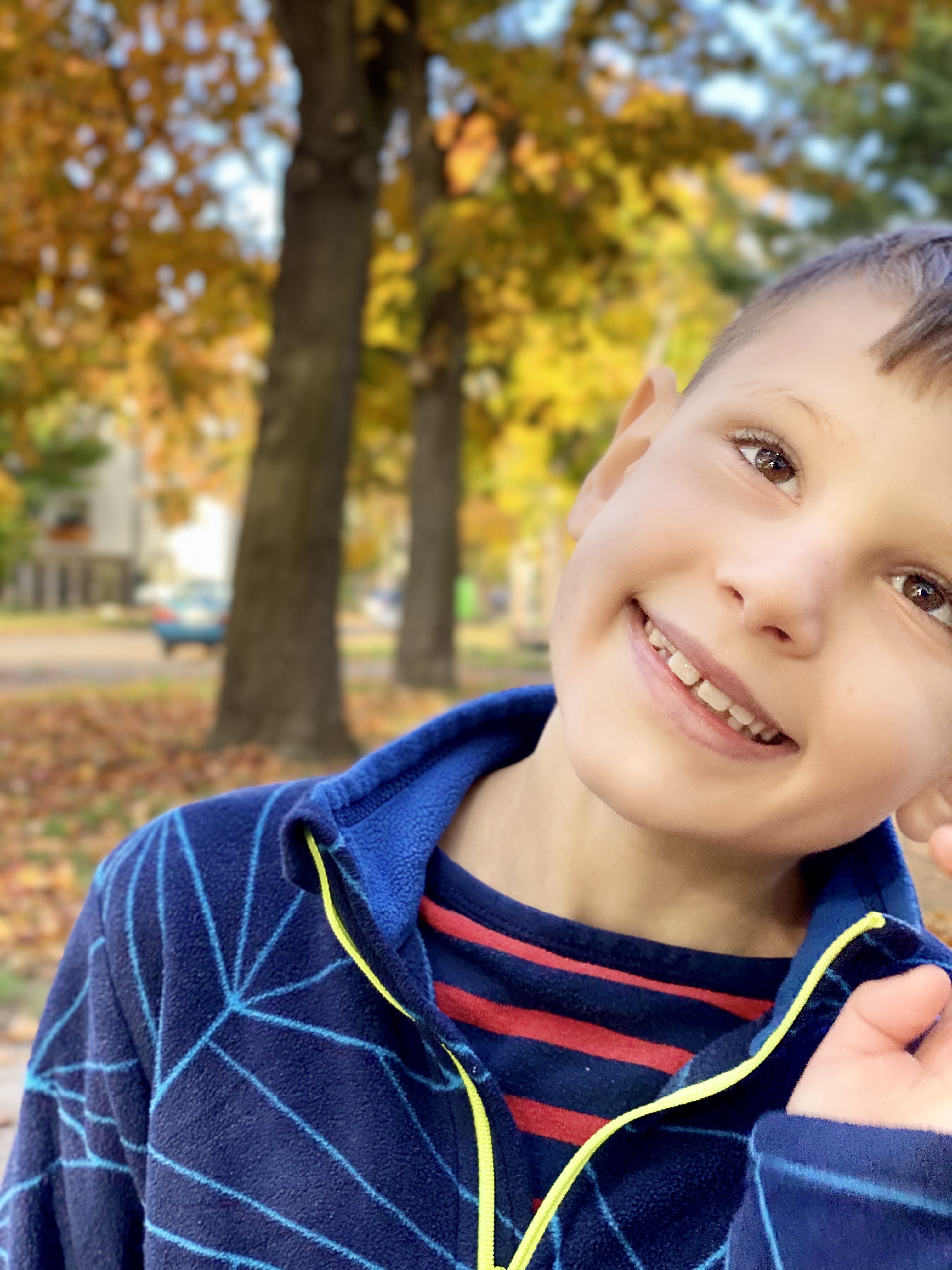
Before heading back to Berlin, we decided to go to a place called „New Venice“.

Originally, the marshy ground was to be drained so that housing could be built there, but in 1926, canals were built instead, giving water sports enthusiasts direct access to the Müggelspree.
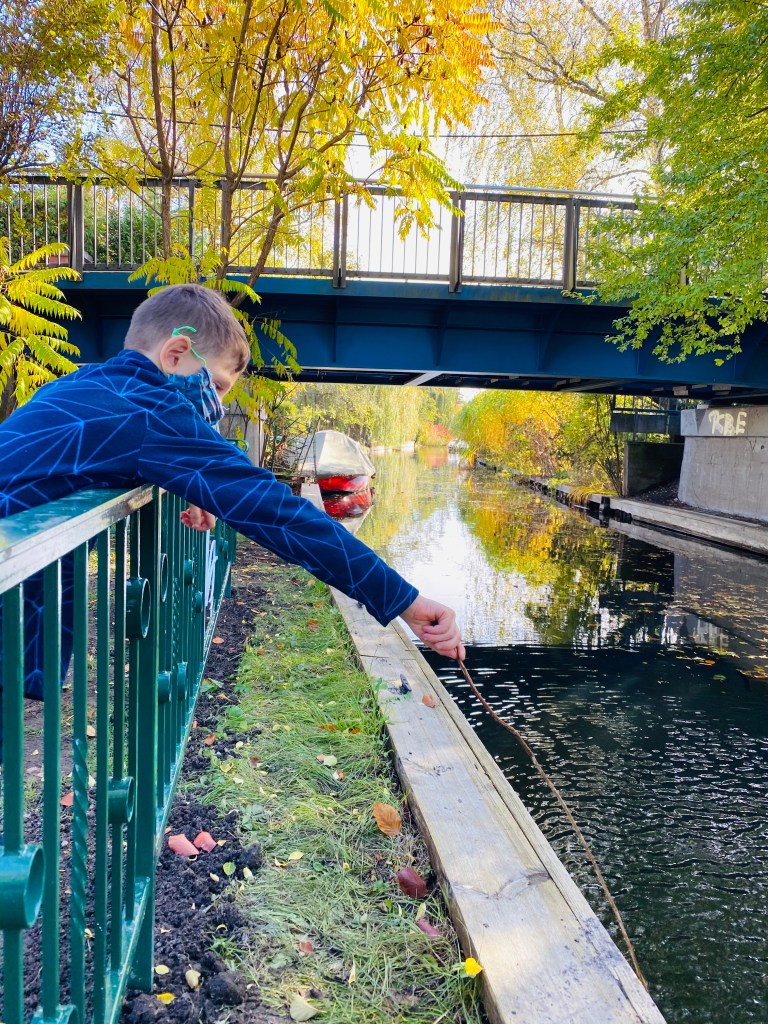
The five kilometres of newly created waterways originally gained the nickname “New Cameroon”. It was only later that comparisons were drawn with Venice and the Italian lagoons.

In the aftermath of the Second World War, New Venice was inhabited by bombed-out families.

From 1961, privileged GDR citizens leased the property of West Berliners. Neu-Venedig became a popular place for the small weekend homes known as dachas. Later, the plots were returned to their legal owners.
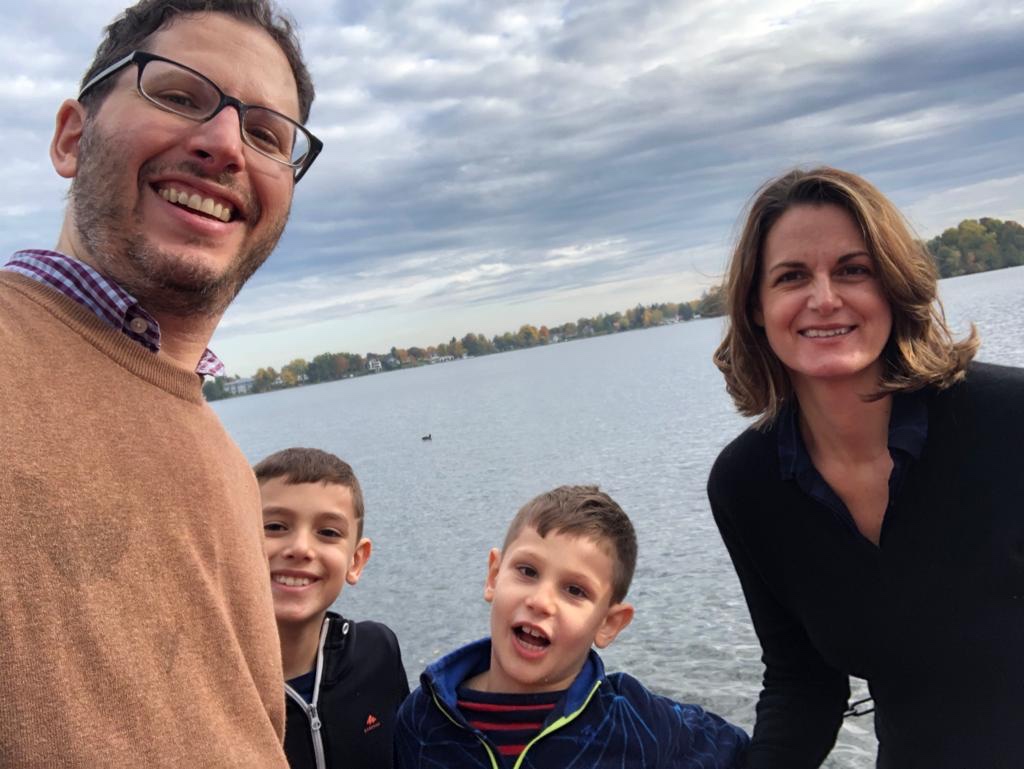
From there we walked to the Dämerotzsee, where we found a hotel (I needed to go to the restroom) on the shores where we also stopped for Kaffee und Kuchen (coffee and cake).
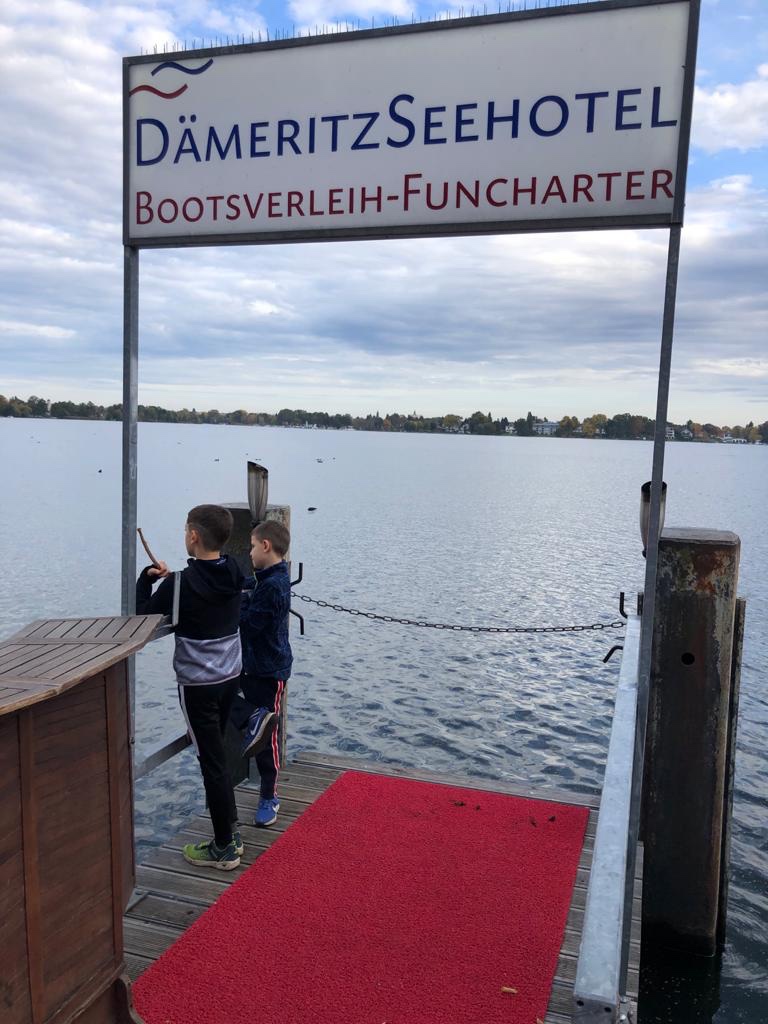
We discovered a bus route the stopped in front of the hotel that would take us back to our car. We were still in Berlin afterall.
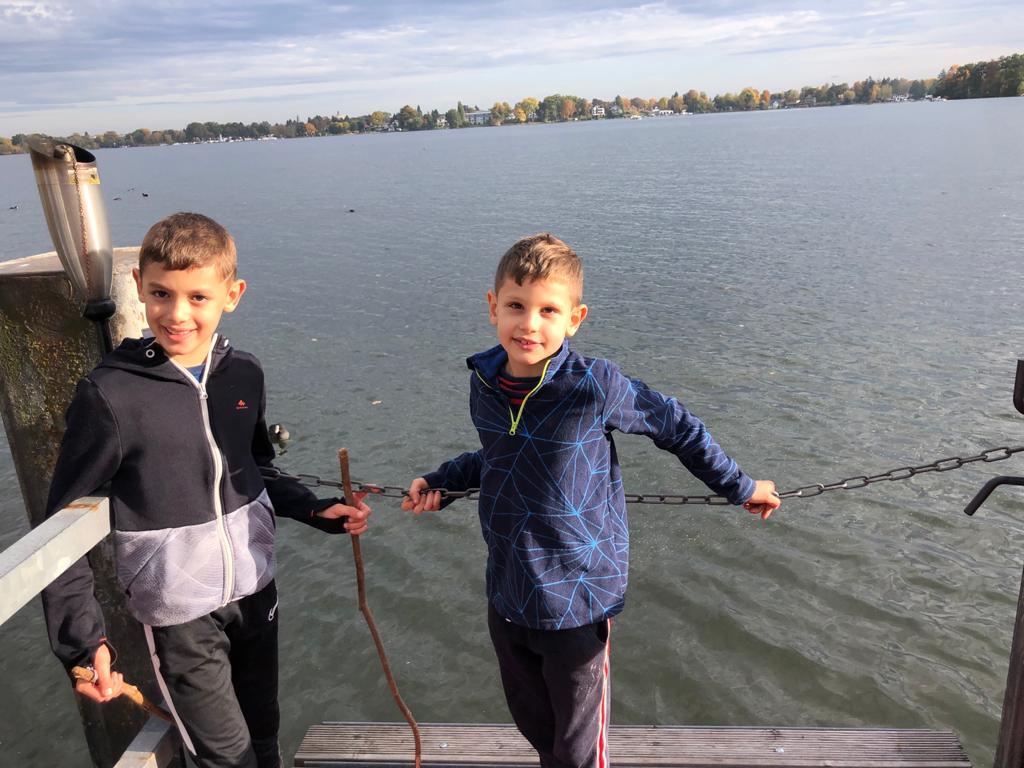
I was sad that our eastern Berlin adventure was ending, but grateful that we were able to have a fairly hassle free break despite Corona.
 Berlin Lubells: Stories of Life in Berlin from an American Expat Mom's First Experience Living Abroad
Gorgeous photos, once again. It looks like such a fabulous and beautiful time, and the boys are so handsome and getting so big!!!
LikeLike
Thank you for continuing to read, Jan. 🙏🏼 I appreciate your time and kind words! Hope you and your are staying healthy.
LikeLike