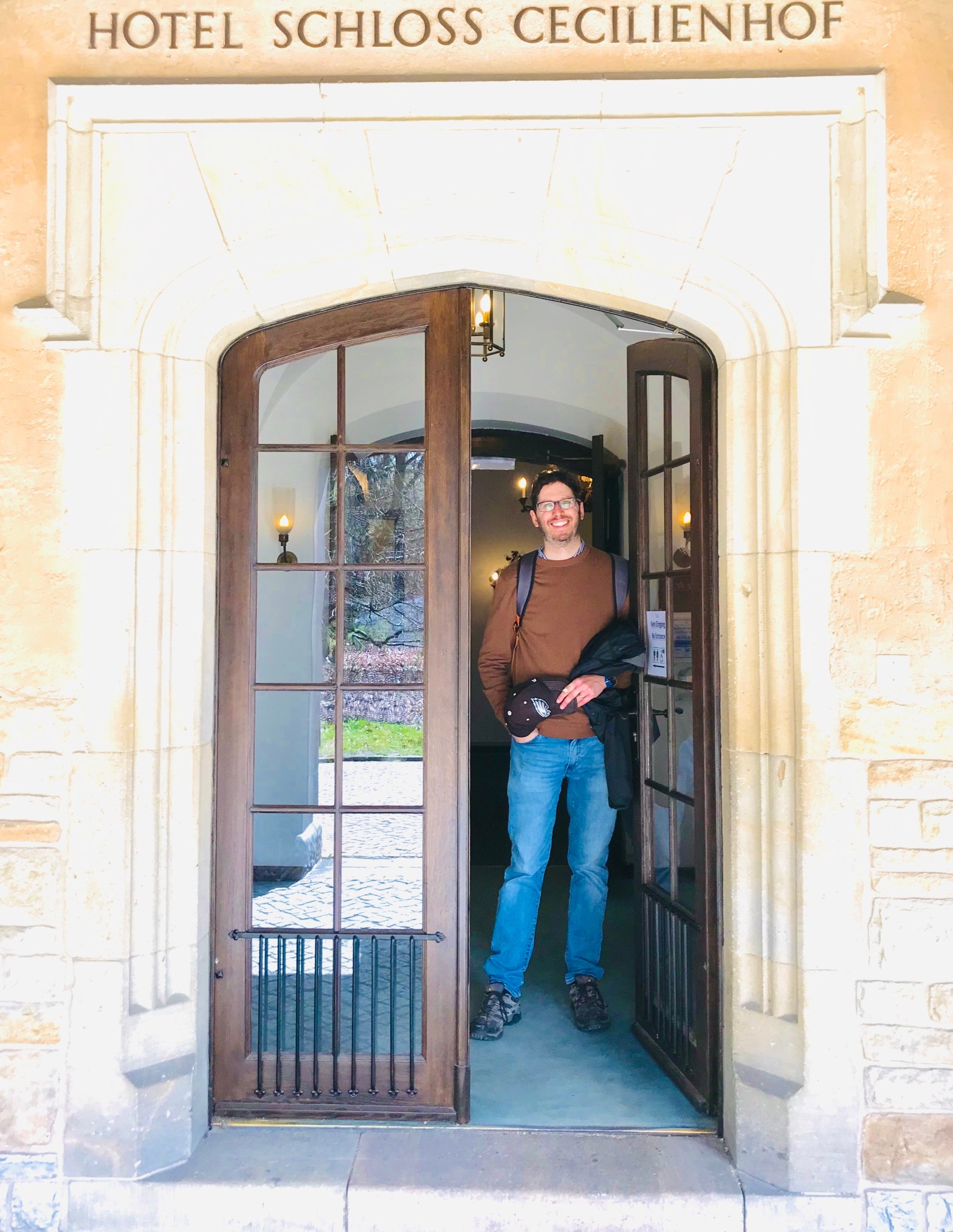
On one of the last days of Easter Break earlier this month, we took a Miles car share to Potsdam. While Potsdam could have been easily reached by public transport, we opted to disinfect the rental car and stay clear of others on public transportation.
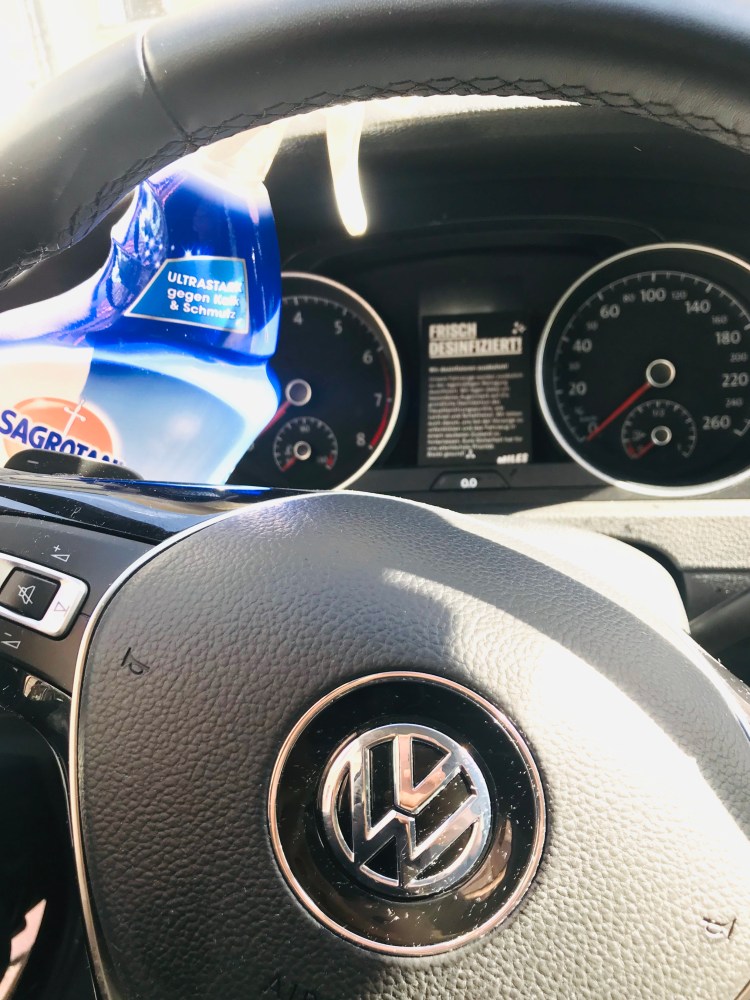
{Disinfecting the rental car and finding a note from Miles sharing that it had also been freshly disinfected by them, too.}
We chose Potsdam based on a nice hike we found on the Komoot app.
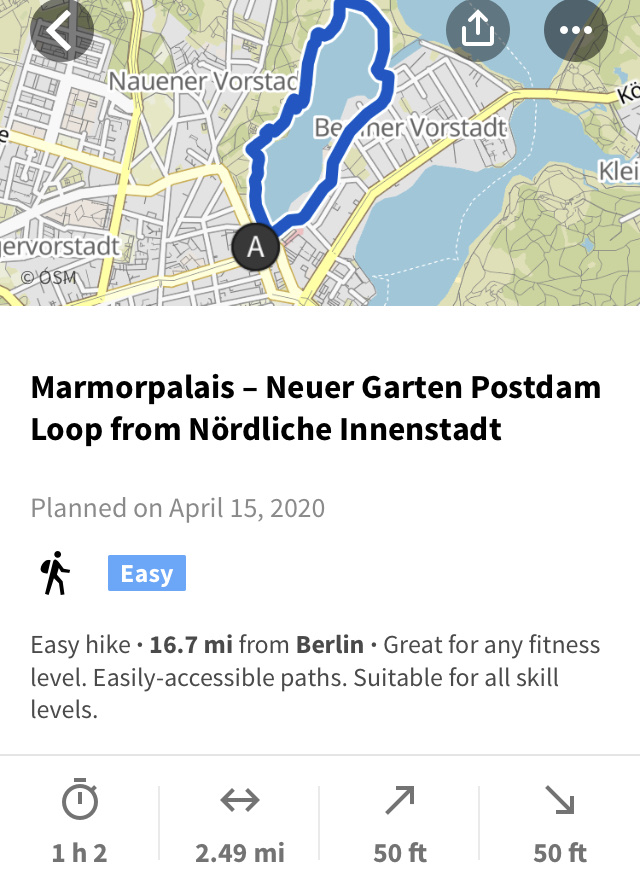
{Our hiking route planned using the Komoot app}
We again packed a picnic luncheon and were on our way. After about forty-five minutes of uneventful driving on mostly highways, we were there. We left the car after paying for parking at a machine and headed the block and a half to the start of our “hike” which would include a thorough tour of the Neue Garten, or new garden.
Starting in 1787, Frederick William II of Prussia (1744-1797) arranged to have a new garden laid out on this site. The New Garden is one of the ensembles comprising the UNESCO World Heritage Site “Palaces and Parks of Potsdam and Berlin,” a status awarded in 1990.
The first landmark we encountered was the Gothic Library. This two-story pavilion was created by the same architects who were in charge of designing all New Garden buildings – Carl Gotthard Langhans and Andreas Ludwig Krüge. One floor of the library was dedicated entirely to French literature and another to German.
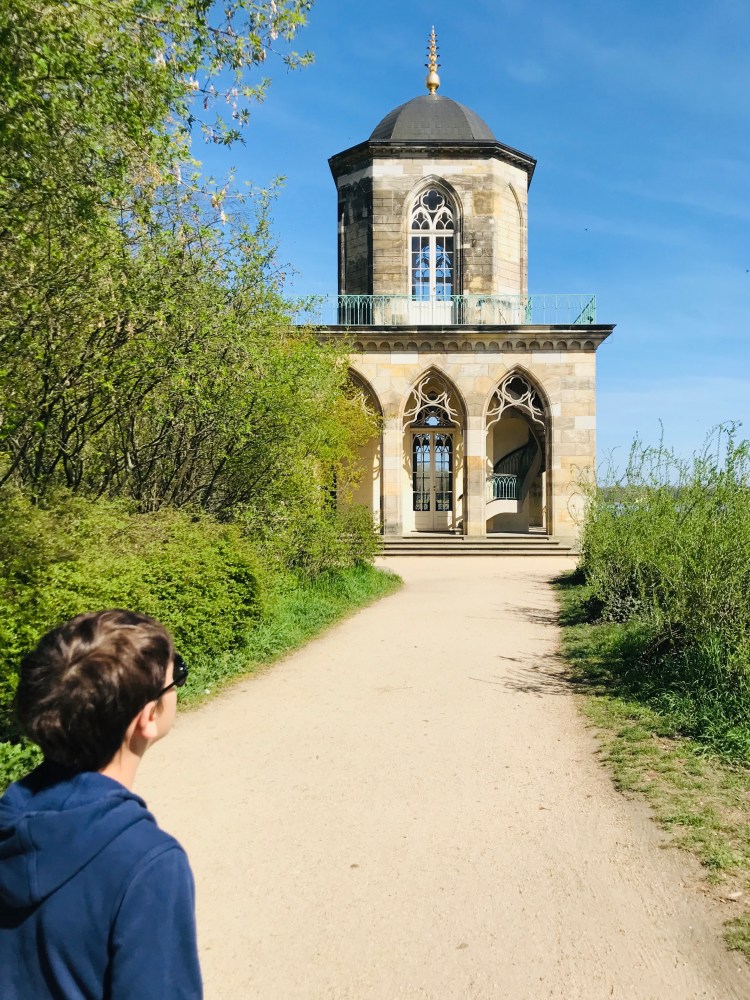
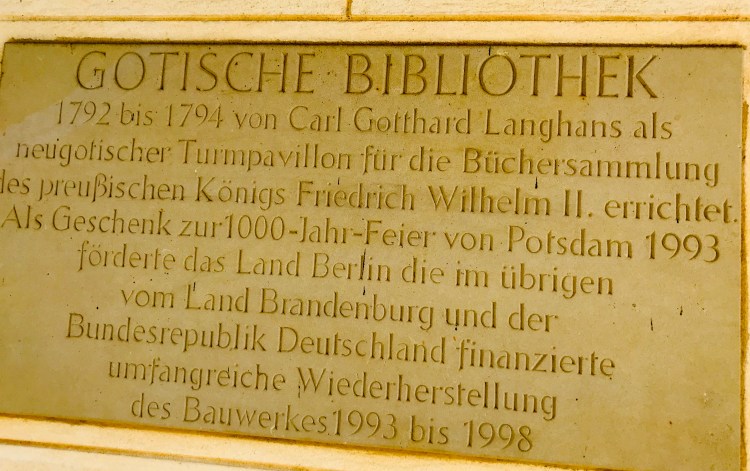 {Gothic Library – our first stop on our Neue Garten tour}
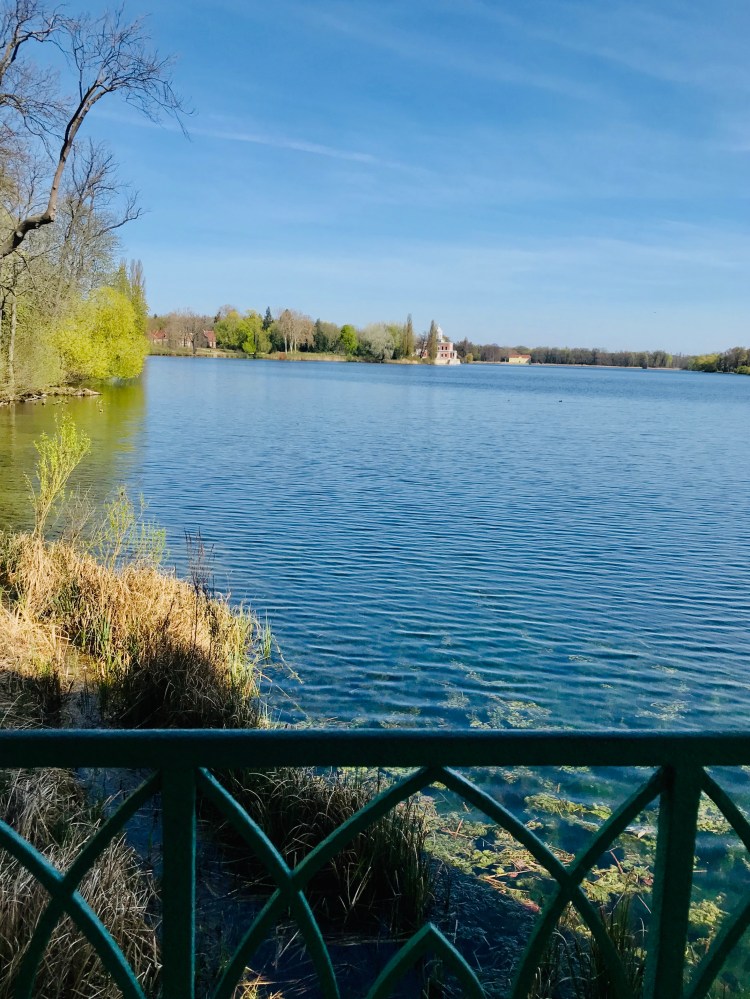
{View of the Marmorpalais (Marble Palace) and the Grunes Haus (Green House) from the Gotische Bibliotek (Gothic Library)}
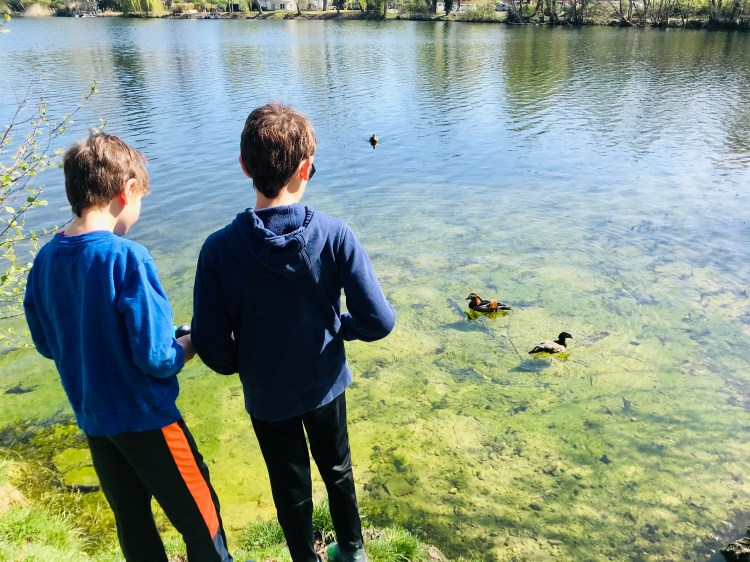
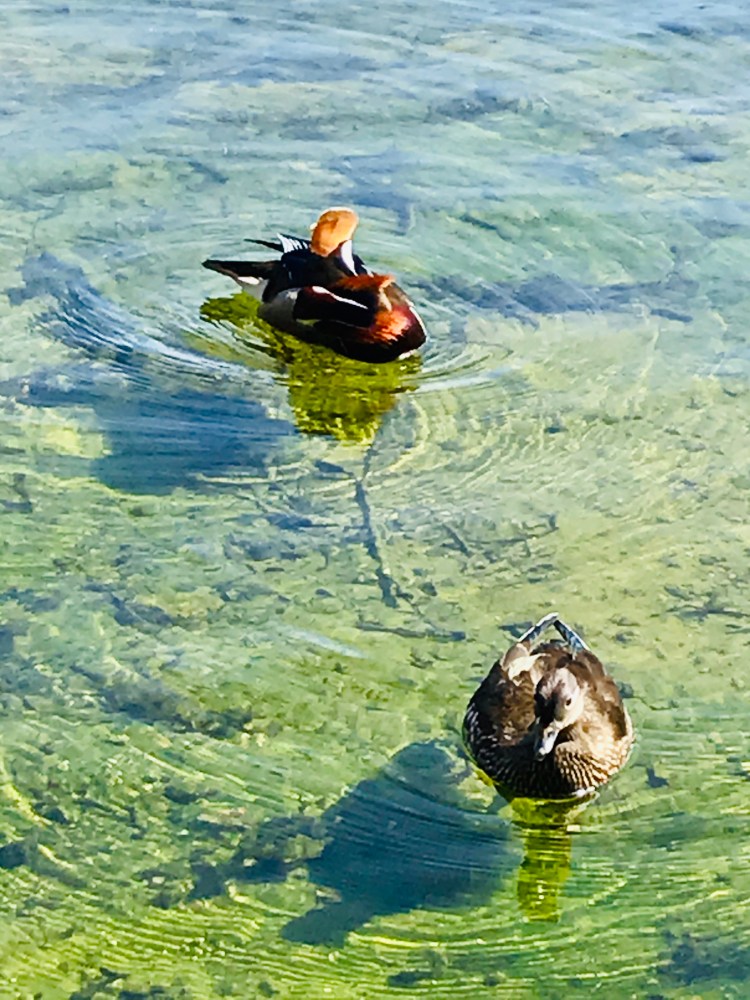
{We discovered many types of ducks on the pond that day}
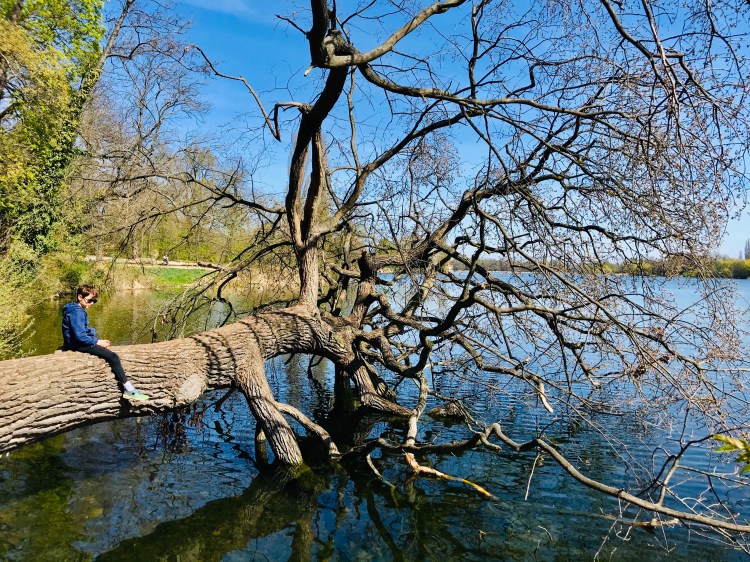
{Ben always loves to climb the trees, whether vertical or horizonal}
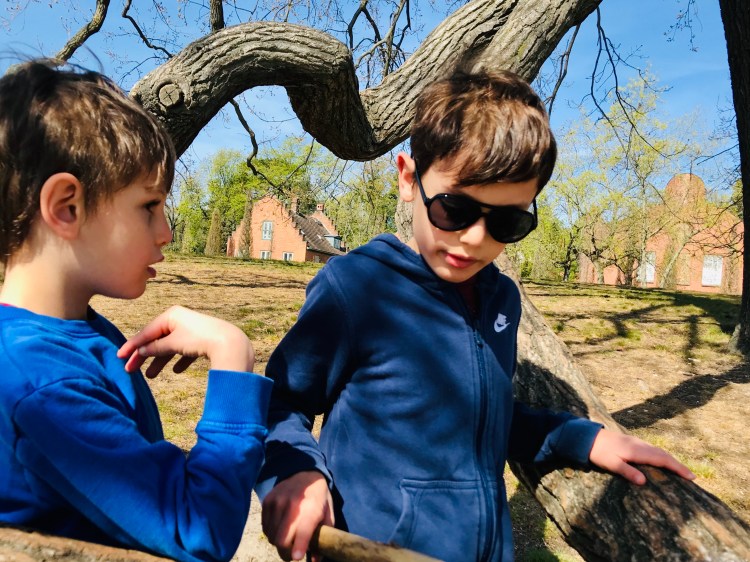
{Brotherly discussions, mostly about gaming these days, with the Dutch Houses in the background}
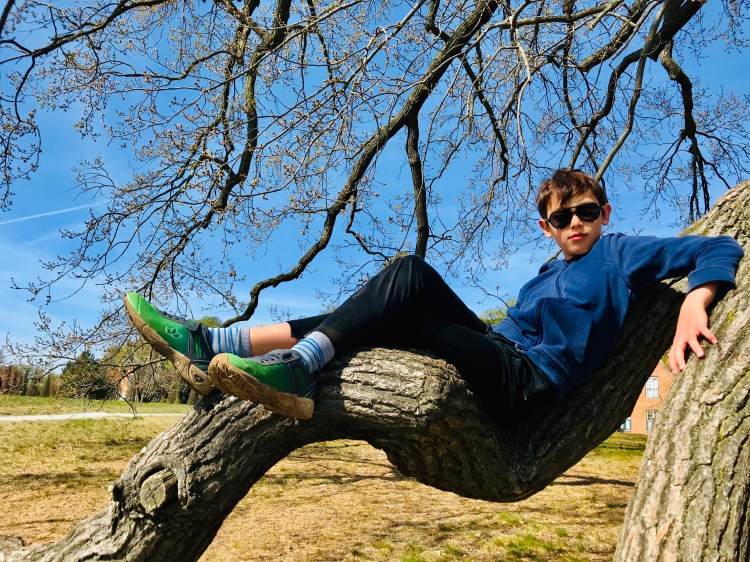
{Just hanging around}
While the boys climbed trees, I hunted for a bathroom after looking at Google Maps. I was in luck, there was a public bathroom only a few minutes walk from where we were.
What I hadn’t realized was that I had stumbled across our picnic spot for the day. Not the bathroom, of course, but the Orangerie next to it. Brimming with colorful springtime flowers, it provided the perfect backdrop for a respite.
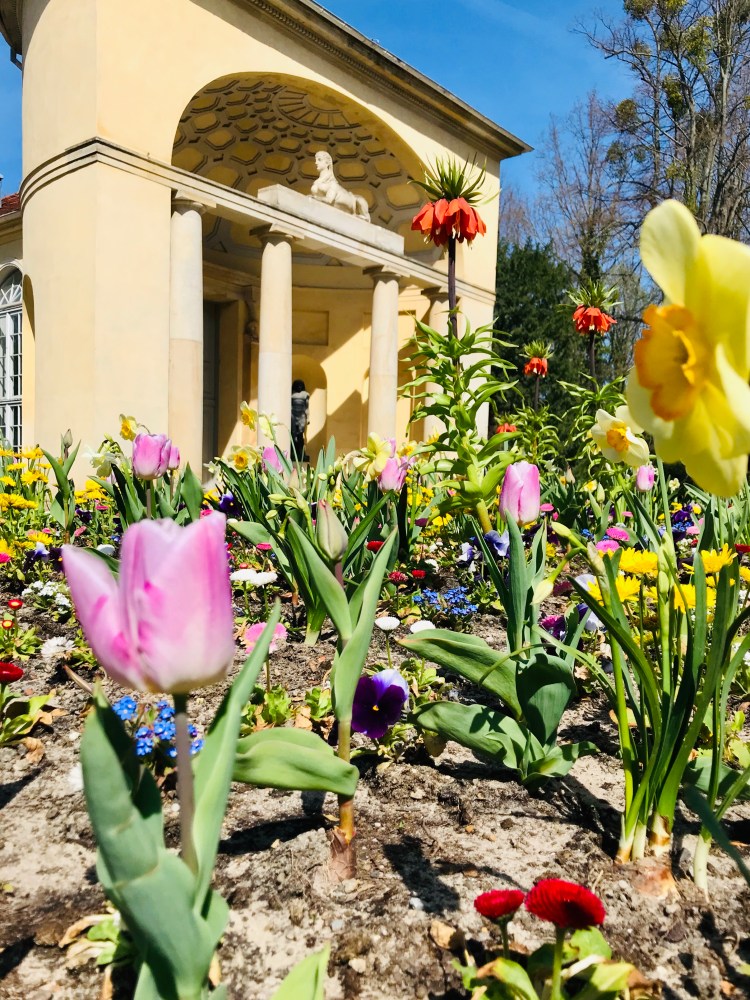
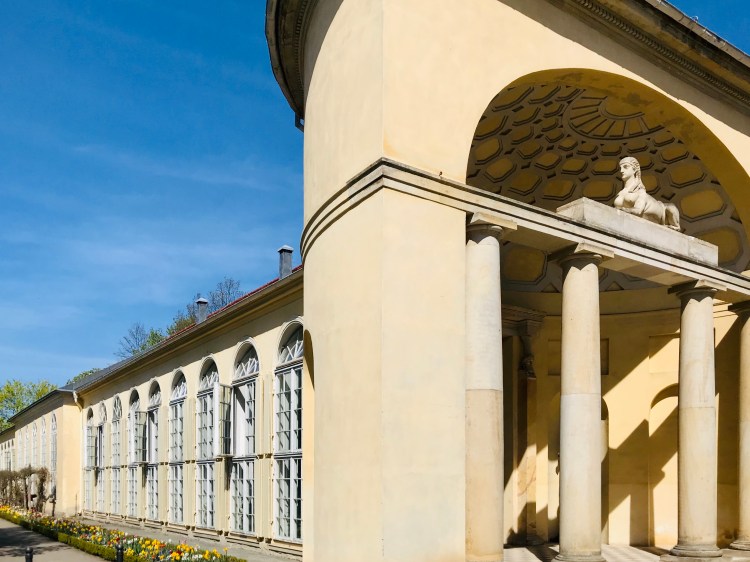
{Egyptian entrance to the Orangerie}
The Orangerie was built between the years 1791 and 1793. The designers of this structure took inspiration from Egyptian mythology. The entrance to the building resembles an Egyptian portal, and above the door lies a Sphinx. Sculptures of Egyptian gods surround another entrance to the Orangerie. All of the sculptures were created by Johann Gottfried Schadow.
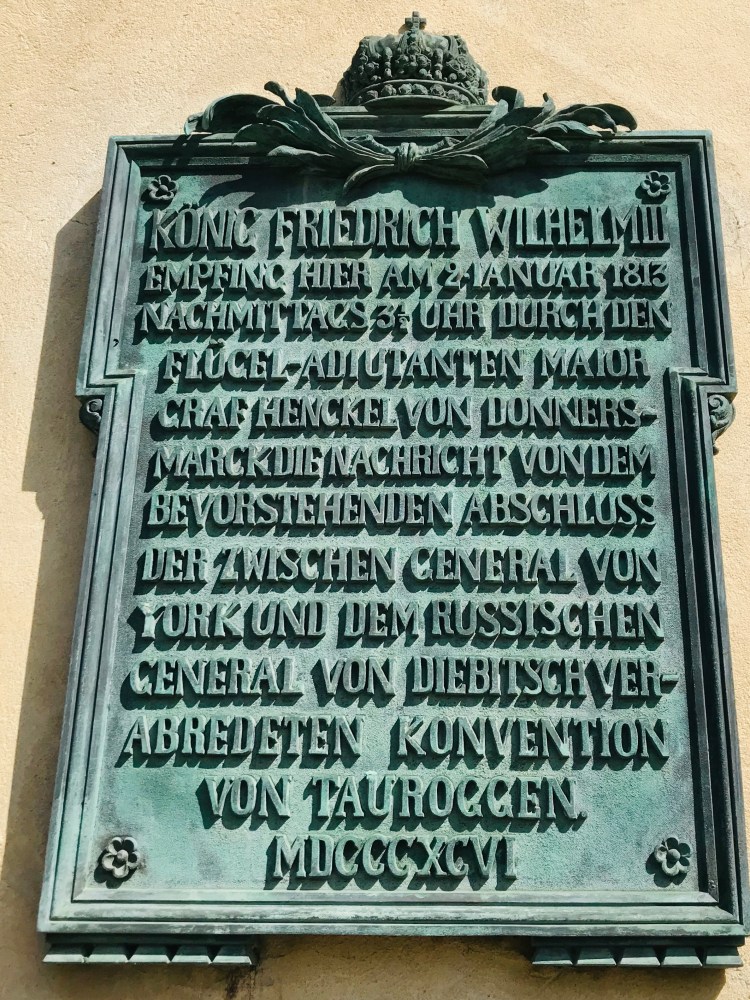
{Orangerie history}
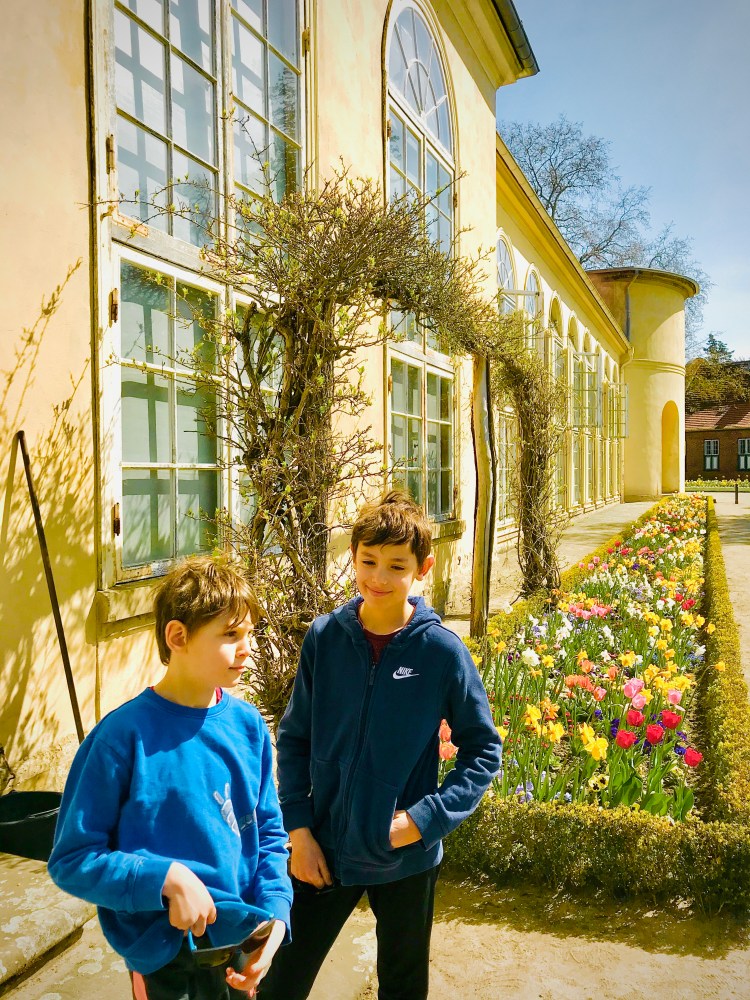
{Humoring mom with a quick shot}
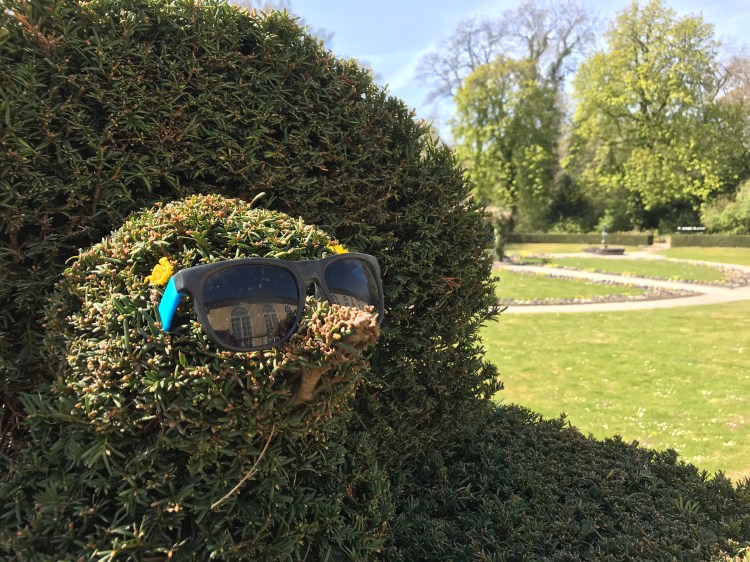
{Mom humoring the boys with Isaac’s sunglasses on the bird topiary}
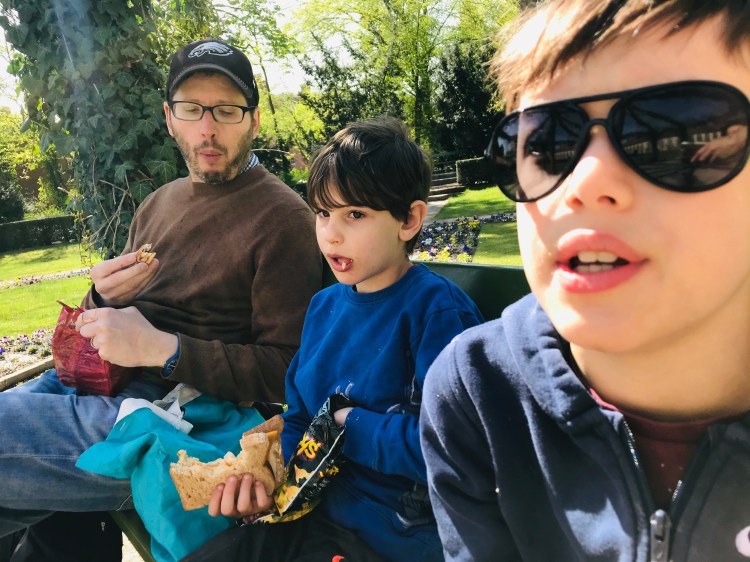
{Picnic time in the Orangerie gardens}
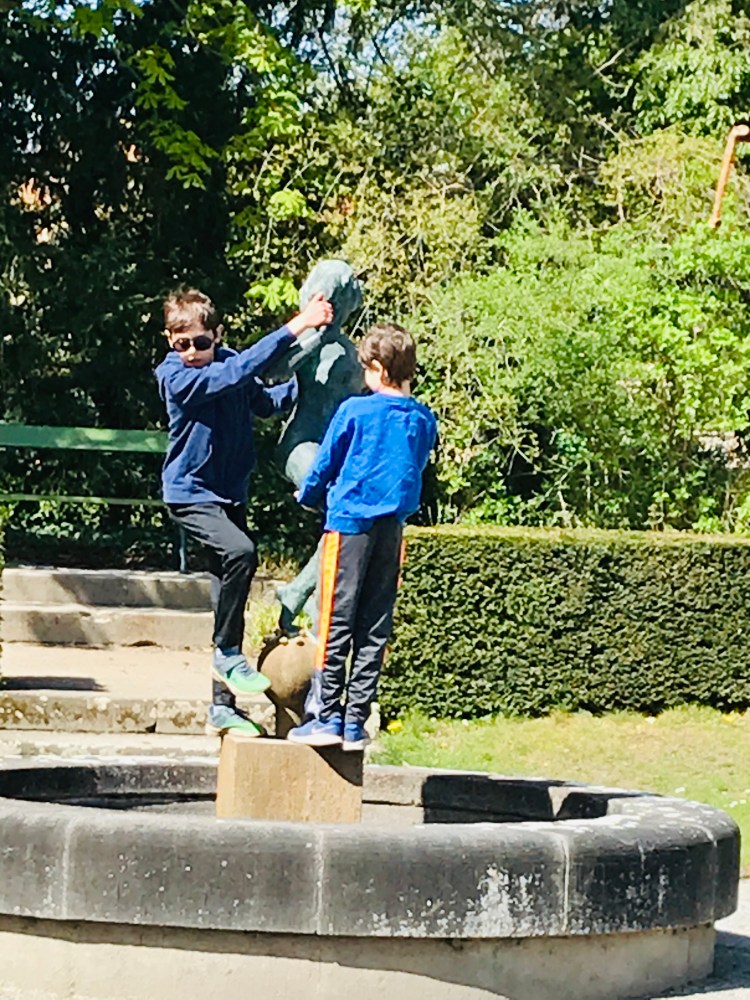
{I know that statues are ready for the playgrounds to open once again}
After lunch and new “Go Power”, we played a game of tag together through the forested paths of the Neue Garten. Little did we know, despite being in the Komoot description, that we would stumble across a palace.
The palace was the Marmorpalais or Marble Palace. The Marmorpalais was a royal resident in Potsdam, build on the grounds for the extensive Neuer Garten on the shores of the Heiliger See (Holy Lake). The palace was commissioned by Frederik William II of Prussia and designed in the early classicist style by the architects Carl von Gontard and (from 1798) Carl Gotthard Langhans, designer of Berlin’s Brandenburg Gate.
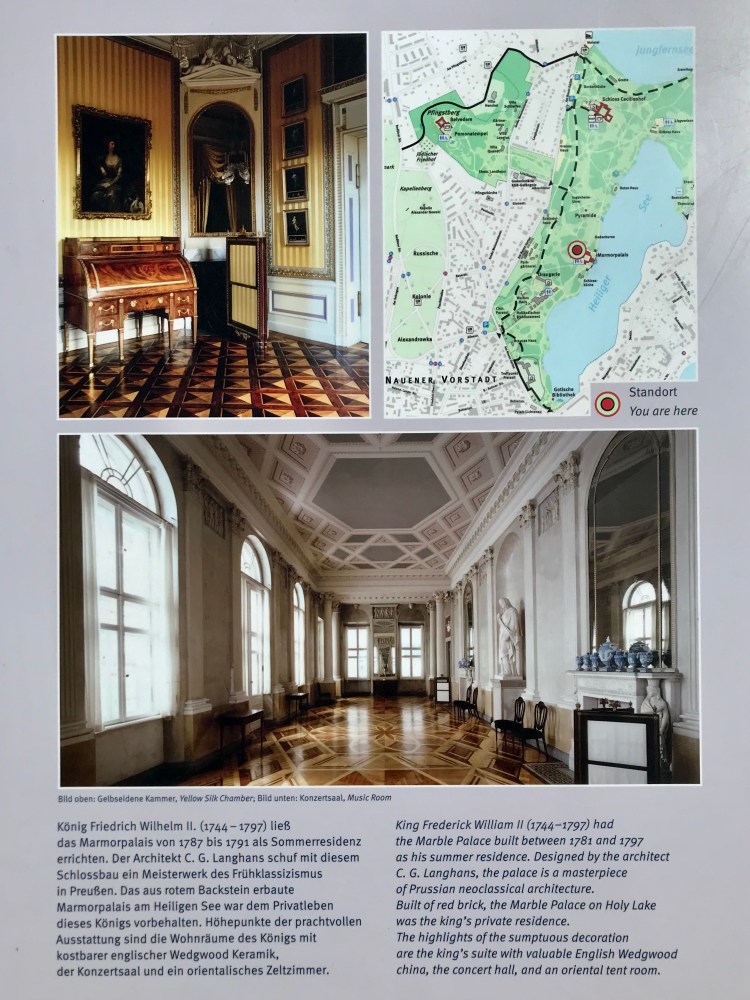
The Marmorpalais was reserved for the private use of the king, who had an artistic temperaments. With this new construction, the nephew and successor of Frederick the Great dissociated himself from his childless uncle, whom he disliked and who favored earlier Baroque and Rococo forms.
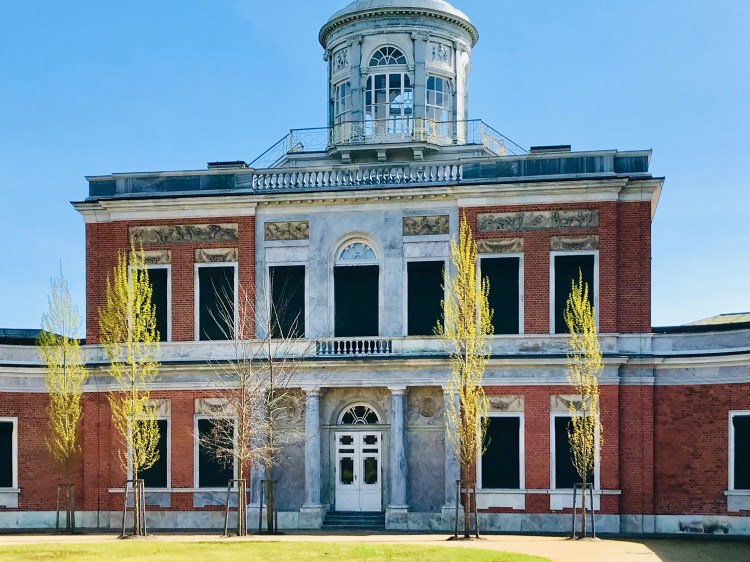
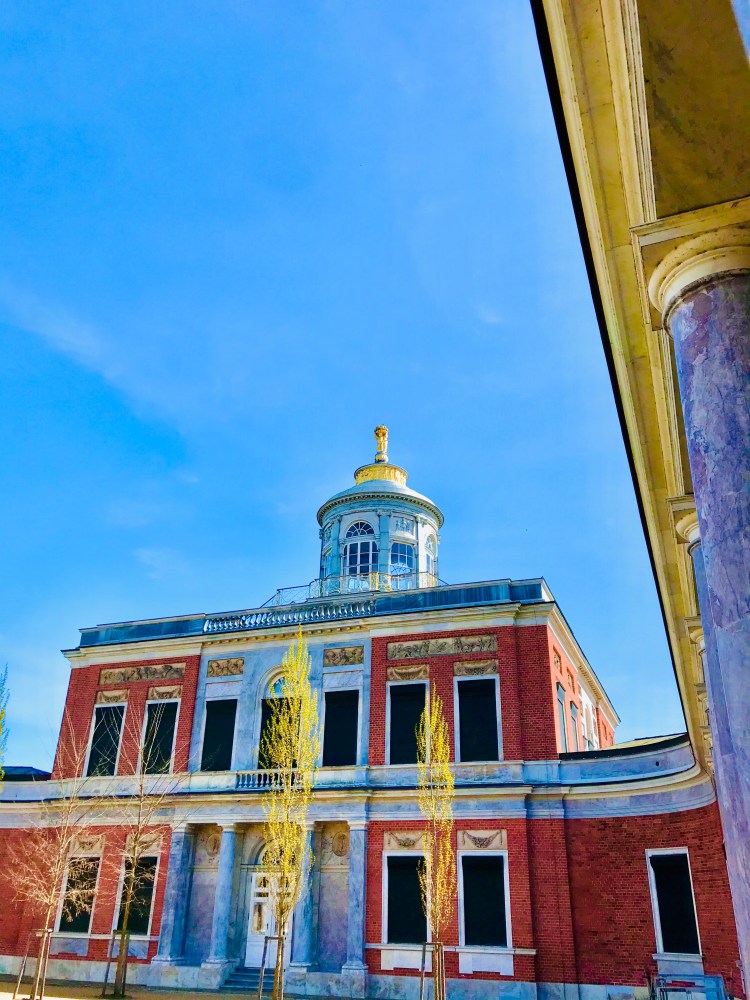
{Marmorpalais}
The red brick Marmorpalais was originally a two-story square building A fine view of the surrounding gardens and lakes is possible from a round pavilion on the flat roof of the cubical structure. Among other buildings, the little castle on the Pfaueninsel (Peacock Island – https://www.visitberlin.de/en/pfaueninsel-and-pfaueninsel-palace) in the Havel River was constructed as an eye-catcher.
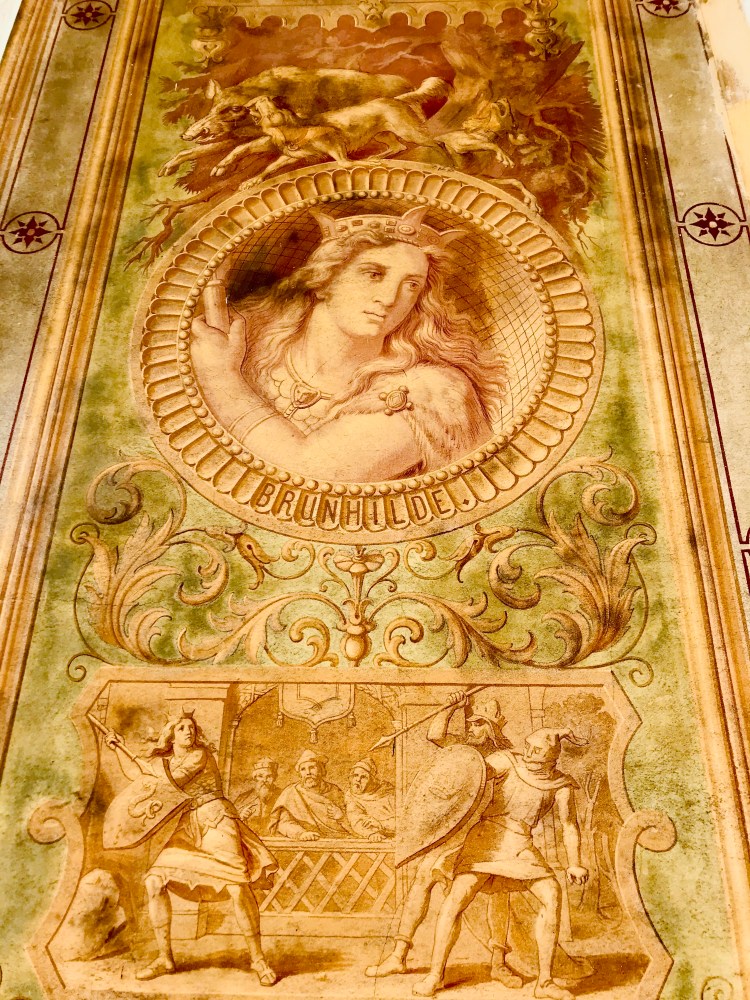
{Detail on the outside of the Marmorpalais}

{Dave with the Grunes Haus in the background}
As we continued walking, we spotted an unusual pyramid on top of a building. We didn’t know it then, but later discovered there was more than meets the eye.
One of the many interesting constructions in the New Garden, the Pyramid served not only as an architectural monument but as an ice cellar. Built in 1792, the cellar kept food fresh and was essentially an early-model refrigerator. During the winter, ice from the frozen lake was taken and stored on the floor of the cellar to keep things cool year-round.
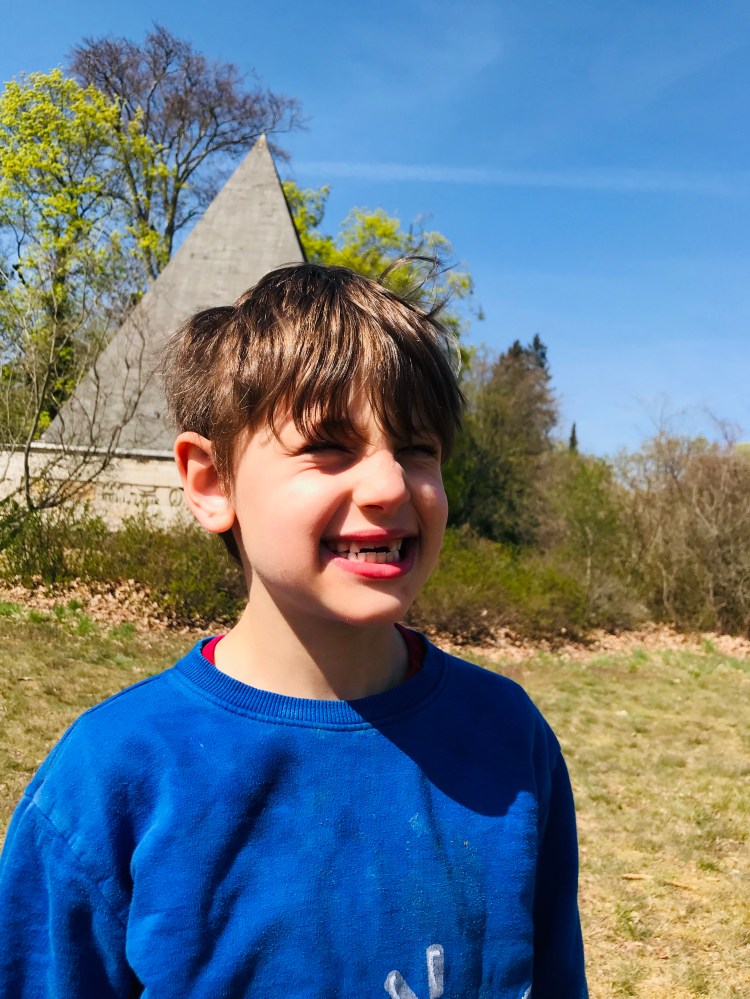
{Isaac in front of the Pyramid}
At this point, Dave suggested modifying our route as he saw on Google Maps that the Palace where the Potsdam Conference was held was nearby. So we left the picturesque riverbank and headed inland along a forested foot path. The altered route was rewarded with a magestic architectural, horticultural and historical gem.
The Cecilienhof Palace was the scene of the Potsdam Conference from 17 July to 2 August 1945, at which the victorious Allied leaders (Harry S. Truman; Winston Churchill and his successor, Clement Attlee; and Joseph Stalin) met to decide the future of Germany and postwar Europe in general. The conference ended with the Potsdam Agreement and the Potsdam Declaration.
What’s more, the boys discovered a water sprinkler and found a welcome distraction while Dave and I read a plaquard explaning the history of the building.

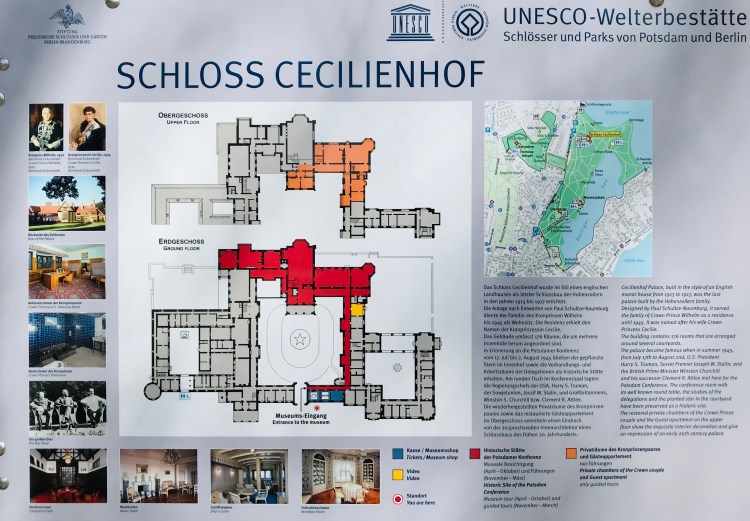
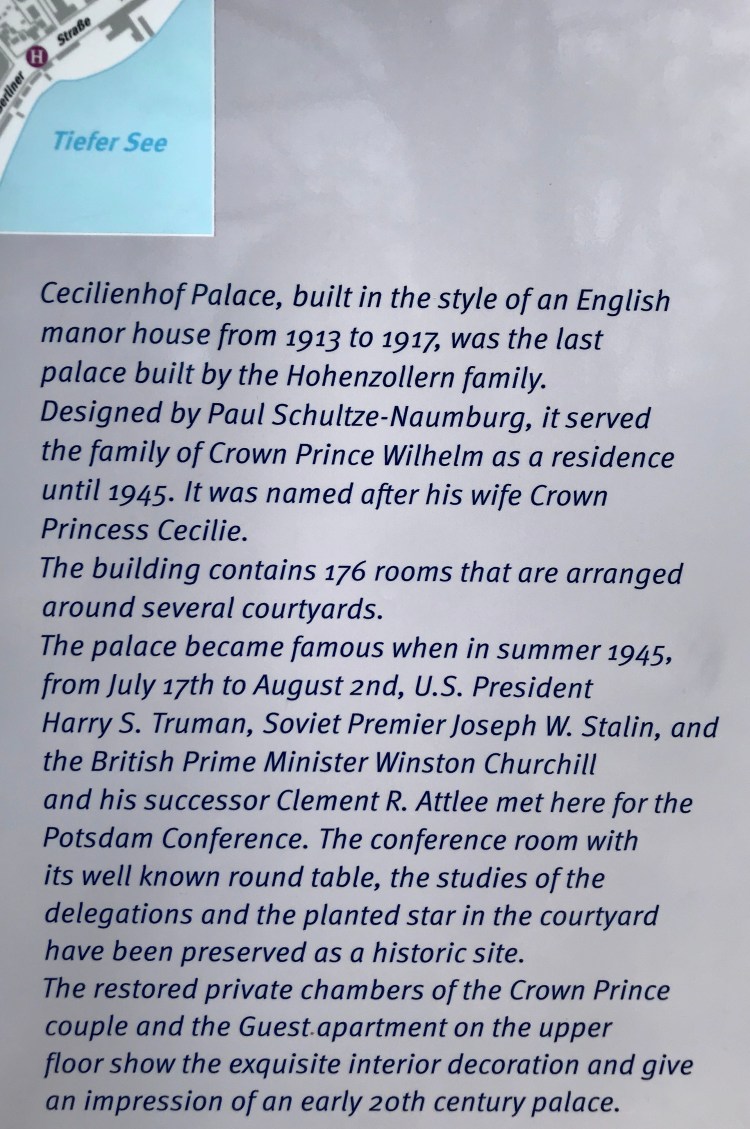
{Cecilienhof Palace, the site of the Potsdam Conference}
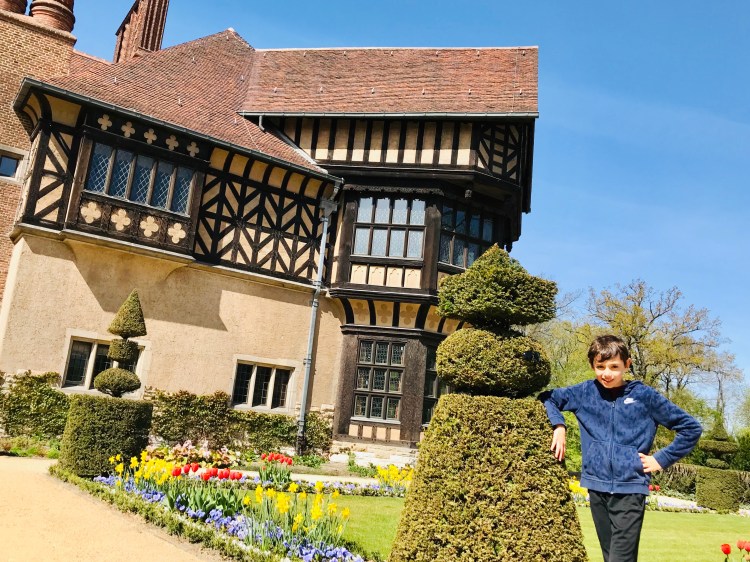
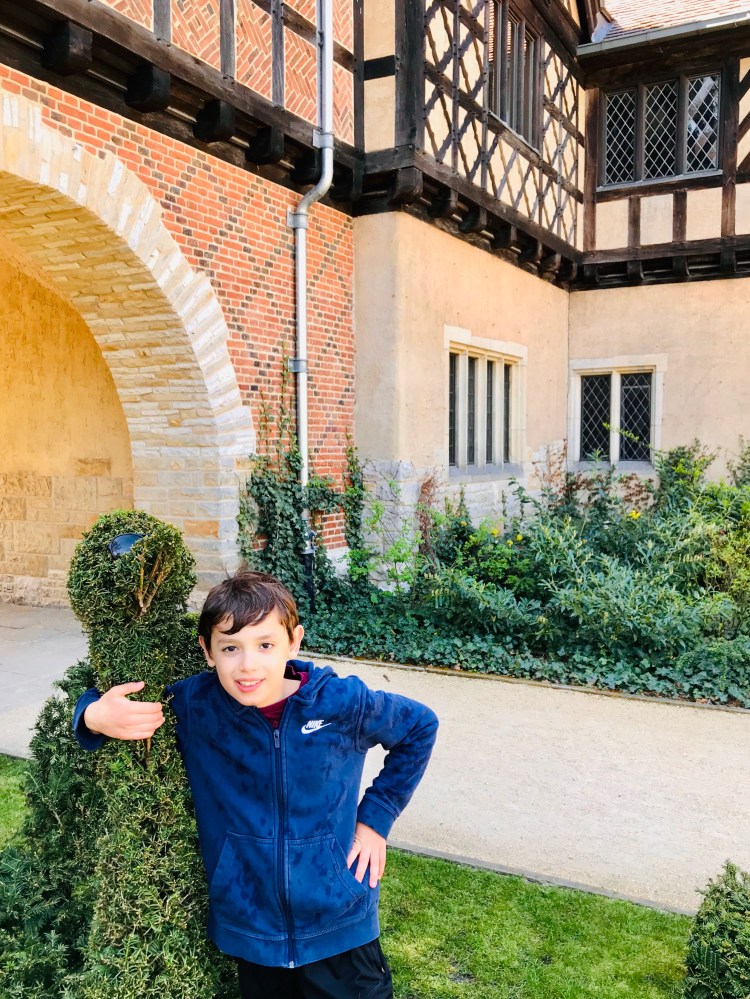
{Ben discovered a new admiration of topiaries – notice his wet sweatshirt from jumping throught the sprinklers}
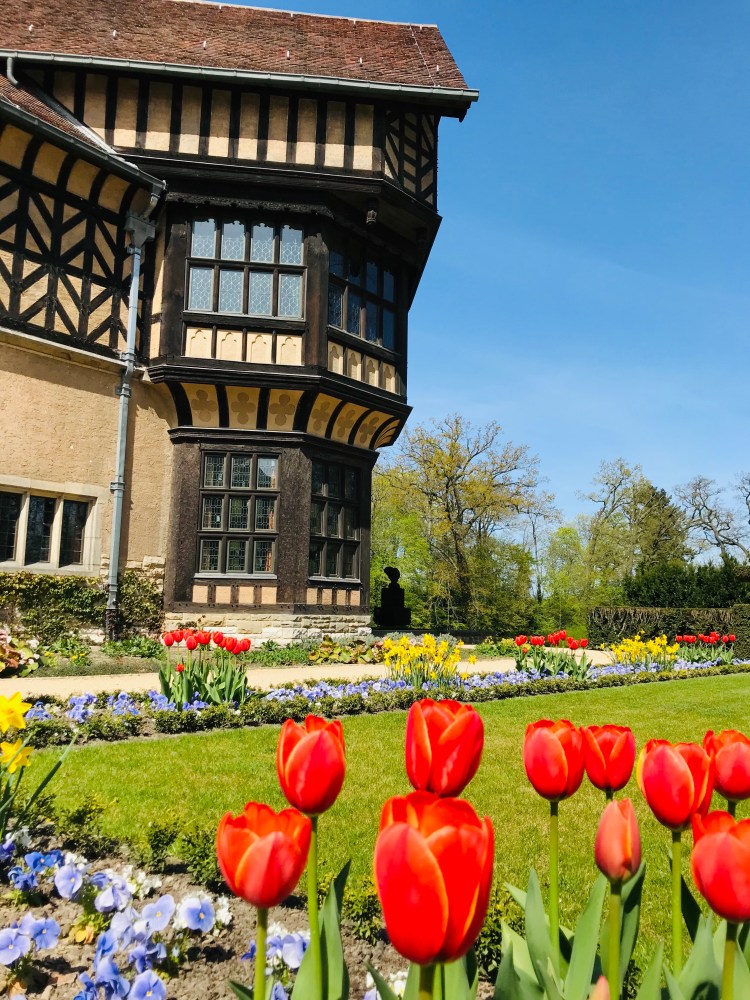
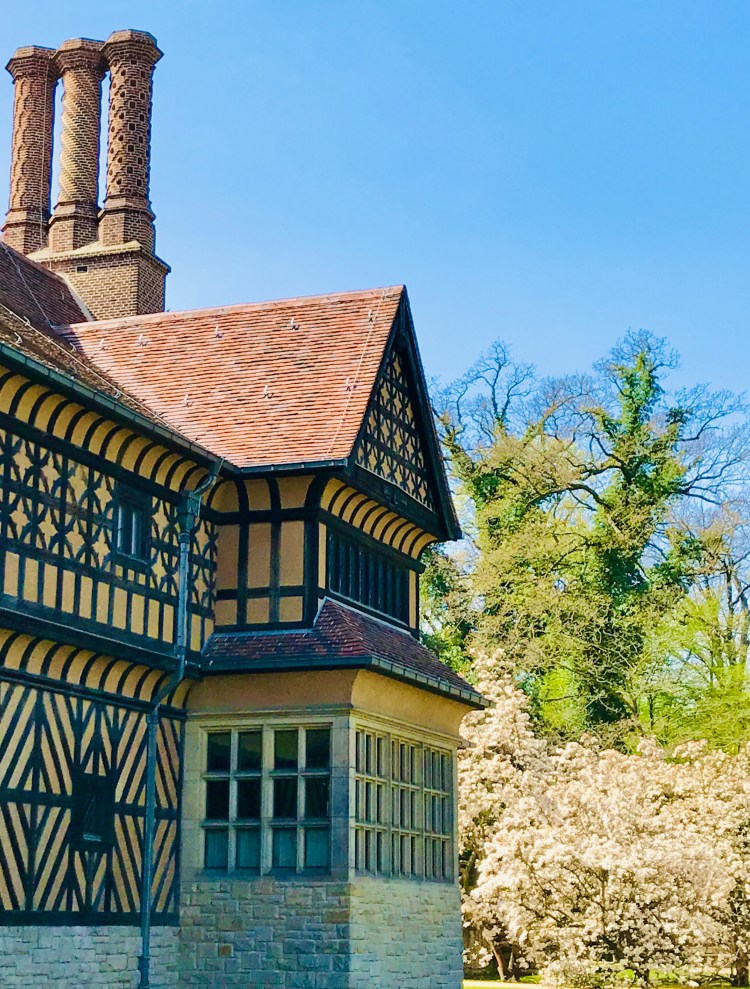
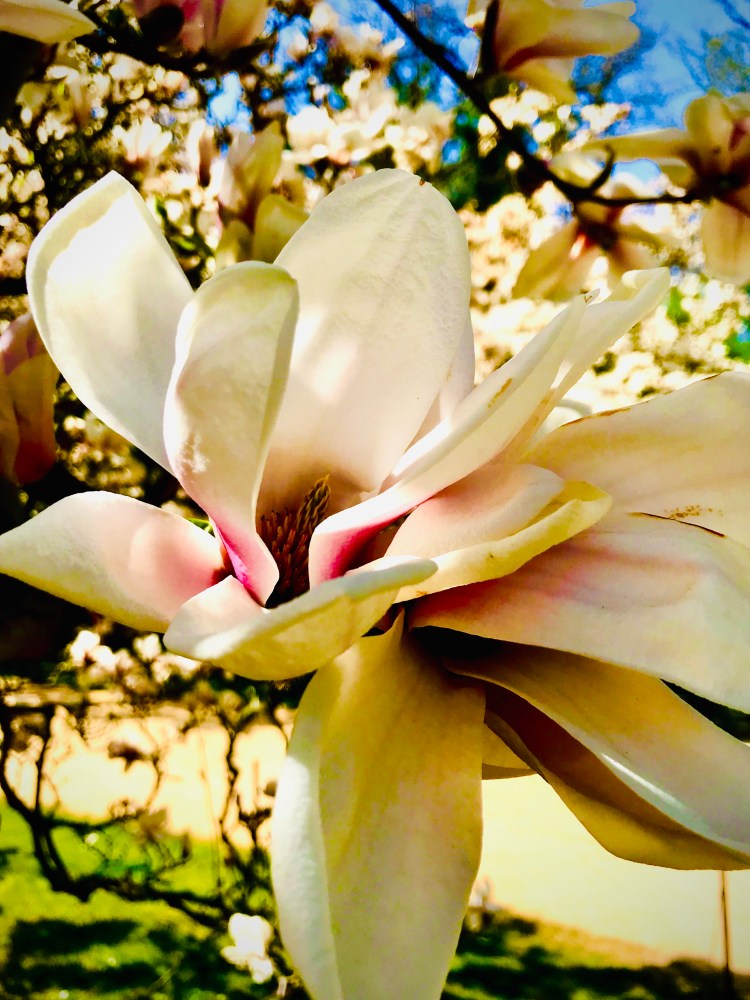
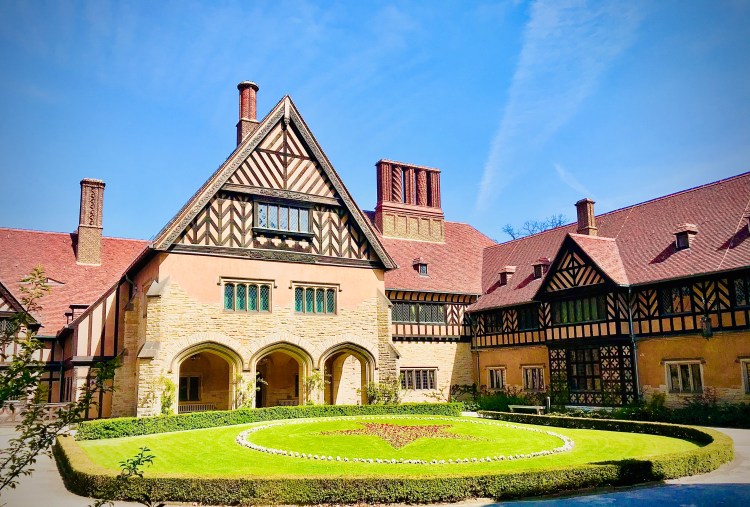
{Beautiful gardens of the Cecilienhof Palace}
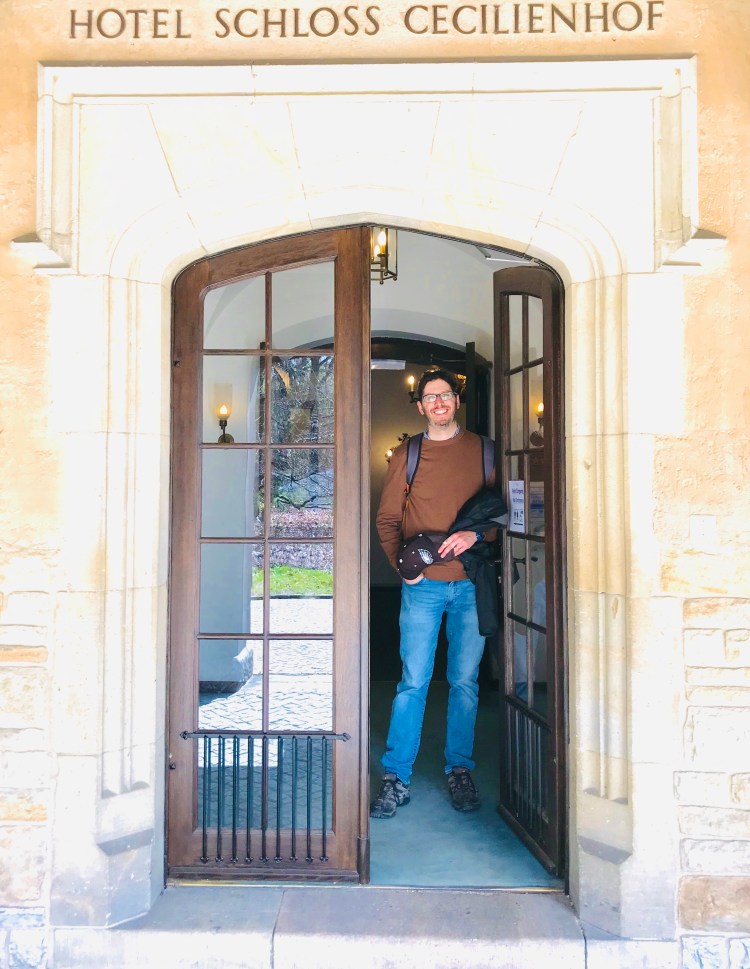
{Dave emerged from a very fancy exit after using the restrooms}
After touring the Palace from the outside (as it was closed because of COVID-19), we headed back towards the old town of Potsdam, where we had parked our car.
Remembering the weekend I had spent in Potdam back in September 2018 during a yoga retreat (https://atomic-temporary-144439175.wpcomstaging.com/2018/09/29/retreat-in-potsdam/), I wanted to show Dave the Dutch Quarter. So we headed toward an ice cream shop in that area as both an enticement and a reward for the boys. Our time in Potsdam so far had not be as exciting for them as it had been for us and we wanted to finish strong.
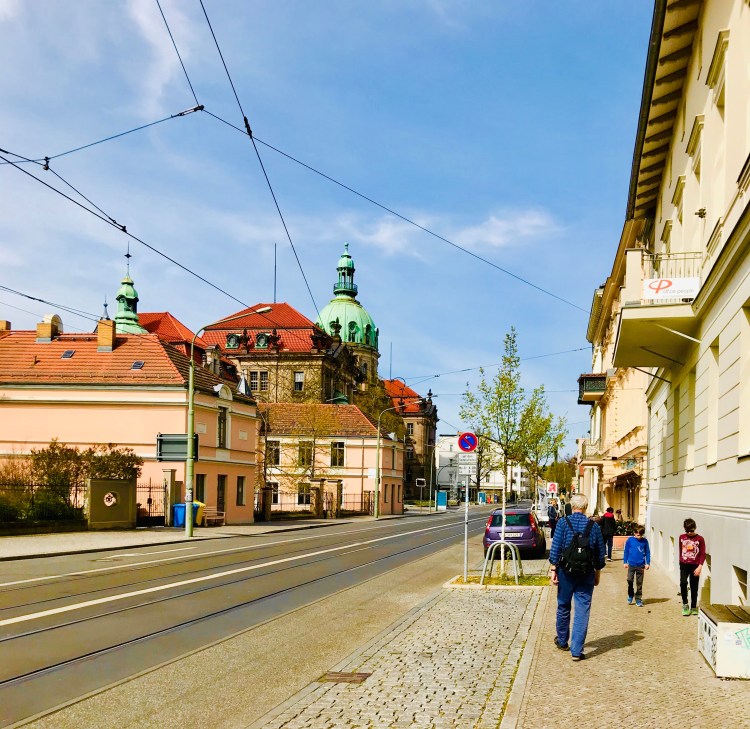
{Scenes from our walk to the Dutch Quarter of Potsdam}

{I was happy to see the historical aspects of Potsdam, but as you can see the boys did not share my enthusiasm.}
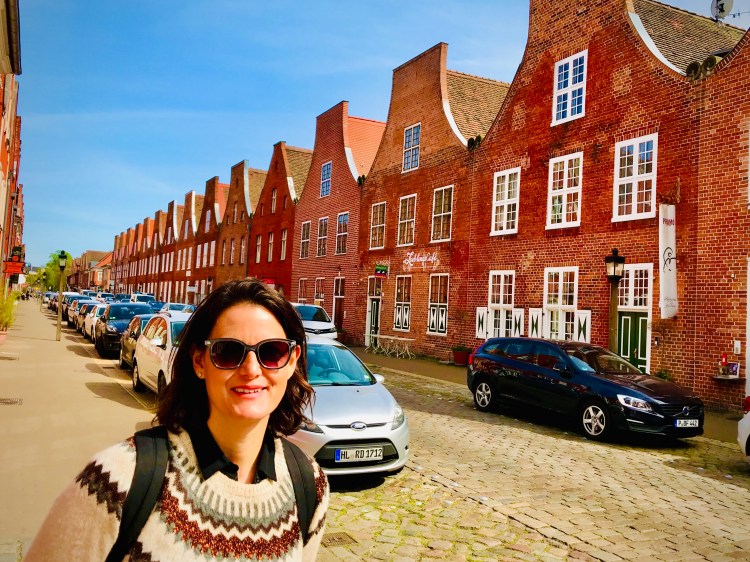
{In front of the Dutch Quarter house I had stayed in during a yoga retreat back in September 2018.}

{A reminder of the current situation}
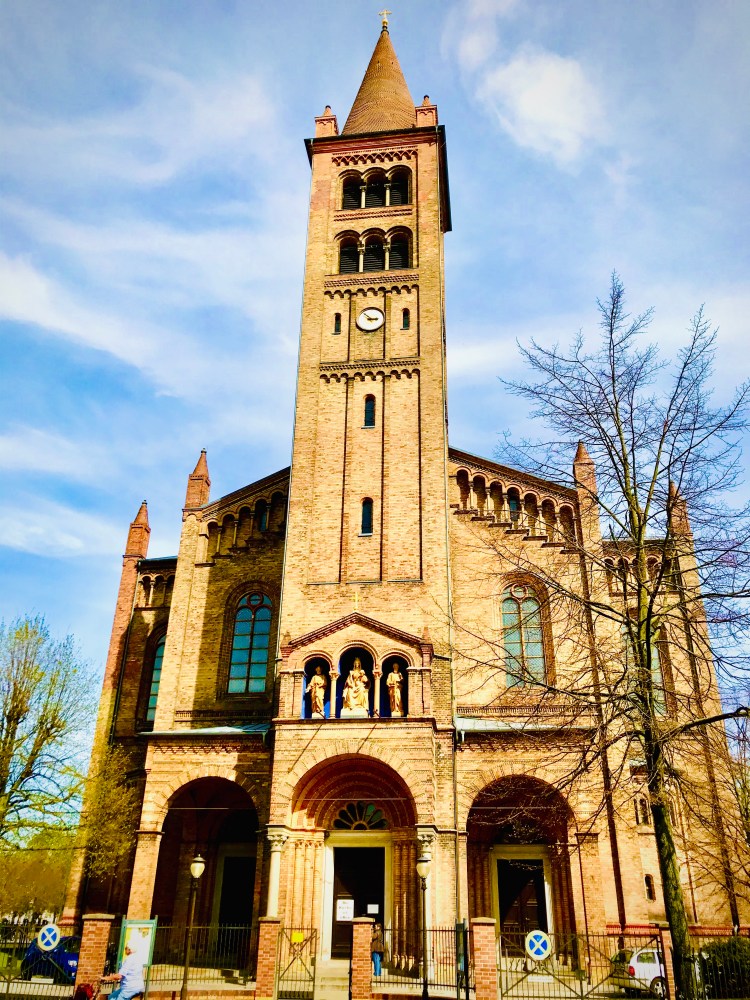
{St. Peter and Paul Catholic Church}
As we headed back to our car from the ice cream shop, we were reminded of the contrast between the classical architecture and more utilitarian communist influences.
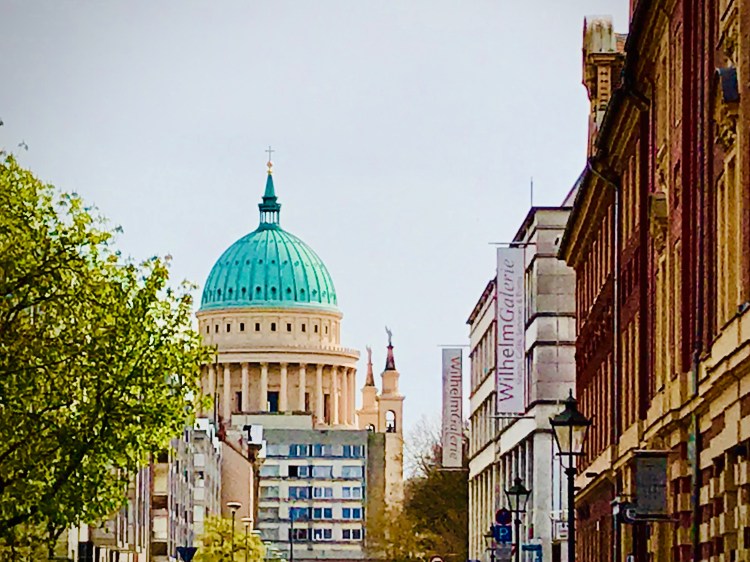
{Classical and communist architecture in the old town}
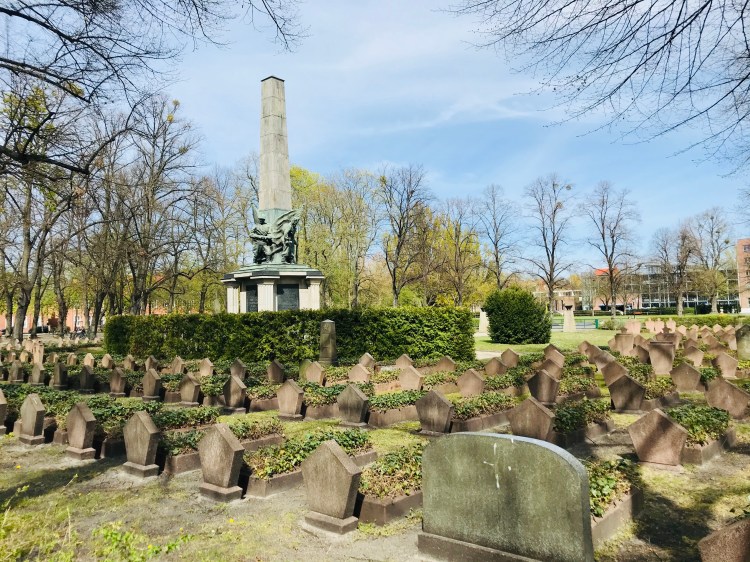 {Post World War II Soviet Cemetary}
Overall, our trip was a very pleasant way to get out of the city of Berlin and enjoy the beautiful spring weather. However, it has been quite difficult trying to find destinations that allow the boys to have fun with playgrounds and other kid activities closed. I hope these more laid back excursions will teach them that low key and low tech days together can be fun. At least Dave and I really enjoyed the day!
 Berlin Lubells: Stories of Life in Berlin from an American Expat Mom's First Experience Living Abroad