
During our year and a half of living in Berlin, I’ve often scratched my head regarding certain cultural norms.
Why aren’t there air conditioners in homes and most businesses, especially with constantly rising temperatures in the summer? Why are so many of the cars here so much smaller? Why do most rental apartments lack a clothing dryer, like the one we had for the first year? Why are the refrigerators so small? And the milk cartons, for that matter? Why do they rarely use paper and plastic dining products such cups, plates and cutlery? Or ice? Why do you have to pay for the paper bags at the grocery store? How are there so many vintage clothing and used book stores around? Why must you pay extra for drinks in plastic and glass bottles? And why are hoards of people dragging bags of empties to deposit them in machines at the grocery store (they are getting their deposit money back)?
I started to wonder if the Germans seem to care more about the impact of their consumption. Are they better stewards of the earth? Are there policy restrictions? Do children grow up under these norms and think nothing of them? Is it also a function of living in a diverse city center? I don’t have many answers, but I do have a lot of questions.
So after doing a little research, I discovered Germans have dozens of measures to encourage companies and households to reduce their carbon emissions. In the near future, rail travel will be made cheaper by way of a cut in value added tax while plane tickets will be taxed more heavily; heating systems that run on oil will be banned from new buildings from 2026; vehicle taxes will be raised for heavily polluting cars, while electric vehicles will be treated more favourably. The government also set out a plan to install at least 1m charging points for electric vehicles across Germany by 2030.
I also read that German policy makers are discussing cutting carbon emissions through speed controls limiting vehicles to 120 kilometers per hour (75 mph) on the Autobahn where speeds are commonly around 200 kilometers per hour. (A pity as I love driving at these high speeds in our German rental cars, but I get it.)
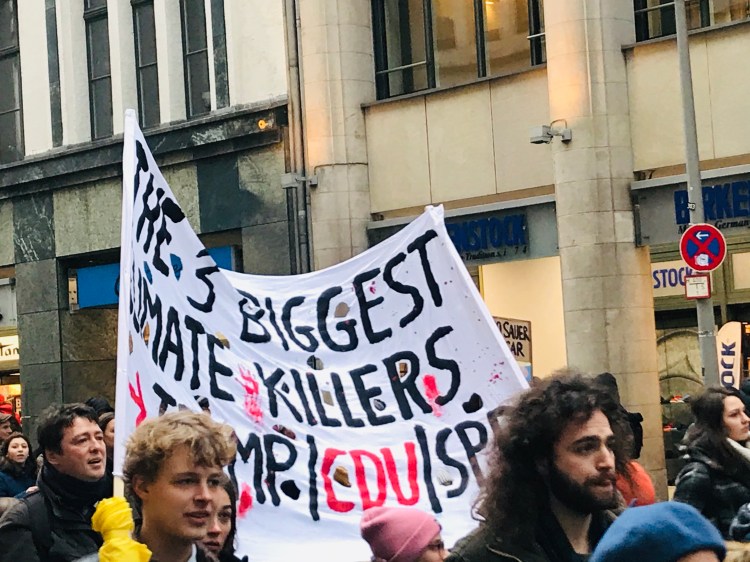
On November 29, I was on Friedrichstraße about to go into my favorite bookstore, Dussmann, looking for books in English for the boys, when I saw the police and a mass of people approaching.
 {Global climate strike in Berlin on 29 November}
What I was witnessing was a student led Climate Strike. https://www.google.com/amp/s/amp.dw.com/en/berlin-climate-protesters-brave-icy-weather-and-waters/a-51463670
I was taken a back and in tears to see the powerful messages and masses of people coming together to have their voices heard. It left a huge impact on me.


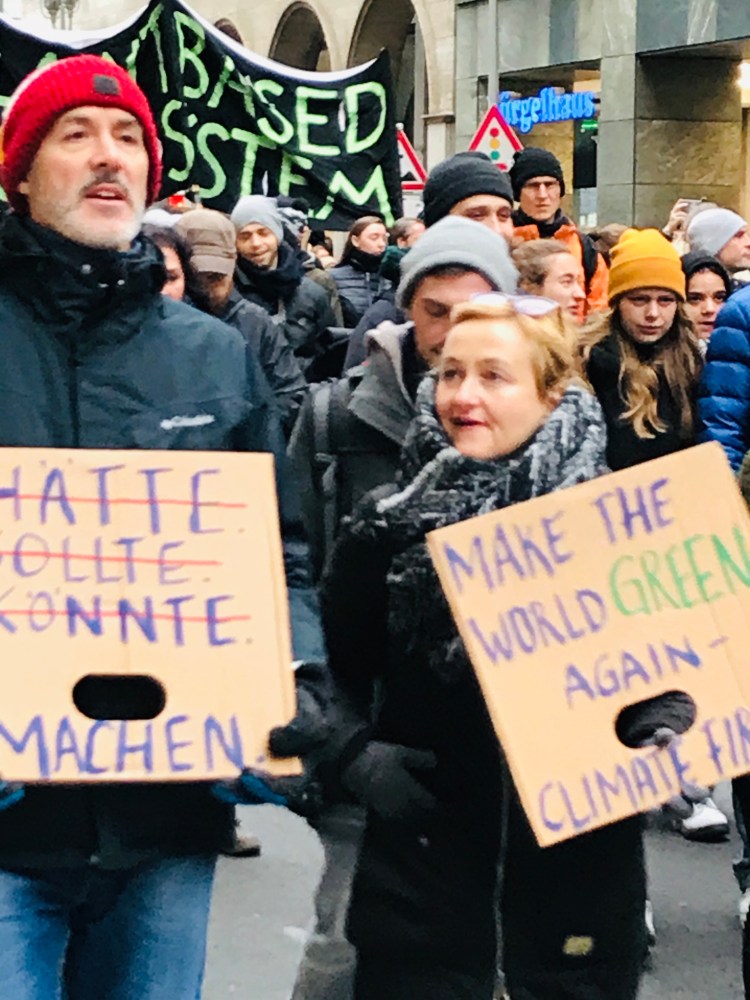

I think the big take away is that we need less. And no matter where we live, these habits of using less will continue. Something that I hope rings true for our two boys.
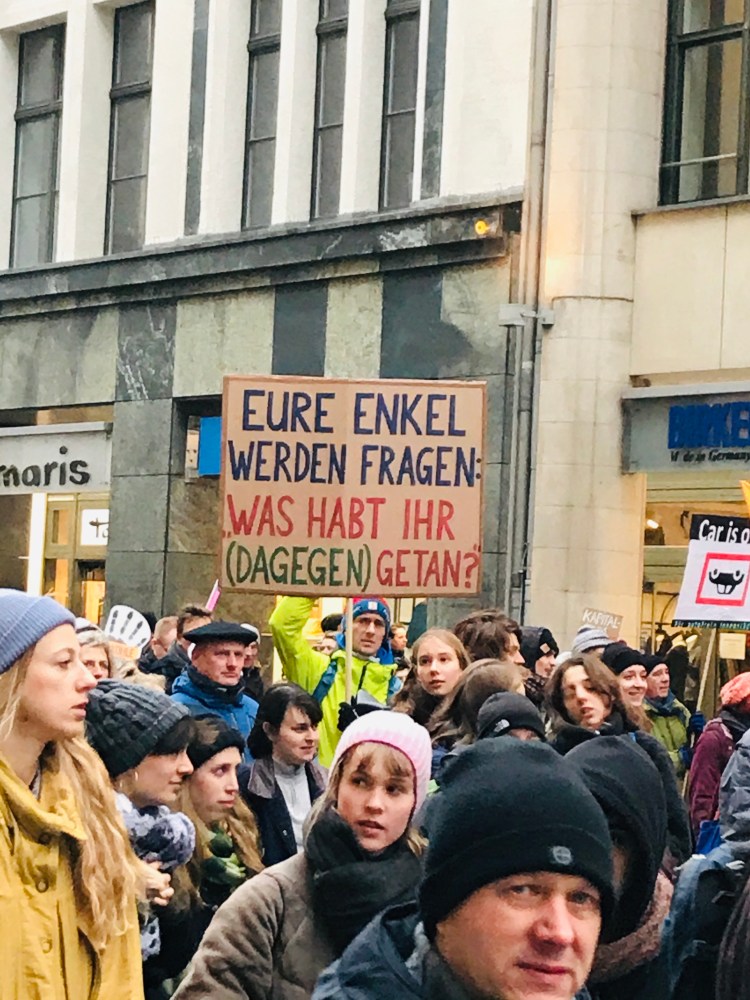 {Your grandchildren will ask what you have done about it}
Part of the reason we are here is to give them a new perspective on how a different way of life can be. With the hope that they will distill the positive from their experiences so that they will lead an intentional life knowing there are many ways to do something. And hopefully, they will be good stewards of the earth for their children.

 Berlin Lubells: Stories of Life in Berlin from an American Expat Mom's First Experience Living Abroad