Dave and I are known to complain about the bureaucracy here in Germany. We joke with friends about needing an official stamp for everything.
But you know what? Once you are “in the system”, things seem to flow quite seamlessly.
For example, we can ride the subway, commuter train, tram, bus and even water taxis using our passes that are paid for monthly through a debit of our DeutscheBank account. And for just over $2 a day!  {Key to getting anywhere in Berlin}
For anyone who has been to Berlin, you know how extensive and well organized the public transportation system is here.
Today, I benefited from the bureaucracy. And this system. Well, actually Ben benefited.
Last Friday, he forgot his backpack on the M1 tram on his way back to Mitte from school. He had a friend with him and was so excited, he forgot his bag.
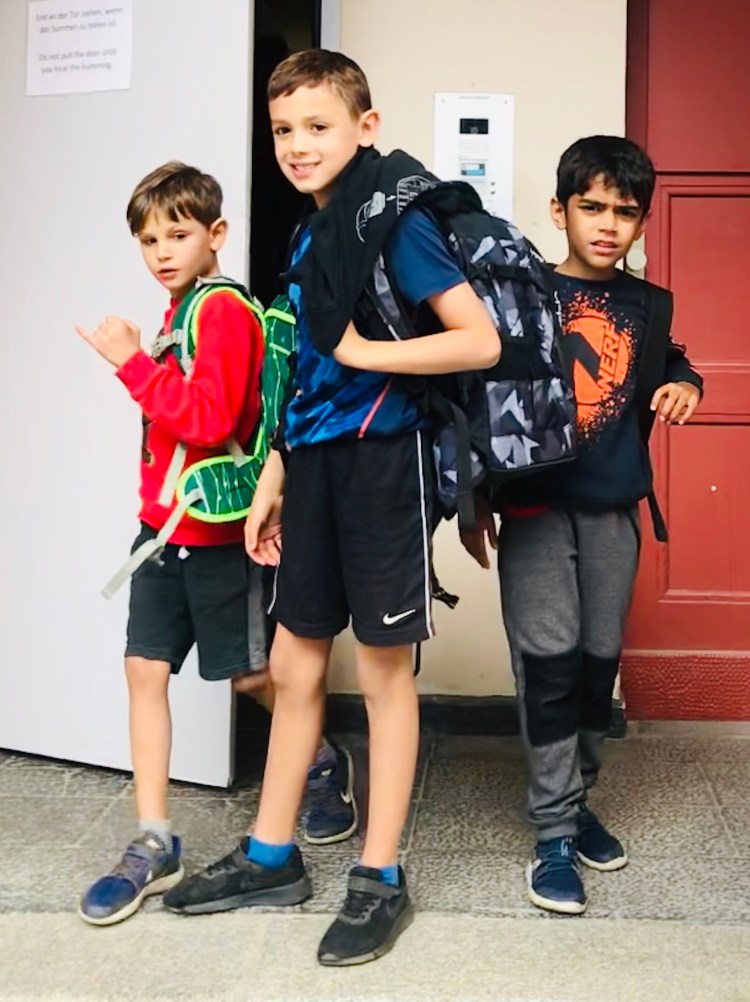 {Leaving school on Friday with his brother, his buddy and his new backpack}
Not only was the backpack more expensive than most of the purses I’ve ever owned (guess that doesn’t say much about the exquisiteness of my handbags, but damn, backpacks can be expensive in Germany), but it also contained his school ID, his BVG pass, his brand new school supplies (serious business here in Germany) as well as his wet swim gear (third graders spend the afternoon swimming each Friday at his school).
We thought they were gone forever. He sadly took an old Pokémon backpack with some spare bare bones supplies to school with him on Monday.
On Monday night, Dave checked the BVG database again, and a bag that fit Ben’s description appeared.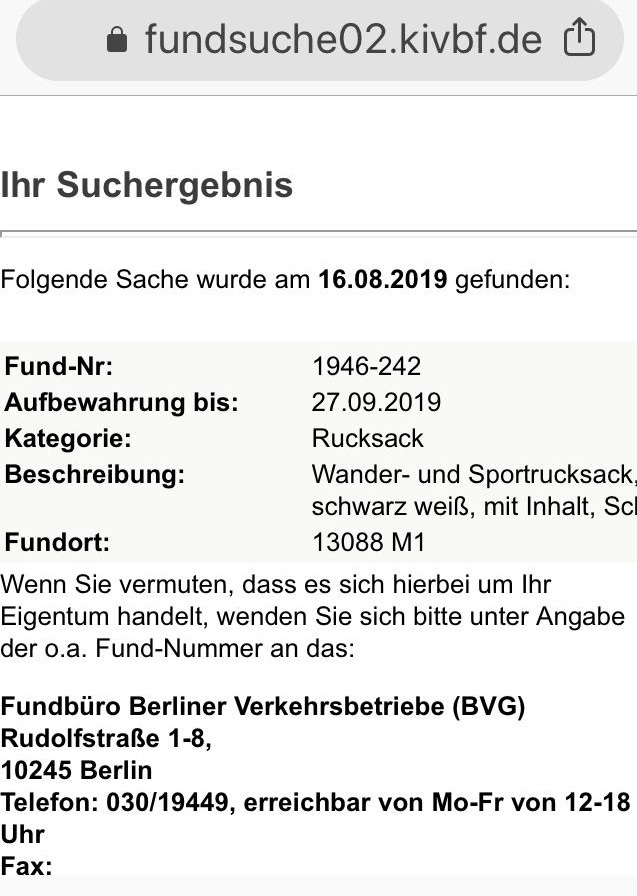 {Could this be Ben’s missing backpack}
Today, I took my passport with me and headed to the Lost and Found office.
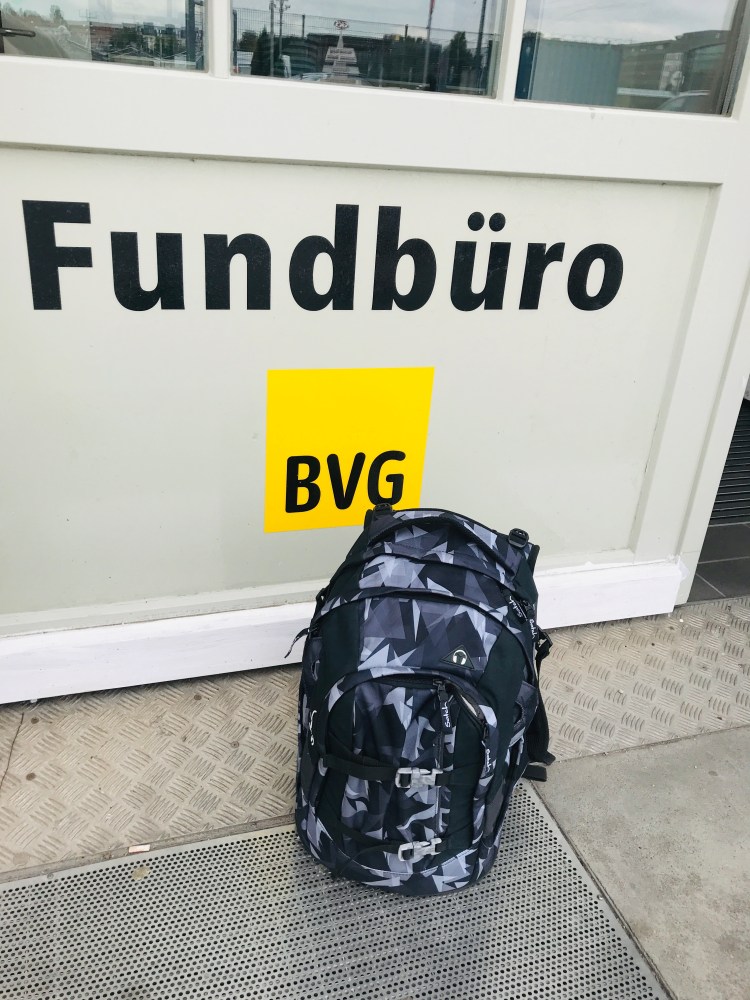 {Success! Ben’s recovered backpack}
There it was. I was thrilled. Dave was thrilled. Most importantly, Ben was thrilled.
Aside from some mildewy swim gear, it was all there just like he had left it.
It goes to show that this “tight” German culture has its advantages.
(I am currently reading Rule Makers, Rule Breakers: How Tight and Loose Cultures Wire Our World by Michele Gelfand.
The book begins as follows:
It’s 11: 00 p.m. in Berlin. Not a single car is in sight, yet a pedestrian waits patiently at the crosswalk until the light turns green.
Which is behavior I see each day.)
 Berlin Lubells: Stories of Life in Berlin from an American Expat Mom's First Experience Living Abroad